
BOT tightens cash rules, ID checks for all and Bt5m+ flagged high risk
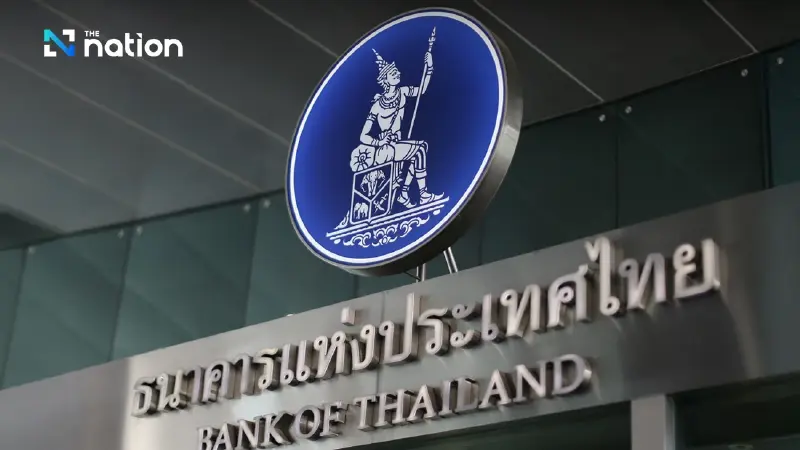


Thailand’s central bank will require banks to verify identities for all cash transactions and apply enhanced checks to high-risk deals of 5 million baht or more from April 1
The Bank of Thailand (BOT) is tightening controls on cash-related transactions, requiring financial institutions to verify customers’ identities for every transaction and to apply stricter scrutiny to high-risk cash dealings worth 5 million baht or more per day, starting on April 1, 2026.
The move is aimed at reducing the risk of banks being used as channels for illicit funds, as cash remains one of the main ways to conceal financial trails and disguise the origins of money linked to crime. BOT said the new framework was intended to strengthen risk management, curb money laundering and protect legitimate customers.
In the initial phase, the new rules will focus mainly on cash withdrawals and transactions involving cash cheques that lead to cash withdrawals, as these are considered particularly vulnerable to being used to move or transform illegal funds into seemingly normal financial activity.
Under the rules, banks must require customers or the final authorised representative to identify themselves or complete identity verification before carrying out any cash transaction, whether at a physical branch or through electronic channels. At branches, individuals must present an ID card or passport, together with contact details and a signature, while juristic persons must provide company registration documents and contact information. For electronic branches or machines, banks must use secure verification methods such as a PIN, OTP, authentication through the bank’s app, or biometric data.
In addition to identity verification, BOT requires banks to ask about the purpose of a cash transaction based on the customer’s risk profile and the nature of the transaction. If a transaction is unusually large compared with the customer’s normal behaviour, the bank may ask for additional information or supporting documents to confirm the reason for using cash. If the customer cannot provide a reasonable explanation, the bank must not proceed with the transaction.
BOT has made clear that cash transactions of 5 million baht or more within a single day must be treated as high risk. In such cases, financial institutions must immediately carry out enhanced customer due diligence, or EDD, including asking about the purpose of the transaction, seeking information from reliable sources, or requesting extra documents. For corporate customers, this may also include details about the business, occupation, workplace and beneficial owner.
If the bank cannot complete enhanced checks and the customer is unable to justify the need for the cash transaction, the bank must reject it and report the matter to the Anti-Money Laundering Office under the relevant laws, before awaiting further instructions from the authorities.
BOT also requires banks to maintain systems to monitor, detect and review customers’ cash transaction behaviour on an ongoing basis. Where unusual activity is found that does not match past behaviour or lacks a clear explanation, banks must monitor the customer more closely and apply appropriate risk management measures. If the activity is linked to digital fraud, banks must also act in line with BOT’s existing digital fraud management requirements.
Banks must also securely retain identification records, documents showing the purpose of transactions and records of unusual behaviour for the period required by law, so they are available for BOT inspections, investigations, legal proceedings and internal controls. At the same time, BOT said the tighter measures must not place an excessive burden on customers, and banks must treat affected legitimate customers appropriately, swiftly and fairly if it later emerges that they were not involved in suspicious activity.
The central bank also signalled that it may later expand supervision to other types of cash transactions, including cash deposits, cash cheque deposits into accounts and banknote exchange services, if it determines that risks have risen further. Financial institutions will also be required to submit reports on unusual cash transactions to BOT in the format and under the conditions it specifies, and may have to provide additional case-by-case information if requested.
BOT said that if a financial institution fails to comply with the rules, or acts in a way that could affect public safety or the stability of the financial system, the central bank may impose additional conditions or order corrective action, delays or the suspension of some or all services. The new framework will take effect on April 1, 2026, marking another step in strengthening the safeguards of Thailand’s banking system as financial crime becomes increasingly complex.
