
Thailand's Education Ministry launches 3 steps to cut school costs
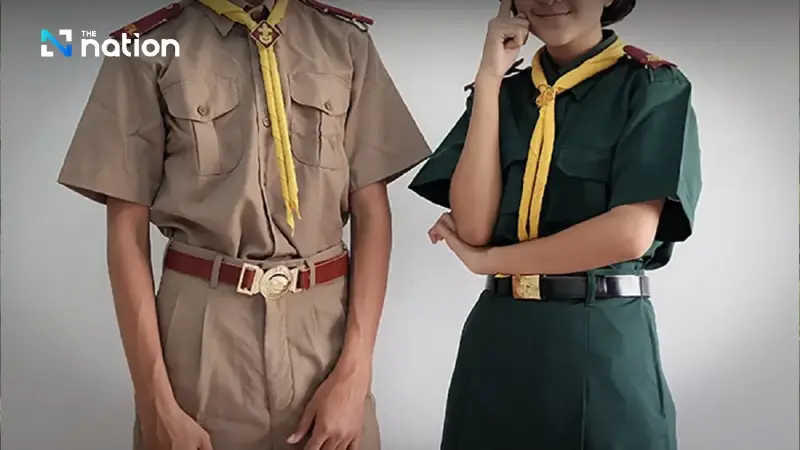


Prasert Jantararuangtong orders schools to relax uniform rules, cut unnecessary fees and offer controlled-price books and stationery before term starts.
- The ministry is relaxing school uniform regulations, such as making full ceremonial scout uniforms optional and allowing students to reuse existing uniforms to reduce clothing costs.
- Learning supplies like textbooks and stationery will be procured and sold at controlled prices through a government commission to ensure fair costs for parents.
- The Education Ministry is partnering with the Commerce Ministry to implement measures that lower the prices of essential consumer goods, providing broader financial relief to students' families.
At a time when the energy crisis and soaring living costs are biting into the budget of every household, the Ministry of Education’s biggest task under its new minister, Prasert Jantararuangtong, is no longer just about improving the curriculum.
It is about stepping in with concrete measures to “ease the burden” on parents.
Prasert made that clear from his first day at the ministry on April 10, 2026, declaring:
“Rules or hidden costs must not be the reason children fall out of the education system.”
Operation “3 urgent measures” to break back-to-school costs
Amid calls from MPs and the public, Prasert moved immediately after the government’s policy statement with his “first directive”, aimed at tackling inequality and reducing hidden costs through three main approaches.
1. Relaxing uniform rules to the greatest extent
The Ministry of Education has instructed schools nationwide to relax uniform rules to an unprecedented extent, allowing students to continue using their existing uniforms even if they move up a year or transfer to another school.
Most notably, it has moved to break the deadlock over Boy Scout and Girl Guide uniforms, which have become a heavy burden on families. Full ceremonial uniforms will no longer be compulsory, with students instead allowed to wear only a neckerchief and cap with their school uniform or PE kit.
The ministry will also replace embroidered first and last names with only the school’s initials in order to cut costs, extend the lifespan of clothing and align with the PDPA.
Another key move is a request for schools nationwide to consider reducing education maintenance fees and other unnecessary charges, while allowing deferred or instalment payments.
2. Intervening in the pricing of learning supplies
Through the Office of the Welfare Promotion Commission for Teachers and Educational Personnel, Prasert has ordered the procurement and sale of books, textbooks and stationery at “controlled prices” to ensure that parents can access quality products at the fairest possible prices.
3. Cross-ministry integration
This is not simply management from an ivory tower. The ministry will also join hands with the Department of Internal Trade under the Commerce Ministry to design measures to reduce the prices of essential consumer goods through various channels, in a broader effort to ease living costs at the macro level and ensure support reaches families of students nationwide.
“Human Capital” roadmap
Beyond short-term measures, Prasert has also laid out a structural reform plan by pushing for a new National Education Act to be completed within this government’s term, in order to modernise the education system and make it more flexible.
A major highlight is the establishment of a “super board” (Human Capital Super Board), chaired by the prime minister, which will serve as a forum bringing together the Ministry of Education, the Labour Ministry, the Ministry of Higher Education, Science, Research and Innovation, and the private sector to jointly design curricula that genuinely match labour market needs.
The goal is to produce more than 1 million highly skilled personnel within five years, alongside a Credit Bank system that recognises real-world experience as educational qualifications, opening the way for lifelong learning.
Returning teachers to classrooms and making safety tangible
To improve learning quality, Prasert plans to use AI technology to reduce teachers’ paperwork and procurement burdens, while piloting a “central kitchen” model with local authorities to manage school lunches instead of requiring teachers to shop for ingredients themselves.
At the same time, he has overhauled the budget allocation formula to help small schools in remote areas by setting a minimum budget floor, in a bid to make the “free education” policy a genuine reality without forcing blanket school mergers.
On safety, the ministry will also establish a “Student Rights and Liberties Protection Centre” and bring in vocational students to proactively inspect electrical systems in schools, to make schools truly safe spaces both physically and mentally.
“All these measures are only the first step,” Prasert said, reiterating his determination to be the “wind beneath the wings” supporting every Thai family. The education minister is scheduled to formally announce his full policy platform again on April 20, which will be an important test of efforts to steer the future of Thai children through the economic storm.
