
Ekniti pitches Thailand’s crisis model at IMF global debate
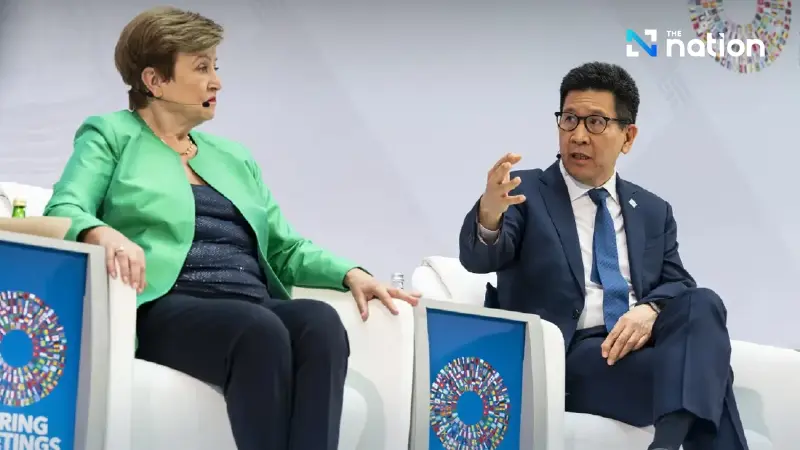


Ekniti says Thailand’s strong macroeconomic position and targeted relief model offer lessons for countries grappling with the global energy crisis
- At an IMF global debate, Thailand's Finance Minister Ekniti Nitithanprapas promoted the country's crisis response model, which focuses on targeted support for vulnerable groups rather than broad-based subsidies.
- He stated that despite being hit hard by the energy crisis, Thailand's macroeconomic position remains resilient, citing strong foreign exchange reserves and a healthy balance of payments.
- Ekniti's model uses the crisis as a catalyst for long-term structural change, specifically by accelerating the shift from fossil fuels to renewable energy to improve future economic security.
- The targeted approach was endorsed by other economists at the forum and aligns with the IMF's general stance against poorly targeted blanket subsidies during commodity shocks.
Thailand’s Deputy Prime Minister and Finance Minister Ekniti Nitithanprapas has told a major global economic forum that the country remains on firm macroeconomic footing despite taking a heavy hit from the energy crisis, while suggesting that Thailand’s response could offer useful lessons for other countries facing similar pressure.
Speaking at the “Debate on the Global Economy” during the 2026 IMF-World Bank Spring Meetings in Washington, DC, Ekniti joined a line-up of top policymakers and economists that included IMF managing director Kristalina Georgieva, Saudi Finance Minister Mohammed Al-Jadaan, Banque de France Governor François Villeroy de Galhau, S&P Global chief executive Martina Cheung and Cornell University professor Eswar Prasad.

Ekniti acknowledged that Thailand, as a net energy importer, has been hit hard by the latest oil shock. In the short term, he said, surging energy prices have fed directly into transport costs and household expenses, adding to inflationary pressure.
The country has also had to contend with supply shocks linked to shortages of upstream goods such as fertiliser and naphtha, which have affected both agriculture and the plastics sector.
Even so, he argued that Thailand’s broader economic position remains resilient. He pointed to a healthy balance of payments position and strong foreign exchange reserves, saying reserves stand at more than 2.5 times short-term external debt and are sufficient to cover around 10 months of imports.

The central message from Thailand, he said, is that support measures during a crisis must be carefully targeted.
Rather than rely on broad-based subsidies, governments with limited fiscal room should direct assistance to the most vulnerable groups.
Ekniti said that approach was necessary because many countries, including Thailand, no longer have the fiscal space for sweeping support schemes.
He has been stressing fiscal discipline as Thailand weighs how best to respond to overlapping economic pressures.
That point resonated during the debate. Eswar Prasad cited Thailand’s targeted approach as an example of an appropriate crisis response, one that helps shield vulnerable groups without overstimulating demand or undermining market mechanisms over the longer term.
The argument also broadly echoes the IMF’s wider stance that governments should avoid poorly targeted blanket subsidies during major commodity shocks.
Ekniti also sought to turn the conversation towards the future, saying the energy crisis should be treated as a catalyst for structural change rather than just a short-term emergency.
The lesson for Thailand, he said, is that the country has relied too heavily on fossil fuels and must now accelerate its shift towards renewable energy.
He highlighted plans to encourage more investment in solar farms, expand incentives for households to install rooftop solar panels and improve regulations so households can sell surplus electricity back into the grid.
That transition, he suggested, would help strengthen Thailand’s economic security over the longer term and reduce its vulnerability to geopolitical shocks.
Earlier this week, Ekniti has linked any future fiscal flexibility to strategic transitions including renewable energy and support for vulnerable groups.
His appearance at the spring meetings also comes as Thailand prepares to host the 2026 IMF-World Bank Annual Meetings in Bangkok in October, placing the country more firmly in the global economic spotlight at a time of heightened volatility.
