
Thailand pushes Land Bridge as energy hub to guard against Hormuz risk
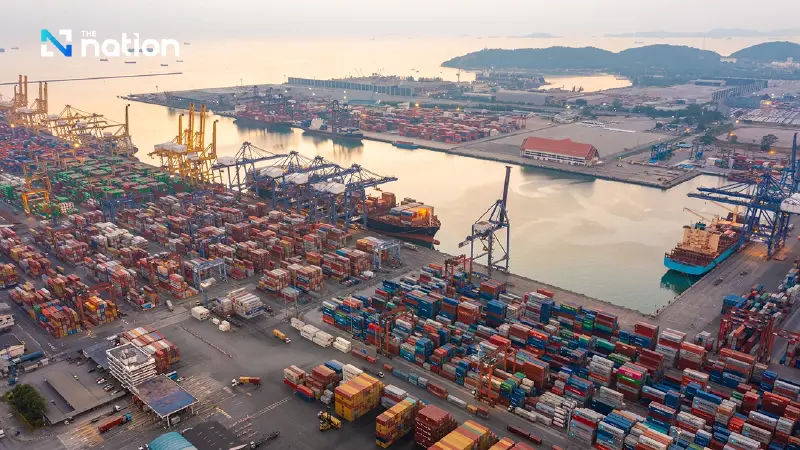


The energy minister said Thailand should turn global volatility into strategic opportunities through the Land Bridge, oil reserves and solar rooftops.
- The Land Bridge project is being developed as a comprehensive energy infrastructure initiative, including large oil storage facilities and a pipeline to connect Thailand's two coastlines.
- It aims to establish Thailand as a new energy hub and an alternative to Singapore for Middle Eastern countries to store and trade crude oil.
- The project is designed to mitigate risks from a potential closure of the Strait of Hormuz, a critical route that handles over 30% of global oil trade, by providing an alternative route and storage location.
- This initiative is part of a broader strategy to strengthen national energy security, which also includes establishing a state-owned Strategic Petroleum Reserve (SPR).
Akanat Promphan, Minister of Energy, has outlined the direction for managing the country’s energy sector amid volatility in the global situation, saying this is the most appropriate time for structural change.
The focus is on turning crises into strategic opportunities to attract investment and strengthen Thailand so it can compete with neighbouring countries that have higher economic growth rates, or GDP growth.
A key issue being prioritised is the use of the Land Bridge project as a tool to strengthen energy security.
He stressed that the project must include comprehensive energy infrastructure, comprising:
More than roads and railways: the Land Bridge must include the construction of large oil storage facilities, or tank farms, and an oil pipeline transport system linking the two coastlines.
A new alternative to Singapore: the aim is to attract Middle Eastern oil-producing countries to store crude oil and conduct trading in Thailand, instead of relying solely on established markets such as Singapore.
A way through the Hormuz crisis: in a situation where the world faces the risk of the Strait of Hormuz being closed, a key oil transport route accounting for more than 30% of global oil trading volume, Thailand would gain a huge economic opportunity if oil storage depots for other countries were located here, while also strengthening security by ensuring the country has a continuous oil supply.
Another important issue is for Thailand to seriously establish a Strategic Petroleum Reserve (SPR) system as the country’s oil reserve.
At present, the law requires private operators to hold oil reserves, which creates a cost burden for businesses.
“Thailand should have a reserve depot owned by the state or based on government-to-government (G2G) cooperation for genuine security. I am confident that, with Thailand’s potential, with as many as six refineries and the capacity to produce finished oil products, diesel and petrol in excess of domestic demand, Thailand can become the ‘Last Man Standing’, or the last country still with energy to use and able to survive even if the world faces an energy shortage crisis.”
On the policy to improve the ex-refinery price structure, prices should not be based 100% on Singapore prices, because Thailand has its own refineries and does not import finished oil products, but imports crude oil for refining.
There is also a plan to promote rooftop solar to reduce reliance on imported liquefied natural gas (LNG), whose prices are volatile and which has a direct impact on electricity bills.
“We must know how to change and treat the illness while there is still a chance. If we do not adapt now, the body may not be strong enough to survive in the future. Building immunity and giving vitamin boosts through energy reform during difficult conditions will allow us to look back with pride in one year and say we have built real strength for the country.”
