Ride-hailing apps given three months to remove illegal drivers
MONDAY, JUNE 08, 2026
Play
Transport Ministry orders ride-hailing platforms to remove drivers without public transport licences within three months
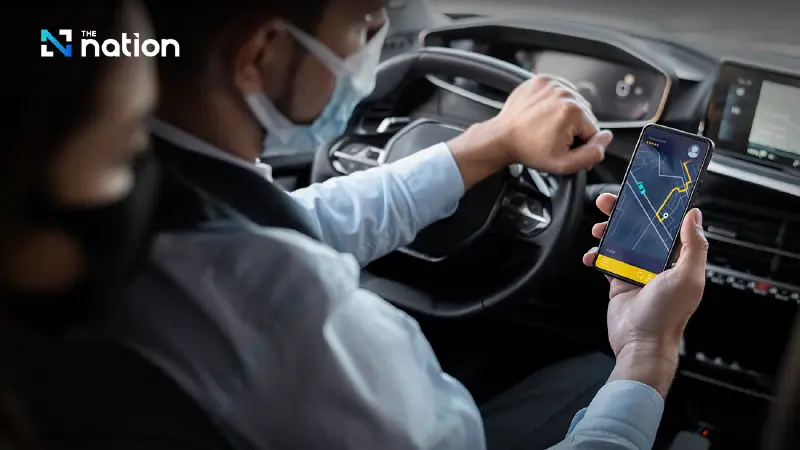
Thailand's Transport Ministry has mandated that ride-hailing platforms remove all drivers who lack a public transport license within three months.
Platforms are immediately forbidden from accepting new drivers who do not hold the required license.
Existing unlicensed drivers must complete the licensing process within the three-month period or they will be removed from the apps.
Ride-hailing companies that fail to enforce these rules risk penalties, including the potential non-renewal of their operating licenses.
Transport Ministry has given ride-hailing platforms three months to remove drivers who do not hold public transport licences, as it moves to tighten enforcement and address complaints from taxi operators.
Deputy Transport Minister Siripong Angkasakulkiat said the ministry had held talks with three taxi networks: the Thai Public Taxi Association, the Suvarnabhumi Hired Car Coordination Association and the Electric Taxi Association, to hear concerns over taxi services and app-based ride-hailing platforms.
He said the ministry would strictly enforce the law against all offenders, with no leniency for those who violate regulations.
“The ministry confirms that it will strictly enforce the law against all wrongdoers. There will be no relaxation of the rules, and violators will still be arrested, fined and prosecuted under the law,” Siripong said.
He said passenger safety and public interest were the ministry’s top priorities, adding that drivers must enter the legal system through proper registration and licensing so they can be regulated effectively and service standards can be improved.
Platforms to be called in for talks
The ministry is preparing to invite all ride-hailing platform operators for talks soon to set common operating standards.
Under the planned approach, platforms will not be allowed to accept new drivers who do not have public transport licences.
Existing drivers already in the system but without the required licences must complete the process within three months, or by August 2026.
Those who fail to comply will be removed from the platforms.
Siripong said platform operators must play a serious role in screening drivers and dealing with offenders.
If they cannot effectively control and resolve illegal-driver problems in their systems, the ministry may consider further measures, including not renewing their operating licences.
He said the aim was to ensure that legally compliant drivers are not unfairly affected by illegal operators.
Suvarnabhumi taxi app to be improved
The ministry has also instructed Airports of Thailand Plc to improve its Sawasdee application so it can calculate taxi fares under an app-based fare system for taxis serving Suvarnabhumi Airport.
The move is intended to reduce complaints over fixed-price fare demands and help law-abiding airport taxis compete more fairly.
Airports of Thailand and related agencies have been assigned to study the issue further.
There has also been a proposal to set up a subcommittee to study improvements to regulations and fare structures outside Bangkok and its surrounding provinces.
The areas under consideration include Kamphaeng Saen, Don Tum, Bang Len, Nong Suea, Lat Lum Kaeo and the whole of Chachoengsao province.
For fixed fares, the proposal suggests a rate of no more than 13 baht per kilometre for small vehicles and no more than 15 baht per kilometre for larger vehicles. The higher rate is intended to reflect the cost of return trips without passengers.
New vehicle types proposed for public taxi registration
Taxi groups have also proposed allowing newer electric vehicles, large vehicles, sliding-door vehicles and premium vehicles to be registered as public taxis.
The ministry said any proposal to increase taxi fares would be considered carefully, balancing public interest with the need to raise service quality, including the replacement of old vehicles with newer models that meet higher safety standards.
A Department of Land Transport source said eight ride-hailing platforms have currently been certified, including Grab, Bolt, inDrive, LINE MAN, Maxim, Lalamove, TADA and Fingogo.
Bolt is currently in the process of applying to renew its operating licence.