
Grab unveils 2025 ride-hailing and food delivery trends
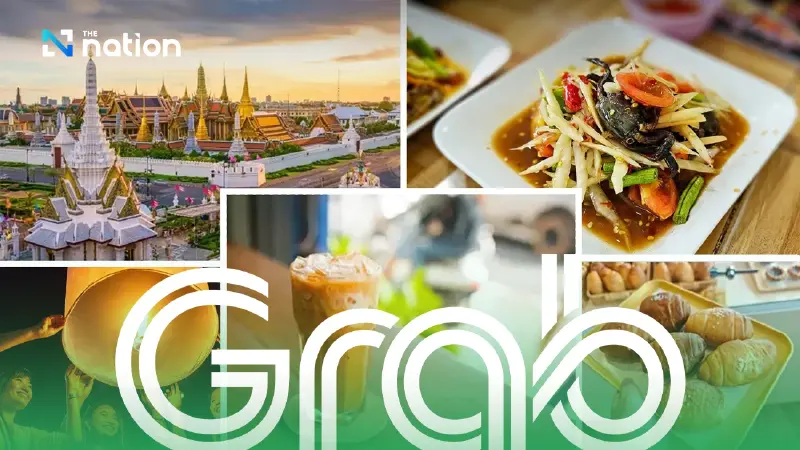


Grab has released its “Best of 2025” trends, highlighting standout data across app-based mobility and food delivery. Here are the key takeaways from this year’s figures.
- “Som tam” remains the most-ordered menu item, with more than 16 million dishes a year
- “Thai iced tea” (Thai tea and bubble milk tea) overtakes iced Americano as the top drink
- Rising-star items: “shio pan” (salt bread), “Kyoho grape tea” and “hand rolls”
- The Huai Khwang Ganesha Shrine became the fastest-growing destination (+678%), while Nakhon Nayok topped the “rising secondary provinces” list
- Chinese tourists remained the largest ride-hailing user group
- BLACKPINK’s concert drove rides to Rajamangala National Stadium up almost five-fold
The data show that over the past year, the Huai Khwang Ganesha Shrine emerged as the hottest destination, with ride requests surging by 678%.
Chinese tourists remained the biggest user group for ride-hailing, especially during Golden Week, when usage rose by almost 50%. Nakhon Nayok was named the year’s hottest secondary travel province, while the BLACKPINK concert pushed ride demand to Rajamangala National Stadium to nearly five times normal levels.

This year’s breakout menu items included shio pan, Kyoho grape tea, and hand rolls.

Food delivery highlights
Thailand’s national favourite som tam remained the best-selling menu item, with more than 16 million orders a year, led by som tam pu pla ra, which recorded the highest number of orders.
Next was khao man gai (Hainanese chicken rice), with more than 1.5 million orders, driven by a viral “Gundum Effect” trend in Japan that spilled over into Thai demand. Larb moo (spicy minced pork salad) followed with more than 1 million orders.
In beverages, Thai iced tea (Thai tea and bubble milk tea) surged past the former champion, iced Americano, with more than 11 million cups ordered across the year. The boost was linked to Lisa’s collaboration with Erawhon on a menu item called “Thai up the World by Lisa”, which went viral worldwide. Next was green tea, with more than 9 million cups sold amid a “matcha fever” that sparked shortages and carried over as a cross-year trend, shaking up both the drinks and bakery markets. Iced Americano slipped to third with more than 8 million cups ordered.

Among fast-rising “hot items”, shio pan—salt bread originally from Japan that became a hit in South Korea before going viral in Thailand—saw sales grow more than 36-fold.
Meanwhile, Kyoho grape blended tea topped with cream cheese led the drinks category, with sales rising more than 17-fold. Another standout was the hand roll, a buzzy favourite among foodies, offering an omakase-style experience at a more accessible price point, with orders up more than 300%.
Ride-hailing highlights
Grab said ride-hailing via the app continued to grow in popularity among both Thai and international users.
The top three destination types for riders were airports, bus terminals, and shopping centres.
This year, CentralWorld ranked as the most popular mall destination, followed by MBK Center, ICONSIAM, and Siam Paragon.
The most popular tourist attractions were the Grand Palace, Khao San Road, and Yaowarat (Chinatown). The Huai Khwang Ganesha Shrine became the year’s hottest new hotspot, with ride demand up 678%, driven by Thai worshippers and foreign visitors seeking blessings for success and good fortune.
Despite a slowdown in tourism, app-based ride-hailing remained one of the key transport choices for foreign tourists.
The top five nationalities using the service were China, the United States, Singapore, the UK, and Malaysia. During Golden Week (China’s National Day holiday, October 1–7, 2025), Chinese tourist usage was almost 50% higher than normal.
One notable trend was that travellers from Georgia were the fastest-rising group, with usage growing more than ten-fold.
On destinations, major provinces such as Chiang Mai, Phuket, and Pattaya remained among the most popular and highest-usage areas. Secondary provinces also continued to gain traction, supported by government tourism stimulus schemes such as Tiew Thai Khon La Krueng and Tiew Dee Mee Kuen.
The five secondary provinces with the highest ride-hailing usage were Udon Thani, Ubon Ratchathani, Chiang Rai, Phitsanulok, and Nakhon Sawan.
Nakhon Nayok was the year’s fastest-rising province, with ride demand growing more than nine-fold, helped by its proximity to Bangkok for day trips and key attractions such as Khun Dan Prakan Chon Dam, Nang Rong Waterfall, Wang Takrai Park, and the red lotus fields.

In particular, BLACKPINK WORLD TOUR <DEADLINE> IN BANGKOK, held on October 24–26, drove ride demand to Rajamangala National Stadium to nearly five times normal levels.
Buffets and grilled meat still win
Beyond food delivery, dine-in trends also grew significantly. Users increasingly chose discount deals and restaurant reservations via the app for special occasions or group meals.
The top three most popular restaurant categories were buffets, grilled meat restaurants, and Japanese restaurants.
The year’s hottest restaurant was Kanori Hand Roll Bar, described as a pioneer of Japan-style hand rolls in Thailand, with sales rising more than five-fold over the past three months.
Brand collaborations also featured as a marketing strategy to add novelty—such as Grab’s “Proudly, Made in Thailand” project, which helped lift daily sales by 48%.
The year’s biggest programme was Let's Go Halves Plus, which helped boost sales for restaurants both in-store and via delivery. Users most often used Let's Go Halves Plus for lunch, with average order values of around 80–120 baht. Bangkok users ranked No.1 in using Let's Go Halves Plus via delivery platforms, while the best-selling restaurant on Grab was Siam Kaprao Cafe – Banthat Thong, with average sales growth of 14 times above normal levels.
After Grab’s full rollout last year, the budget ride option SAVER—both GrabCar SAVER and GrabBike SAVER—surged in popularity, with usage up more than 289%.
This reflects consumer behaviour as people look for cheaper choices in tighter times. Advance Booking also continued to gain popularity, with growth above 50%, most often used for trips to airports.
Meanwhile, the eco-focused feature “Grab EV Rides”, which increases the chances of matching riders with EVs as a first option, also drew rising interest, reflected in usage growth of 58%.
