
50:50 chance of government change, political analysts watch closely for ‘power shift’
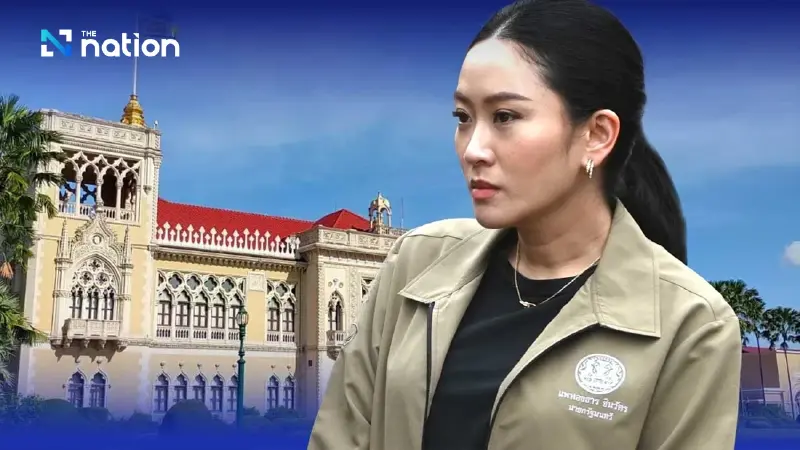


Political uncertainty in Thailand intensifies as PM's future hangs in the balance, with a potential government shift and power struggle looming.
The political future of Prime Minister Paetongtarn Shinawatra is facing its most challenging moment yet, following the release of the audio clip involving Hun Sen, which has escalated tensions along the Thai-Cambodian border. The country is in an uproar, frustrated by what is perceived as her lack of experience. The Prime Minister’s fate rests solely on the Constitutional Court, which is expected to issue its ruling on August 29.
Whether the ruling is favourable or not, it is unlikely to significantly bolster Paetongtarn’s position. If she is allowed to return to office, she will have to bear the public distrust and rejection that have stemmed from the damage caused by Hun Sen.
Remaining as Prime Minister for the next two years of her government, in the face of a declining popularity, seems increasingly unlikely. Her efforts to prove herself and lead the government could escalate the pressure, making the situation even more precarious and negatively impacting Pheu Thai Party’s reputation.
The question now is whether Paetongtarn can survive politically. If she does, society’s emotional response will be explosive, with many having already passed judgement since the clip was first leaked. The opposition is expected to intensify its efforts, both inside and outside parliament, to overthrow the government. This could push the political temperature to a boiling point, making it difficult for the government to function effectively in a highly precarious situation.
Conversely, if the ruling is unfavourable and Paetongtarn is removed from office, this will likely mark the end of her political career and open the door for a shift in government leadership. This could pave the way for Bhumjaithai Party to lead the next government, particularly Anutin Charnvirakul who harbours ambitions of becoming Prime Minister.
In theory, “the Blue faction” would need to rely on votes from the People’s Party to secure a majority, as previously indicated by the “Orange Party”, who would support the vote but not join the government. However, this could lead to an interim government, which would seek to dissolve parliament and call for new elections, along with a constitutional amendment referendum.
In practice, the conditions proposed by the People’s Party might be met, though political goals vary greatly, meaning that politicians generally seek to remain in power as long as possible, rather than accepting a temporary arrangement.
Amid rumours of a “2-billion-baht deal” to buy votes in a government power shift, questions have arisen about whether this investment is worthwhile, and whether it would be more strategic to focus on the upcoming elections, where there may be better chances of success.
For Paetongtarn, the ultimate goal may not be just about securing the role of Prime Minister, but about controlling certain mechanisms to delay or reverse political shifts. The desire to settle old scores within political parties and gain control over strategic land holdings could make this power play worthwhile, especially if the time runs out before the next election.
The power balance lies heavily in the hands of the coalition parties, especially if Paetongtarn’s political future is in jeopardy. In this case, Pheu Thai would need to rely on votes for a new Prime Minister, likely Chaikasem Nitisiri, while also incentivising coalition partners to remain on side.
However, Chaikasem’s own health limitations, as pointed out by Pheu Thai MPs, could complicate his acceptance by coalition partners. This would especially affect his ability to lead effectively, given past health issues.
Despite this, Chaikasem remains the best option available to Pheu Thai, seen as a temporary solution that could pave the way for an election and the dissolution of parliament. In the style of Thaksin Shinawatra, the party will avoid trusting others, preferring candidates who are loyal and easily controlled. Yet, there may be exceptions if political pressure mounts, leading to a deal that is acceptable to all parties involved.
For Bhumjaithai Party, if they wish to reverse the political situation and regain power, they must secure a "master deal" to persuade their existing coalition partners and others to support Anutin for Prime Minister.
The major challenge lies in how the Blue faction plans to consolidate votes to exceed the majority threshold of approximately 248 MPs in the House of Representatives, without relying on the People’s Party for support.
While different factions within the coalition may have differing views on Paetongtarn’s situation, the likelihood of them sticking together and moving forward is still significant. Even though the current scenario may be more challenging than when Srettha Thavisin was ousted as Prime Minister due to a Constitutional Court ruling over serious ethical violations during the Pichit Chuenban appointment, the situation was different back then as Bhumjaithai was still in the coalition, with a robust 300+ seat majority. Now, with the Blue faction having withdrawn, this creates the potential for political tremors at any moment.
While the Blue faction may be under scrutiny for quietly manoeuvring for power, the dynamics within their own party are no longer as steady as before. There are signs of infighting, with some members ready to go against the vote for the new Prime Minister, potentially aligning with Pheu Thai instead. Many members are already preparing to switch allegiances in the upcoming votes.
Another indicator is the likely involvement of the Deep State, which could play a significant role in this politically sensitive period. All parties, including Pheu Thai, coalition members, and Bhumjaithai, must assess whether the political winds will blow in their favour or shift direction unexpectedly.
Paetongtarn’s future remains uncertain, depending on how the Constitutional Court weighs and interprets the case. Everyone is hoping that she will provide clarity and resolve the political impasse, but some factions believe that the root cause of the problem lies with those who created the issue in the first place.
An important political issue that some are watching is whether the Court will consider the honour and dignity of the nation, particularly in relation to Hun Sen’s influence and his ability to shape Thailand’s political direction.
Behind Paetongtarn, a quiet but significant force is at work, orchestrated by her father, whose sole mission is to ensure the situation passes smoothly and the Prime Minister’s case on August 29 proceeds without further political turbulence.
