
Constitutional Court to rule on Prime Minister's fate based on ethical standards
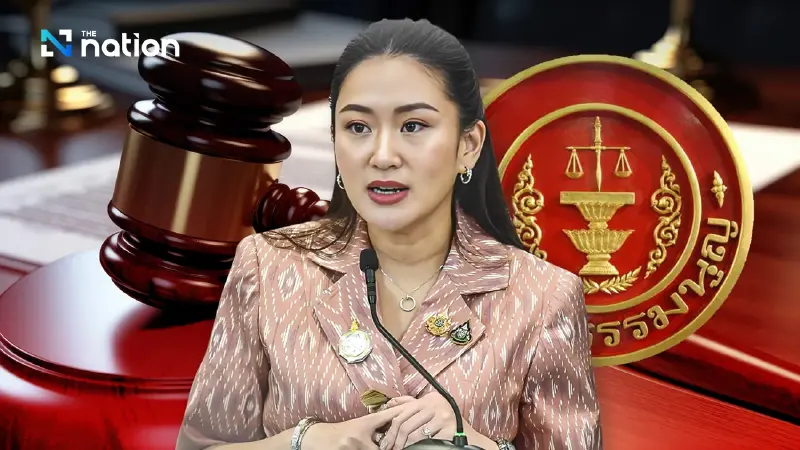


The Constitutional Court is set to rule on the eligibility of Prime Minister Paetongtarn Shinawatra following a petition filed by 36 members of the Senate on Friday (August 29).
The complaint revolves around a controversial audio clip featuring a conversation between Paetongtarn and former Cambodian Prime Minister Hun Sen.
The senators claim that her actions may breach the constitutional requirement for “demonstrated honesty” and “grave violations of ethical standards.” According to the Code of Ethics for Politicians under the Constitution, the relevant legal provisions are as follows:
Article 170, Paragraph 3, in conjunction with Article 82, allows MPs or senators, constituting at least one-tenth of the total membership, to submit a petition to the Constitutional Court if they believe the ministerial office has been vacated.
In this case, the 36 senators invoked Article 170, Paragraph 1(4), alongside Article 106 (4) and (5), stipulating that the position of minister is automatically terminated if the individual lacks qualifications or is found to possess disqualifying characteristics:
- Article 106 (4): The officeholder must exhibit “demonstrated honesty”
- Article 106 (5): The officeholder must not “violate grave ethical standards”
Summary: If the Court determines that the conversation with a foreign leader constitutes a lack of honesty or a grave ethical violation, Paetongtarn's tenure as Prime Minister would be immediately revoked.
Key considerations in the ruling will include:
- “Demonstrated Honesty”: This is a fundamental requirement for politicians. The Court will assess the circumstances and evidence to determine whether transparency, integrity, and a lack of personal or partisan gain were demonstrated.
- “Grave Ethical Violations”: According to the standards outlined in Article 219 of the Constitution, actions considered to be serious ethical breaches include:
- The misuse of power for personal gain
- Conflicts of interest between personal and public benefit
- Undermining public confidence in political institutions
- Interfering with independent bodies or the judicial process
Ethical Standards for Political Officeholders
- Source: Established by the Constitutional Court, the Supreme Court, and independent bodies, with enforceability according to the Royal Gazette. These standards apply to the Prime Minister, ministers, MPs, senators, local government executives, and political officials.
- Main Principles:
- General Standards: Must demonstrate honesty, integrity, transparency, prioritise the public good, avoid discrimination, and refrain from using power for personal gain.
- Stringent Standards (in severe cases): Prohibited actions include undermining political institutions, engaging in corrupt policymaking, interfering with the judicial process, or encroaching on civil servant duties.
- General Standards: Must demonstrate honesty, integrity, transparency, prioritise the public good, avoid discrimination, and refrain from using power for personal gain.
- Consequences of Violating the Standards:
- Minor Violations: Criticism, condemnation, or reprimands.
- Severe Violations: The Supreme Court's Criminal Division for Political Officeholders may rule for removal from office and impose a 10-year ban on political rights or a lifetime ban.
- Minor Violations: Criticism, condemnation, or reprimands.
If corruption is detected, the National Anti-Corruption Commission (NACC) can initiate criminal proceedings.
Code of Ethics for Political Officials (2021):
- Uphold core institutions: Nation, Religion, and the Monarchy.
- Perform duties with honesty, responsibility, and avoid using their position for personal benefit.
- Reject bribery, refrain from distorting information, and avoid interfering with government operations.
- Prioritise national and public interests over personal gain, ensure transparency, and maintain confidentiality of government matters.
- Treat citizens with respect, uphold human rights.
- Maintain the dignity and reputation of politicians.
Conclusion:
The mechanism under Article 170, Paragraph 3 and Article 82 allows 36 senators to submit a petition. The court will consider whether there is a breach of “demonstrated honesty” and adherence to “grave ethical standards.”
If the court finds grounds, Paetongtarn's ministerial tenure will end immediately, with the added risk of losing political rights. This case thus becomes a crucial test of Thailand's political ethics standards.
