
Global Media Watches as Thai Court Rules on Fate of Paetongtarn Shinawatra
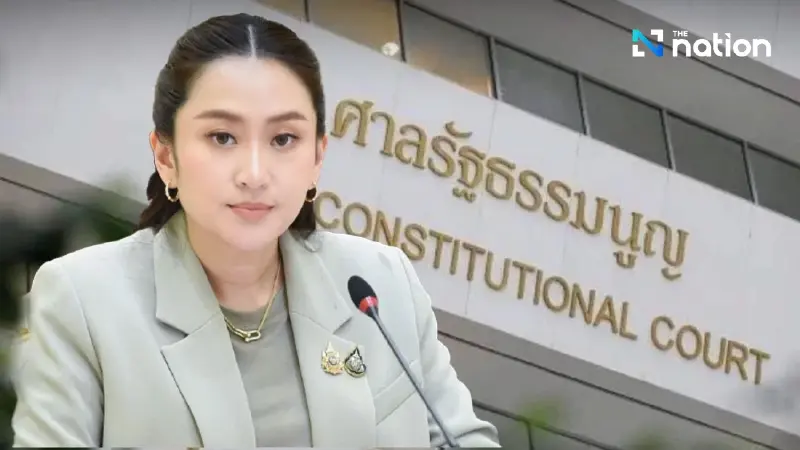


The country holds its breath as the Constitutional Court prepares to deliver its verdict, following a political crisis sparked by a controversial phone call with Cambodia's former leader
- Thailand's Constitutional Court is ruling on the political future of suspended Prime Minister Paetongtarn Shinawatra, who could be permanently removed from office.
- The case was triggered by a leaked private phone call with Cambodia's former leader, which sparked a major political crisis, public protests, and accusations that she compromised national interests.
- A guilty verdict would mark the fourth time a member of the powerful Shinawatra family has been ousted from power and follows a severe strain in Thai-Cambodian relations, including armed border clashes.
Major international news outlets, including The New York Times and The Guardian, are closely following today's highly anticipated verdict from Thailand's Constitutional Court, which will decide the political future of suspended Prime Minister Paetongtarn Shinawatra.
The country's youngest-ever female prime minister was suspended from her duties nearly two months ago after a private phone call with Cambodia's former leader, Hun Sen, was leaked to the public.
The conversation, which sparked a major political crisis, is at the centre of an ethics case that could see her removed from office after less than a year.
The leaked audio clip revealed Paetongtarn referring to Hun Sen as "uncle" and offering to "take care of everything" for him.
The conversation, which also contained negative comments about high-ranking Thai military commanders, prompted a public outcry over concerns about her ability to protect national interests and her loyalty to the country.
A group of senators subsequently filed a petition with the Constitutional Court, accusing her of lacking integrity and committing a serious breach of ethical standards.
Although Paetongtarn apologised and described the conversation as a "negotiation strategy," her explanation failed to quell the political turmoil.
The crisis deepened when a coalition partner withdrew from the government, leaving it with a razor-thin majority.
Thousands of protestors have since taken to the streets of Bangkok, demanding the Prime Minister's immediate resignation.
According to Reuters, the case marks the fifth time in 17 years that a Thai prime minister could be removed by the Constitutional Court, highlighting its central role in the country's long-running power struggle.
The Shinawatra family has been at the heart of this conflict, enduring two military coups and seeing three governments fall.
If Paetongtarn is dismissed, it would mark the fourth time a member of her family has been ousted from power, following her father Thaksin Shinawatra (2006 coup), her uncle-in-law Somchai Wongsawat (2008 court ruling), and her aunt Yingluck Shinawatra (2014 court ruling, followed by a coup).
The fallout from the leaked conversation has also severely strained Thai-Cambodian relations.
Shortly after the audio was made public, armed clashes erupted on the border, lasting for five days and resulting in dozens of deaths and the displacement of hundreds of thousands of people.
Critics argue that the private relationship between the Shinawatra and Hun Sen families is directly undermining Thailand's national interests.
Furthermore, Hun Sen has since released the full transcript of the conversation and threatened to disclose additional information that could be damaging to Thaksin Shinawatra.
This comes despite the close relationship the two had in the past, which has now devolved into a deep-seated conflict.
If Paetongtarn is dismissed, the prospect of a new prime minister would be complex.
"Appointing a new prime minister...will be difficult and may take considerable time," said Stithorn Thananithichot, a political scientist at Chulalongkorn University. "It's not easy for all parties to align their interests."
There are five eligible prime ministerial candidates from the 2023 election, but only one is from her Pheu Thai party. The other candidates include former prime minister Prayut Chan-o-cha, who led the 2014 coup, and Anutin Charnvirakul, a former deputy premier whose party withdrew its support from the government over the leaked phone call.
