
Constitutional Court rules 6-3: Paetongtarn removed from office, Cabinet dismissed
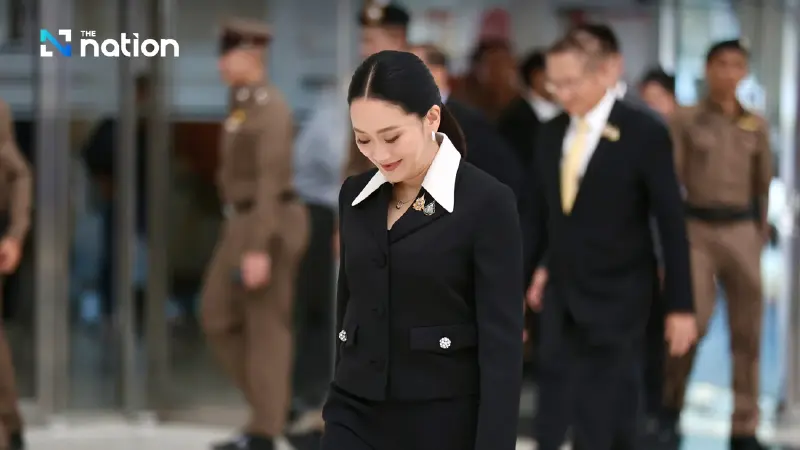


The Constitutional Court has ruled 6-3, concluding that Prime Minister Paetongtarn Shinawatra's tenure as a minister has ended, effective from the court's order for her to cease duties on July 1, 2025. The entire Cabinet has also been dismissed.
The court ruled that Paetongtarn committed serious ethical misconduct, prioritising her relationship with Cambodian Senate President Hun Sen over the national interest.
The ruling, announced at 3pm on Friday (August 29), follows a petition submitted by 36 members of the Senate, asking the court to determine whether Paetongtarn’s position as a minister should be terminated under Article 170, paragraph 1(4), in conjunction with Articles 106(4) and 106(5) of the Constitution.
The Senators alleged that Paetongtarn had violated ethical standards and lacked integrity, particularly in relation to a leaked audio clip of a conversation between her and Hun Sen, concerning the Thai-Cambodian border situation.
The petitioner, Gen Sawat Tassana, a member of the Senate, attended the court hearing in person. Paetongtarn, however, delegated Prommin Lertsuridej, Secretary-General to the Prime Minister, and her legal team to attend.
The Constitutional Court asserted that it had the authority and responsibility under the Constitution to decide whether Paetongtarn’s position as Prime Minister had ended.
In addition to the audio clip of a conversation between the respondent and Hun Sen, the respondent admitted to the conversation taking place but claimed that the clip was unlawfully obtained.
According to the court, the Constitutional Court provided the respondent an opportunity to challenge this, but the respondent did not claim that the content was inaccurate. Therefore, the court accepted the audio clip as admissible evidence.
Whether the respondent’s status as a minister had ended was the issue to be decided. The court ruled that a minister must demonstrate visible honesty and integrity, exceeding the standards for Members of Parliament (MPs), and must fulfil the duties of managing the affairs of the state.
Ethics are fundamental principles or standards of conduct, reflecting the responsibility of the individual. The Constitution sets the framework that ministers must be demonstrably honest, upright, and free from dishonesty, deceit, fraud, or serious breaches of ethical standards. Therefore, ministers must carry out their duties with integrity, the court said.

The court stated that the issue of not violating serious ethical standards includes the duty to protect the honour and interests of the nation, sovereignty, and national welfare.
The facts show that while the respondent was negotiating with Hun Sen, the situation between Thailand and Cambodia was tense. However, it was found that the respondent did not accept the proposal, prioritising the national interest. The respondent’s actions showed no clear evidence of dishonesty.
The case, involving the closure of the Chong Bok border crossing in Ubon Ratchathani, was not a personal matter, but rather an action taken in the capacity of Prime Minister. Therefore, the respondent’s actions should not have violated serious ethical standards.
Regarding the mention of the commander of the Second Army Area, Lt Gen Boonsin Padklang, the respondent clarified that the use of negotiation techniques was to separate the issue from the individual, employing a questioning technique.
The respondent, as Prime Minister, made these remarks to Hun Sen and stated that the matter should be discussed with the security authorities first.
Upon consideration, the court found that the respondent was aware that Hun Sen held no official state position. The respondent sought to use both formal and informal negotiation channels, as they had previously engaged with Hun Sen on official matters.
However, when negotiating in the capacity of Prime Minister, the respondent could not engage freely. The respondent’s choice of negotiation style appeared to seek Hun Sen’s sympathy, which led to a destabilisation of the respondent’s government, the court said.
Furthermore, the respondent had previously proposed that the National Security Council (NSC) address issues related to technology crimes and human trafficking, but did not discuss border issues or international law matters.

As a result, the negotiation appeared to serve Hun Sen’s interests rather than those of Thailand, without considering the security situation at that time.
The court noted that the respondent’s actions raised public doubts about their loyalty to the country’s interests. Although the facts revealed that the respondent did inform the security team on June 16 after the conversation, the issue was only raised in the meeting later.
The fact that the respondent requested sympathy was not a negotiating technique, as claimed, but rather an action that damaged the respondent’s honour and prioritised personal interests over the national interest, leading to public mistrust and loss of credibility in their role as Prime Minister, the court said.
Therefore, the court concluded that the respondent’s actions violated ethical standards and caused significant harm. This breach of serious ethical conduct led to the respondent losing the qualifications required for the position. As such, the court found no need to rule on other charges.
Finally, the Constitutional Court ruled that the respondent’s status as a minister ended on July 1, 2025, when the court ordered the cessation of their duties, and the entire Cabinet was dismissed.
