
Chaikasem, Pheu Thai’s PM candidate, speaks on leadership and challenges
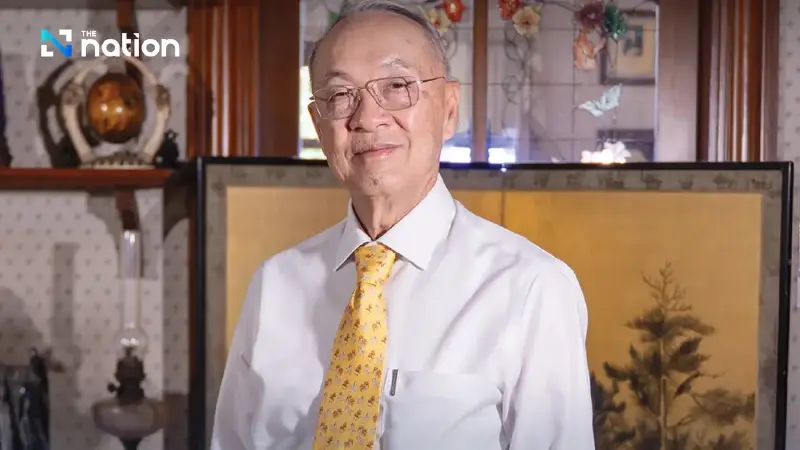


Chaikasem Nitisiri, the veteran lawyer and Pheu Thai’s last prime ministerial candidate, speaks out on his health, independence, and readiness to lead.
- Chaikasem addresses past health concerns, stating he has fully recovered from a stroke and is physically fit to serve as prime minister.
- He expresses a candid reluctance for the top job, saying he would feel "very lucky" if not chosen, as he could avoid the "headaches" of leading the country.
- He asserts his independence, rejecting the idea he would take orders from others and emphasizing that his decisions would be based on his own experience and careful study.
- Regarding the challenge of constitutional reform, he states that any proposal for an interim government must be carefully examined in detail before he can support it.
The race to become Thailand’s 32nd prime minister remains uncertain, with the contest now centred between the Bhumjaithai and Pheu Thai parties. The decisive factor rests with the People’s Party, which has demanded that any new prime minister commit to dissolving parliament within four months in order to hold a referendum on drafting a new constitution.
Bhumjaithai has moved quickly by nominating its leader, Anutin Charnvirakul, as its candidate for prime minister.
The former ruling coalition, meanwhile, is preparing to put forward Chaikasem Nitisiri as Pheu Thai’s final nominee, following Paetongtarn Shinawatra’s removal from office by the Constitutional Court on August 29.
Who will emerge as Thailand’s 32nd prime minister depends on which bloc can secure the crucial support of MPs. Chaikasem, in a previous interview with Krungthep Turakij, acknowledged past health concerns but stressed that he has now fully recovered and is fit to take on the role.
Chaikasem recalled his recent medical check-up at Phramongkutklao Hospital, where his doctor told him he was “extremely lucky.”

“I even asked the doctor, how could I be lucky when I’ve been through all this? And he said, of course you’re lucky, the clot from the stroke is gone, and it even took another one with it. That means I’m now completely normal. I have no problems at all. I don’t wobble when I walk, nothing. Everything is gone,” he explained.
“Whether you call it fate, destiny, or luck, however you look at it, the bottom line is I have no health issues anymore,” Chaikasem added.
As for the photos showing him on the golf course, he explained that “I’ve been doing it regularly. Now I’m fully able to, and the doctor has approved it. He only advised me to stop if the weather gets too hot and to be careful about the heat. But when playing golf, if it’s hot while walking, I use an umbrella, and the course has palm trees for shade. I’ve played many rounds already without any problems,” he said.
Glad if not chosen as PM
Asked how he would feel if the coalition partners insisted on nominating someone else as prime minister, Chaikasem replied candidly:
“Let it follow the process. Honestly, in my heart I’d say I was lucky, very lucky, not to be chosen. I could just live my life, stay at home, and be happy. I wouldn’t have to get involved or deal with all the headaches when there are already so many problems in the country.”
He went on to say: “If in the end I don’t have to be involved at all, I’d go and pay respect at three or seven temples to thank the sacred powers. Do I really want to be prime minister? Oh, my dear friend, taking on that role would only mean bringing hardship upon myself.”
Commenting on the People’s Party’s proposal for a temporary government that would support constitutional reform, Chaikasem said the details must first be examined carefully.
“Suggestions like this need to be looked at in detail, what parts of the constitution would be amended, whether the reasons are valid, and whether such changes would really improve the country. I can’t make a judgement without knowing exactly what is being proposed. Even a single word could alter the meaning. This requires people with real knowledge and ability, and with genuine goodwill for the nation,” he explained.
He added: “How can you be certain that an interim government would be better than one formed through the normal process? There’s no guarantee. It depends on the individuals involved, not only those in government but also the cooperation of all parties concerned. If we only think in those terms, there will be no end to it.”
Fit to serve as PM even tomorrow
Amid speculation over his candidacy, Chaikasem said that he has no concerns about his physical readiness to serve as prime minister if called upon.
“I have never felt unprepared. It depends on those with the authority to decide who they believe is suitable. As for my health, I have no problems at all. Whether today or tomorrow, I am ready to take on the role,” he stated.
He added that he would not take offence if circumstances changed: “Replace me whenever you like, remove me whenever you like, I won’t be angry. If you want to promote me for something else, go ahead. It’s no problem.”
Asked what he would think if the coalition rejected Pheu Thai’s proposal and instead nominated Privy Councillor Gen Prayut Chan-o-cha as prime minister, Chaikasem replied: “If the coalition parties ask for it, then so be it. But if someone suddenly says, ‘I’m going to take it now,’ then what will you do? Don’t overthink it. Whatever happens, we’ll deal with it step by step. “If you keep saying things like that and Gen Prayut hears it, he might ask, ‘Who said I was trying to compete?’”
On the observation that almost every Pheu Thai prime minister has eventually been removed by Constitutional Court rulings, Chaikasem remarked: “This is the nature of political competition between parties. If one side has the chance to topple the other, they will take it. Politics doesn’t grant privileges to anyone. What matters is that the process is based on facts. That’s enough. I personally am not worried. If I step away from politics, I’ll simply stay home with my wife, children and grandchildren, and be perfectly happy.”
Denies giving special help to Shinawatra family
Asked about his relationship with former prime ministers Thaksin and Yingluck Shinawatra, Chaikasem dismissed speculation of any political deal.
“There is no special help involved. They haven’t given me any, and I haven’t given them any in return. We are simply on friendly terms. When we talk, if there are issues, we can help one another find solutions, that’s all,” he said.
Rejects outside orders, insists on own authority
Responding to criticism that he could become a prime minister who merely follows instructions if he were to succeed Paetongtarn Shinawatra, Chaikasem dismissed the suggestion.
“I don’t know who they mean when they say someone would give me orders. Who would order me around? I have maturity and long experience as a former attorney-general. Every decision I make comes from experience and can be explained. I won’t just act on what someone tells me, every matter must be studied carefully to see whether it is true or not. Decisions affecting the nation carry serious consequences, and anyone in this position must think very carefully,” he stressed.
Chaikasem further emphasised that if circumstances placed him in the top leadership role, he would require genuine authority to make decisions. “If you hold decision-making power, you cannot simply do what others tell you. You must study and be clear about the facts. Decisions in government affect many things. Whoever holds this responsibility must weigh every choice carefully.”
He added that his professional background would be an advantage in office: “With my experience and what I’ve witnessed throughout my career, I believe that in certain situations I could resolve the country’s problems more effectively than has been done in the past.”
Whether Chaikasem will become the next prime minister depends on Pheu Thai’s ability to secure more than 246 votes in parliament. Observers warn that any delay could risk the emergence of an alternative coalition capable of forming the government.
