
Rangsiman urges Anutin to tackle call-centre gangs, take Cambodia to ICC
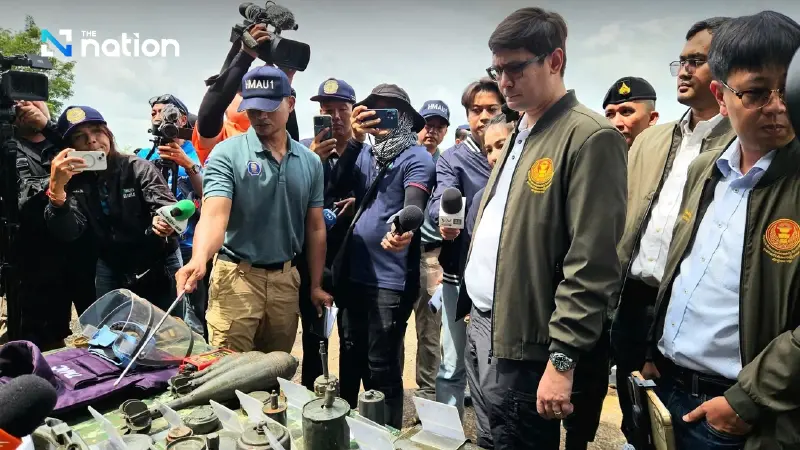


Rangsiman Rome, deputy leader of the People’s Party, has called on the incoming government under Anutin Charnvirakul, the 32nd prime minister-designate, to change Thailand’s strategy towards Cambodia in order to combat call-centre gangs.
He said he had already discussed the matter with the National Security Council (NSC), stressing that Thailand-Cambodia strategy must change and cannot return to the old approach.
“Even if we adjust the strategy, we must acknowledge that Thailand and Cambodia cannot simply walk away from one another. Therefore, we must find a new way forward,” he noted.
Rangsiman said national security must be guaranteed with confidence, which requires a total overhaul of strategies covering trade, border policy, the Foreign Ministry’s stance, and crackdowns on call-centre gangs.
He insisted that once Anutin assumes power, one of the issues he would raise is bringing the matter before the International Criminal Court (ICC). He clarified that this was not a proposal for Thailand to ratify the ICC, but noted that Cambodia is already a party.
“We are convinced that the Cambodian state’s involvement has enabled the growth of large-scale call-centre operations,” he said. “Thailand can still find ways to pursue legal action against Cambodia through the ICC.”
On the question of the new defence minister, Rangsiman said clarity was still needed, as the situation could change at any time. He pointed to Thamanat Prompow, chairman of the Klatham Party advisory board, as a possible candidate but said he would wait for confirmation.
He added that there was a strong likelihood Anutin would also serve as interior minister, a role tied to oversight of electricity and internet networks. Rangsiman said it was vital to ensure no Thai resources were exploited by Cambodia to sustain call-centre scams defrauding Thai citizens.
He cited information from his team on the ground indicating that call-centre gangs in Cambodia remain highly active.
