
Thailand joins US, Japan and India in crackdown on cross-border call centre gangs
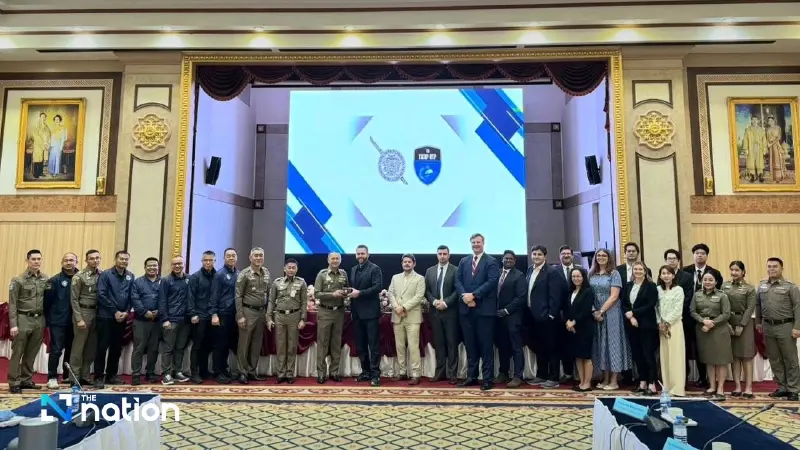


Thai police have joined forces with counterparts from the United States, Japan and India through the newly established war room to share intelligence and strategies to dismantle cross-border call centre gangs.
At the Royal Thai Police headquarters on Saturday (August 23), Pol Gen Thatchai Pitaneelaboot, Inspector-General of the Royal Thai Police and Commander of the International Anti-Scam and Human Trafficking Syndicate Command Centre (IAC), provided an update on the operations of the IAC war room.
The centre was created as a hub for international cooperation in intelligence-sharing and coordinated action against transnational online fraud and call centre syndicates.

Two days earlier, on August 21, Thatchai, together with the Commissioner of the Cyber Crime Investigation Bureau and the Deputy Commissioner of the Tourist Police, met with security agencies from the United States—including the Secret Service, the Federal Bureau of Investigation (FBI) and Homeland Security Investigations (HSI).
Five regional representatives attended the session at the IAC war room to exchange information on evolving online scams and cross-border criminal networks.
Thatchai later held talks with representatives of the US Congress and Thai police officers engaged in anti-human trafficking and child exploitation cases. The delegation was briefed on the IAC’s work and Thai-US law enforcement cooperation before being taken on a tour of the war room and Thailand’s anti-trafficking centre.

On August 22, Thai police continued discussions with senior officers of the Japanese National Police Agency via an online conference, joined by officials from the Japanese Embassy in Bangkok.
That same day, Thatchai also met a delegation from India’s Cybercrime Coordination Centre (I4C) under the Ministry of Home Affairs, joined by senior executives and representatives from the Indian Embassy in Thailand.
Talks with Japan and India focused on the exchange of intelligence on new scam methods, identification of Japanese and Indian nationals linked to call centre gangs, and efforts to trace networks using Thailand as a transit point to traffic victims for illegal work abroad.
Thatchai stressed that criminal groups are increasingly using Thailand as a base or transit route, complicating investigations. However, strengthened cooperation with the US, Japan and India has now enabled more efficient intelligence exchange, technological support and joint investigations.
“International cooperation is not just about chasing criminals—it is a signal to the global community that borders will no longer be safe havens for offenders,” he said.
He added that beyond enforcement, the Royal Thai Police is prioritising public awareness campaigns to help Thai and foreign residents recognise the tactics of online fraudsters, thereby creating a “first line of defence” against victimisation.
