
Thaksin sleeps well on second night in prison: source
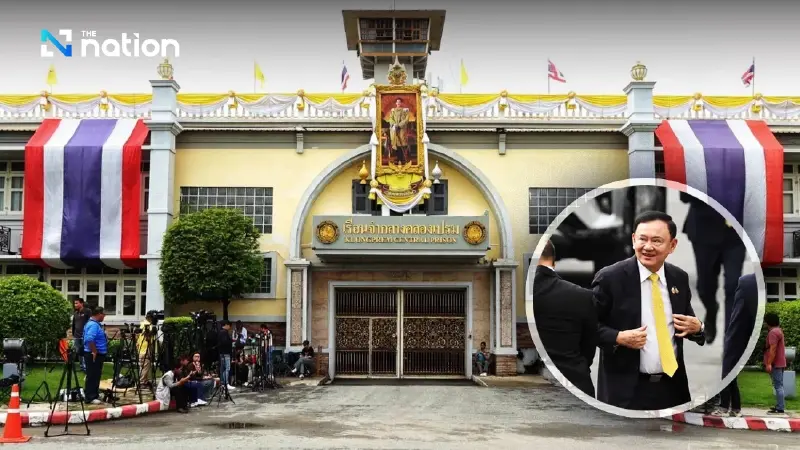


Thaksin Shinawatra sleeps well on his second night in Klong Prem prison and cooperates with officials, according to a source.
- According to a source, former prime minister Thaksin Shinawatra slept soundly on his second night in prison, showing no signs of restlessness, tension, or depression.
- He has reportedly adapted well to prison life, not skipping any meals and cooperating with officials.
- For his safety, the prison has assigned inmates with exemplary behavior, trained in first aid, to act as his "babysitters".
Thaksin adapts to prison life
Former prime minister Thaksin Shinawatra appears to have adapted to life behind bars, as he was seen sleeping well on his second night at Klong Prem Central Prison and did not skip any meals, according to a well-informed source.
No signs of restlessness or depression
A source from the Department of Corrections said that close monitoring revealed Thaksin slept soundly on his second night without appearing restless. The source added that he did not show signs of tension or depression and cooperated with prison officials, behaving according to their advice.
Babysitters assigned for Thaksin's safety
The source also revealed that the prison had assigned inmates with exemplary behaviour to act as "babysitters" for Thaksin, in light of concerns about his safety. These babysitters have received training in first aid and other tasks within the prison.


Public service opportunities for Thaksin?
As Thaksin is considered an economic expert, some have suggested that Klong Prem prison could send him out for public service activities, such as academic events at book fairs. However, the source explained that before an inmate is sent out for public service, the prison must submit a project for approval by the Department of Corrections. The source cited the example of singer Seksan Sukpimai (Sek Loso), who has been allowed to perform concerts outside prison for public service.
Parole eligibility depends on Thaksin's behaviour
The source mentioned that the possibility of Thaksin being released on parole before completing his one-year term would depend on his behaviour behind bars. Inmates may be eligible for parole if they exhibit excellent, very good, or good behaviour. The criteria for parole eligibility are as follows:
- Inmates with excellent behaviour: Must have no more than one third of their sentence remaining (for Thaksin, this would be four months).
- Inmates with very good behaviour: Must have no more than one fourth of their sentence remaining (three months).
- Inmates with good behaviour: Must have no more than one fifth of their sentence remaining (two months and 15 days).


Review of Thaksin's behaviour
The source noted that Thaksin was initially classified as having moderate behaviour when he began his sentence. His classification would be reviewed in December based on his behaviour.
Possible parole under special circumstances
The source also indicated that Thaksin might be eligible for parole under special criteria, given his age (over 70 years old) and possible health issues. In such cases, Thaksin would need to have served at least half of his sentence (six months).
Parole approval process
The source explained that, under general parole criteria, a parole consideration committee from the prison would submit its opinion to the prison chief, who would then refer it to the director-general of the Department of Corrections for final consideration. If the department agrees, the decision would be sent to a committee for approval. For special parole cases, the justice minister's approval is required.
