
Risks loom over Anutin’s government as it struggles to build public trust
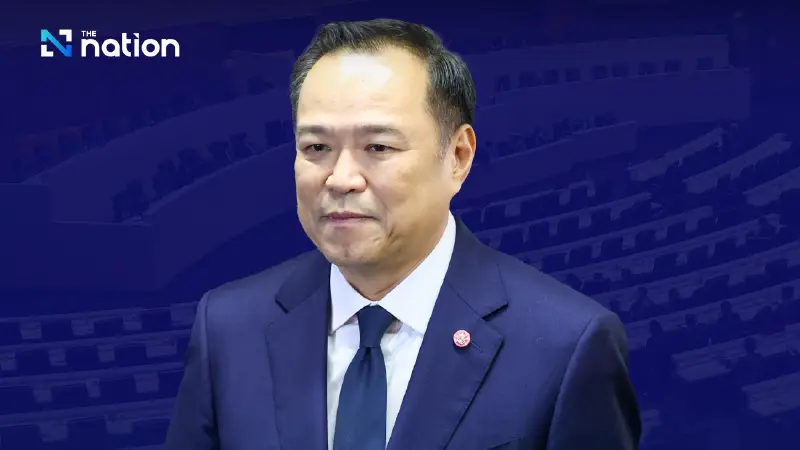


Anutin’s minority government faces a fragile four-month mandate before dissolution, with a looming no-confidence debate by Pheu Thai posing its greatest risk.
- Anutin's government is a fragile minority administration with a limited four-month working window, making it inherently unstable and reliant on a temporary political ally to function.
- It faces an imminent no-confidence motion from the opposition Pheu Thai party, which plans to exploit controversial issues and could cause the government's early collapse.
- Due to its weak position in parliament, the government will struggle to pass legislation, forcing it to rely on cabinet authority and focus on short-term policies rather than long-term reforms.
- The administration is bound by a memorandum of agreement to dissolve parliament and hold a referendum, and failure to meet these commitments risks losing the confidence of both its allies and the public.
The minority government led by Prime Minister Anutin Charnvirakul has a working window of just four months under its agreement with the People’s Party, starting from early October 2025. Parliament is widely expected to be dissolved by the end of January 2026, leaving the administration with limited time and authority to govern.
Operating under a minority framework poses inherent risks. With fewer seats than the opposition, the government must rely on support from the People’s Party as a temporary ally to push legislation through parliament, a task made more difficult by strategic manoeuvres, particularly from Pheu Thai.
Politically, Anutin’s government lacks strength. According to the memorandum of agreement, the pro-government bloc holds just 146 MPs. Even with defectors from the previous ruling coalition moving to Bhumjaithai, the numbers remain far short of the opposition’s tally, effectively halving its weight in parliament.
The most serious hurdle will come in the form of a no-confidence debate and vote. Pheu Thai, as the opposition party, has signalled it will not coordinate with the People’s Party, preferring to preserve its freedom to plan attacks and settle old scores.
Should the Pheu Thai fall into this trap, siding with the opposition bloc, it risks being squeezed by People’s Party discipline and parliamentary tactics, which could severely restrict its manoeuvring space and erode its legitimacy.
Pheu Thai plots censure debate to corner Anutin’s fragile government
Pheu Thai is expected to file a no-confidence motion in November, before parliament closes in early December. If the party misses that window, the next session will not open until mid-February, after the anticipated dissolution of parliament, making this the only chance to challenge Prime Minister Anutin’s minority government.
The opposition is likely to centre its censure debate on two controversial issues: alleged collusion in the senate election and the long-running Khao Kradong land dispute. Both are seen as major liabilities for Anutin and his “blue network”, and could be used to pressure the People’s Party into a decisive vote of confidence or no confidence.
Pheu Thai’s manoeuvre is also aimed at competing with the People's Party for political ground, ensuring Anutin’s administration becomes collateral damage. Should the People’s Party vote against the government, its life could end well before the agreed four-month timeline. If it abstains, the survival of the coalition will hinge on whether its 146 MPs and allies can hold the line.
Cabinet members with political stigmas or questionable records are particularly at risk. They could become direct targets of censure, particularly those on the People's Party’s “watch list”. In such cases, if the People’s Party votes in support or abstains, it could pay a political price.
With its vulnerable standing and exposure to parliamentary attack, Anutin’s minority government has become a “lightning rod” administration whose stability is anything but assured.
Anutin’s government constrained by parliament, forced to rely on cabinet powers
Another key challenge for Prime Minister Anutin’s minority government is navigating the legislative process. Many bills will require support from the People’s Party to pass through parliament, but if the party refuses to back them, progress will stall.
This means the government is unlikely to deliver much policy through legislation. Instead, it will depend heavily on cabinet authority. In cases deemed urgent, emergency decrees may be issued to bypass parliamentary votes and ensure speedier implementation.
Commitments under the MOA
According to the memorandum of agreement, the administration must dissolve parliament within four months and hold a referendum on constitutional amendments. Failure to meet these commitments would invite attacks for breaking promises and risk losing the confidence of both allies and the public.
Focus on short-term gains
Given the limited timeframe, the government is expected to concentrate on short-term, urgent measures rather than long-term structural policies. Immediate priorities include tackling household debt, economic pressures and the cost-of-living crisis, issues that citizens are pressing for quick action on.
Observers note that the “Half-Half” co-payment scheme, once credited with boosting former prime minister Prayut Chan-o-cha’s popularity, may serve as a model. Alongside this, short-term stimulus spending is anticipated, such as local infrastructure projects, roadworks, and canal dredging, which not only aim to spur employment but also deliver political benefits.
At the same time, the government will seek to instil economic confidence with clear “early win” policies on essentials like electricity bills and fuel prices, enabling citizens to see tangible results quickly.
With its fragile position, Anutin’s administration must carefully manage political and policy risks if it is to avoid collapse before the four-month deadline runs out.
Anutin’s government walks a tightrope under MOA timeline
The government is under pressure to follow the framework of the MOA, which sets out a clear timeline for constitutional reform and a referendum. At the very least, the process must be initiated before the next general election to demonstrate good faith to its “orange bloc” allies.
To secure stability in parliament, Anutin may also need to seek backing from medium- and small-sized parties, particularly if the People’s Party abstains in a no-confidence vote. The government must secure more confidence votes than Pheu Thai without giving the impression of political collusion that could damage its legitimacy.
Outside parliament, Anutin’s “blue network” may need to engage civil society and academics to bolster credibility and avoid being accused of breaking commitments. Transparency is critical, as Pheu Thai, acting as both opposition and long-time adversary, is poised to scrutinise government projects for any sign of corruption. Ministers regarded as “lightning rods” for criticism are especially vulnerable, as suspicions of profiteering in a short-lived administration could bring the government down swiftly.
Another pressing issue is the Thai-Cambodian border. While Anutin continues to insist that border checkpoints remain closed, mounting pressure from the business sector is forcing the government to seek solutions.
Equally important is communication. The Bhumjaithai-led government must manage public expectations by clearly outlining what a transitional administration can realistically deliver in the short and medium term, and what its limitations are. Failure to do so risks disappointment and backlash.
Anutin’s government stands at a critical juncture. If it manages risks effectively within its limited timeframe, it could gain political credit. But a single misstep, whether from policy failure, corruption allegations or parliamentary defeat, could quickly turn into a double-edged sword, leaving Bhumjaithai with lasting political damage.
