
Anutin reaffirms Ban Nong Chan as Thai land, legal deportation assured
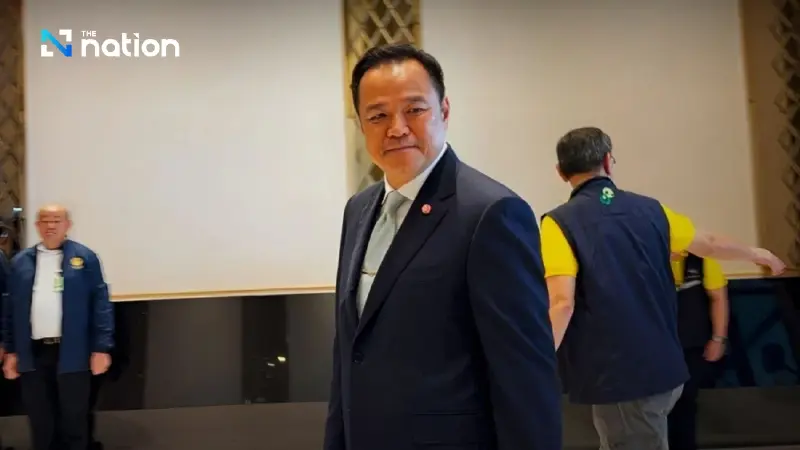


Prime Minister Anutin Charnvirakul reaffirmed on Friday that Ban Nong Chan village in Sa Kaeo province remains Thai territory, emphasising that the deportation of Cambodian nationals must be carried out according to Thai law.
His remarks came following the ongoing evacuation of Cambodian nationals from Ban Nong Chan, which is set to be completed by October 10. Recent Cambodian media reports indicated that the migrants have refused to leave the area.
We are proceeding according to Thai law. There’s no way we will allow people who are not Thai citizens to break the law in Thailand. It would be difficult, he stated.
Regarding the legal framework to address this situation, the Prime Minister explained that multiple laws would need to be applied. He noted that these individuals are considered regular citizens, so a different approach would be taken, ensuring they are not harmed.
We won't resort to pushing them out or forcibly removing them, but will rely on legal procedures as much as possible, he added.
The Prime Minister further clarified that the situation, which began under the Sa Kaeo provincial governor's timeline, involves many aspects that need careful consideration, particularly regarding the security risks at the border.
He emphasised that the focus should be on managing potential confrontations, not on forcibly expelling people.
Eviction could be part of the negotiations, provided heavy weapons are withdrawn, landmines cleared, and troops pulled back. We can then discuss how to relocate these individuals, he explained.
When asked whether the issue would be resolved by October 10, the Prime Minister reiterated that while he had provided details on the process, the specific timeline should not be set in stone.
Anutin also addressed his upcoming visit to Surin and Buriram provinces on October 3-4, where he will expedite compensation for those affected by the Thai-Cambodian border conflict.
He confirmed that the aid has been approved and the Department of Disaster Prevention and Mitigation has allocated the necessary funds. He added that while the funds are ready, his visit will help assess the situation on the ground and enable collaboration with relevant agencies for further planning.
He also mentioned the ongoing approval for the construction of a border fence, which will begin with decisions on where the fence should be located along the border, explaining that it would not extend along the entire length.
Regarding the recent deaths caused by stress related to the Thai-Cambodian border unrest, the Prime Minister expressed sympathy and stated that the government would address such incidents, with an effort to categorise them under the stress caused by conflict.
"We are monitoring the situation, although the numbers are not significant, we will continue to provide support," he concluded.
