
Anutin: no staged campaign events—Bhumjaithai keeps it organic
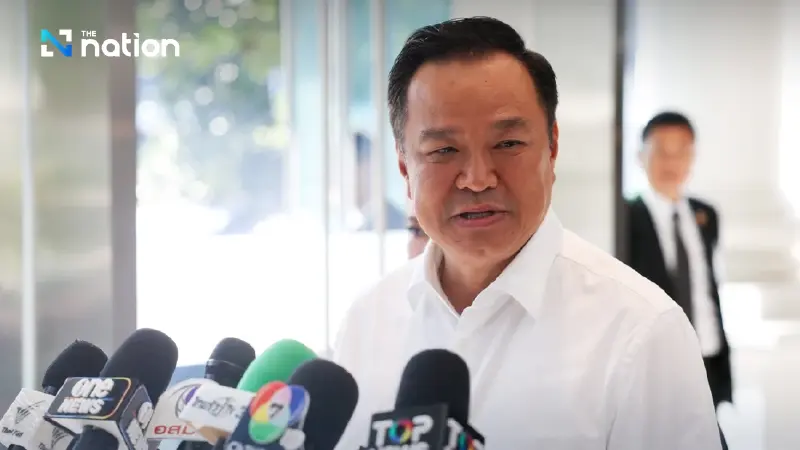


Anutin says Bhumjaithai will campaign “organically”, avoid staged events and major rallies, and stay calm if attacked while focusing on voters.
Caretaker Prime Minister Anutin Charnvirakul, who is also leader of the Bhumjaithai Party, said on Tuesday, January 6, that the party would stick to an “organic” style of campaigning—avoiding staged events, formalities and large rallies.
Asked whether he had issued any additional instructions to party figures ahead of the election, Anutin said he was listening to updates from each constituency. He said he had been told that Bhumjaithai candidates across the country were working hard and consistently visiting communities, especially over the New Year period when many voters returned home.
On early polling, Anutin said the party did not rely on surveys, arguing that the most meaningful “poll” was public confidence earned through hard work. Drawing on experience from past elections, he said he could usually judge outcomes fairly accurately.
Pressed on whether he could estimate the number of seats the party might win, Anutin said any projection was still a “guess”, comparing it to buying a lottery ticket before the results are known—after previously floating a figure of 150 seats.
He said the public response during visits had been encouraging, adding that people might be more familiar with him because he is serving as caretaker prime minister. Anutin said some supporters offered encouragement before he could even ask for votes, including remarks linked to tensions on the Thai–Cambodian border.
On the party’s “national fence” policy, he said strengthening the country’s defences was already under way and remained among the party’s top priorities.
Asked about Pol Lt Gen Kamronwit Toopkrajang, President of the Pathum Thani Provincial Administrative Organisation, reportedly backing the Kla Tham Party, Anutin said they remained close.
He said Kamronwit had long offered political advice in Pathum Thani, and stressed that while Kamronwit was not a candidate, Bhumjaithai had its own candidates in the province
Anutin said he worried about everything in an election, arguing no candidate or party executive could ever be fully at ease. He said concerns ranged from whether campaigning was sufficiently extensive to whether assessments of voter sentiment were accurate.
On whether security concerns, including border unrest, could affect the election atmosphere, Anutin urged people to separate national security from the election process. He said there would still be a government in place and that coordination with the Election Commission (EC) gave him confidence the election would proceed. He added that the EC had agreed in principle to a central budget for election management, with the cabinet moving to support the process.
Asked about reports that Gen Prawit Wongsuwan had resigned as leader of the Palang Pracharath Party, Anutin said he had not yet been informed, adding that he respected Prawit as a senior figure.
Anutin said he did not want Bhumjaithai’s campaigning to be driven by grand set-piece events. He said public interactions during constituency visits often lasted hours, with people approaching him for photos and offering encouragement without him needing to make a formal pitch.
Asked whether he would join campaigning in Bangkok on Sunday, January 11, Anutin again said he preferred an organic approach, adding that if he happened to meet Bhumjaithai campaign leaders while they were out canvassing, he would step in to help.
On handling attacks during campaigning, Anutin said the party would choose to “crouch” rather than fight back, arguing that even winning a confrontation could still cause damage. He said the party’s role was to present its policies to the public, not to respond to opponents’ doubts.
He insisted the term “organic” was not a political strategy, but simply reflected his personality—without ceremony or excessive formalities.
