
Natthaphong outlines “orange government” coalition model
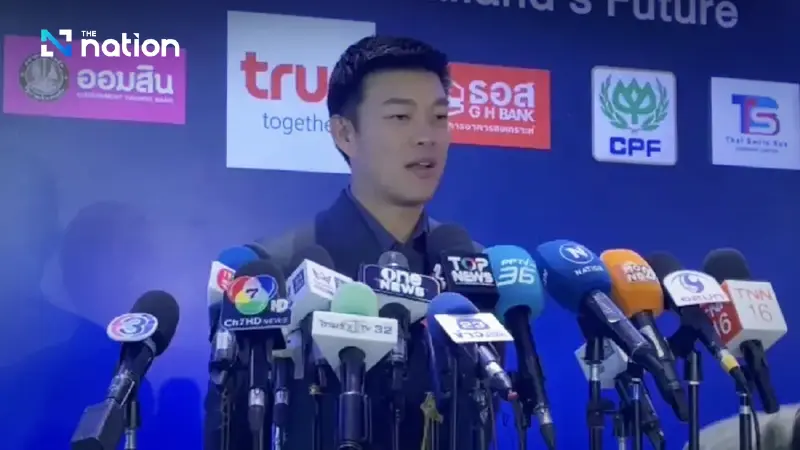


People’s Party leader Natthaphong says a “people’s government” can include partners if they accept cross-ministry coordination, as he pitches THB630bn “orange” investments
Natthaphong Ruengpanyawut, leader of the People’s Party, said a future “people’s government” does not necessarily have to be a single-party administration, arguing that coalition partners could be included if the party falls short of 250 MPs — provided they accept a cross-ministry governing structure designed to deliver unified policy implementation.
Speaking at Channel 3 on 12 January 2026 during a “Thailand Vision 2035” programme, Natthaphong said the party’s platform sets out 12 national agendas, distilled into four levers to be overseen by four deputy prime ministers under what he called a “people’s government” aimed at dismantling “grey systems”.
He said the four pillars are:
- State reform and rebuilding trust
- Reviving the grassroots economy and inclusive growth
- Building human capital and improving quality of life
- Resetting strategy for security and foreign policy
Natthaphong said the party would prioritise investment in cities, digital development and sustainability through an “orange mega-project” programme worth 630 billion baht over eight years. Examples he cited included expanding electric buses nationwide, “Nano Bus” connectivity for seamless travel, and rolling out drinkable tap water across the country.
He also outlined proposals to raise human capital “from the womb to the tomb”, adjust wage formulas to reflect living costs and rising skills, modernise the military under civilian oversight, shift conscription towards a professional force, pursue what he described as “pro-Thailand diplomacy” that is not aligned with any major power, and reform the justice system and police to tackle ticketing, bribery and position-selling.
On the party’s “people’s government management team” model announced on 11 January, Natthaphong said it does not mean a single-party government only. If the party does not reach 250 seats, he said the core objective remains forming a “people’s government” — and any partner parties must be able to work across ministries rather than operating in silos. He said the structure should include deputy prime ministers overseeing the broader picture to ensure coherence, adding that negotiations for a coalition should be transparent and visible to the public.
Asked about meeting Anutin Charnvirakul, leader and prime ministerial candidate of Bhumjaithai, again on the same platform, Natthaphong said he felt no different from before, noting that past parliamentary cooperation had been based on publicly known agreements. He reaffirmed the party’s position that it cannot join a government with the Kla Tham Party, and said he and People’s Party MPs cannot vote for a prime ministerial candidate from Bhumjaithai. He also said he was confident the party would win greater support in Bangkok, with a goal of securing all 33 constituency seats.
Natthaphong also commented on remarks by a Cambodian minister urging voters to choose one Thai party over another. He said the issue should be viewed on two levels, arguing that Cambodia understands Thai political dynamics and that such statements can influence popularity. He said the People’s Party’s stance is to dismantle scammer networks, which he described as central to the Hun Sen “system” and its networks. He suggested that attempts to discourage support for the “orange” camp could be aimed at preventing it from disrupting “grey deals” or leading the next government.
