
Redesigning Thailand: 4 political parties outline their visions
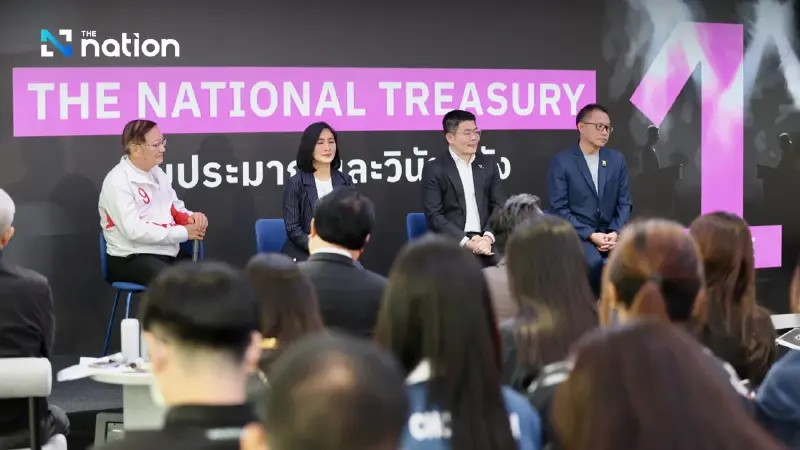


Representatives from four political parties – Democrat, People's Party, Thai Kao Mai, and Pheu Thai – present their visions for “redesigning Thailand” in the debate.
Four political parties – the Democrat Party, the People's Party, Thai Kao Mai, and the Pheu Thai Party – shared their visions for “redesigning Thailand” during a debate on Friday, under the constraints of budget limitations, tax policies, laws, geopolitics, flooding imports, and corruption.
The debate titled "Thailand Redesign 2026: The Next Level" was held at AIS Siam in Bangkok, where the editorial team of Thansettakij posed a clear question: If these parties were to govern, which single issue would they choose to redesign, and how would they implement this change despite unavoidable limitations?

Democrat Party: Tackling the root of the nation’s setbacks by ending corruption
Karndee Leopairote, Deputy Leader of the Democrat Party and candidate for Prime Minister, highlighted that redesigning the country must start with “ending corruption” as it is the root cause of economic losses and a burden on future generations.
She argued that corruption not only depletes the nation's resources but also erodes confidence, investment, and vital infrastructure that should be built for future generations. The party’s core approach involves tackling corruption across three main areas:
- Leveraging technology to increase transparency and enable public scrutiny.
- Raising the ethics of politicians and civil servants, without solely relying on legal instruments.
- Fostering a culture of political responsibility, ensuring that individuals with doubtful integrity should not hold power, even before any legal judgment.
Karndee firmly believes that corruption is not an insurmountable issue and that public perseverance will lead to change. By restoring trust, it would open opportunities for investment and more efficient use of tax revenue.
She believes that Thailand can “wash the nation with clean water” and recover if it has a trustworthy and honest leadership.

People’s Party: Redesigning the state to reduce economic costs and build a new future
Sittiphol Viboonthanakul, List MP candidate for the People’s Party, stated that the main issue facing Thailand is an "inefficient government" and a sluggish economy that makes the public feel they have no future.
The People’s Party’s redesign of the country starts with creating a functional government through reforms in laws and bureaucracy. They proposed “Operation 18” to overhaul laws that hinder business operations, which have only seen 30% progress over the past 8-9 years.
The People’s Party intends to push forward with the reform to reduce costs, especially for small businesses. Their proposals for the new economy focus on:
- Small Businesses: A receipt lottery policy to drive consumer spending in local shops and community markets sustainably.
- Large Businesses: The "Made in Thailand" (MiT) initiative and creating new industries to benefit Thai entrepreneurs directly.
The People’s Party also sees a government spending budget of 600-700 billion baht annually, but believes it has not led to real domestic production. The example of waste management systems only covering less than 5% of provinces and limited access to public transport in many secondary cities further underscores the need for reform.
Additionally, the party advocates for lifelong welfare upgrades, from children to the elderly, focusing on dignity throughout life.

Thai Kao Mai: Education as the foundation for change
Panurat Damrongthai, Head of Strategic Energy and Innovation at Thai Kao Mai, believes that the redesign of Thailand should begin with education. He argues that development is not determined by resources, but by the intellectual opportunities provided to the people.
He pointed out that Thailand does not lack talented individuals, but rather lacks access to opportunities. Using his own experience as an example, he emphasised that if Thailand wants to progress, it must shift from simply “giving fish” to “teaching people to fish,” equipping students and citizens with skills relevant to the evolving world, especially in technology.
On corruption, he suggests that the real solution is to instil ethics from a young age. If everyone develops maturity and common sense, dishonesty will diminish without the need for complex oversight systems, as society will not accept corrupt individuals.

Pheu Thai: Redesigning the economy, solving debt, and creating immediate income
Prommin Lertsuridej, Chair of the Economic Committee for Pheu Thai, believes that the public’s immediate need is “an improved economy,” through debt resolution and income generation.
The Pheu Thai Party has clear plans for guiding Thailand to a high-income economy through three main economic sectors. They focus on urgent actions that do not require waiting for new budget allocations, which may be delayed until October:
- Collaborating with the private sector to address SME issues.
- Managing debt across all sectors.
- Connecting the agricultural economy with the industrial sector while promoting advanced investments, even before legislative frameworks and budgets are in place.
Prommin acknowledged the challenges in managing the budget, citing that previous ministers could only implement 30% of their planned policies. However, he believes that collaboration with the private sector will help accelerate progress, emphasising the need to understand the public’s struggles and address them effectively.
