
German NGO: Thai voters prioritise economy over politics
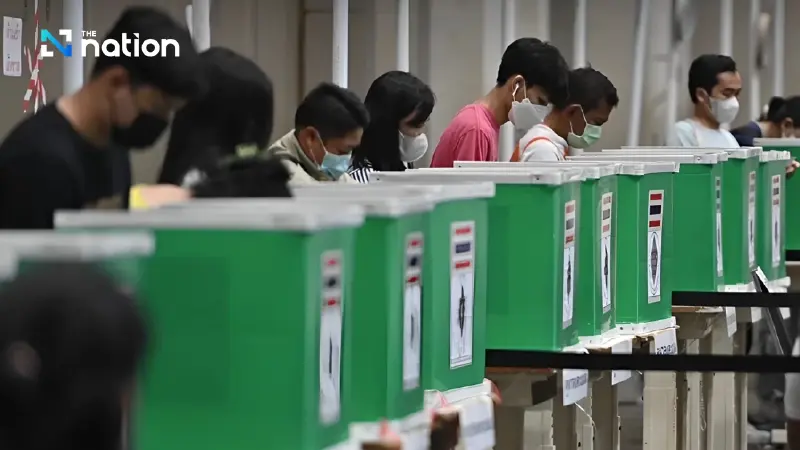


Friedrich Naumann Foundation says Thai voters focus on economic stability in the upcoming election, with concerns over political continuity and reform
February 5, 2026 – The Friedrich Naumann Foundation for Freedom (FNF), a German non-profit organization promoting liberal values, has released an analysis of the upcoming Thai election titled: "Thailand: Hope for change, longing for stability."
Founded in 1958 to promote democracy, human rights, civic education, and economic freedom worldwide, FNF has a long-standing presence in Thailand, working closely with civil society and the public sector. Their latest analysis outlines the following key points regarding the Thai political landscape:
A Desperate Longing for Stability
On February 8, 2026, Thai citizens will head to the polls to elect a new House of Representatives. This election comes less than three years after the last one—a period marked by significant turbulence, including the removal of two Prime Ministers, the banning of the largest opposition party, and escalating border tensions with Cambodia.
The primary desire for many Thais right now is stability, which they hope will ultimately lead to much-needed economic growth.

Content Over Emotion: The Economic Factor
Pre-election polls show that only 14% of voters remain undecided. Unlike the highly polarized landscape of 2023, voters today are making decisions based on policy substance rather than raw emotion. The public is less concerned with the "Left vs. Right" ideological divide and is instead focused on the state of the country, particularly the economic situation.
The People's Party: Leading with a "100-Day Plan"
The People's Party currently leads the polls. Their campaign combines institutional reform with a more concrete economic revival plan than seen three years ago. Their platform includes:
- A 250-billion-baht "100-Day Project" designed to stimulate growth and increase investment.
- Focused liquidity support for Small and Medium Enterprises (SMEs).
- A goal to achieve an absolute majority to avoid the complications of a coalition government.
- Continued focus on amending lèse-majesté laws and limiting the military’s political influence.
While Pita Limjaroenrat (banned from politics for 10 years) remains a powerful supporting figure in the campaign, the party is officially led by Natthaphong Ruengpanyawut, whose popularity has yet to reach Pita’s heights.
New Rules of the Game
The People’s Party faces a slightly easier path than in 2023, as the military-appointed Senate no longer holds the power to vote for the Prime Minister. However, the removal of the Senate’s influence does not guarantee total political freedom. Factors such as the Constitutional Court, the Election Commission (EC), and the National Anti-Corruption Commission (NACC) remain significant variables that have contributed to government instability and party dissolutions in recent years.
Bhumjaithai and the "Security" Card
The Bhumjaithai Party, currently in power with leader Anutin Charnvirakul serving as Prime Minister, remains a key player. Anutin dissolved Parliament early in December to preempt a predicted no-confidence motion. Bhumjaithai has positioned itself as the party of stability and security rather than comprehensive reform, especially following recent border conflicts with Cambodia, emphasizing national security and territorial integrity.
The Democrat Resurgence
The Democrat Party is attempting a political comeback under the leadership of former Prime Minister Abhisit Vejjajiva. They are positioning themselves as a party of economic liberalism and institutional credibility, campaigning heavily against corruption and illegal capital flows. While they maintain a stronghold in the South, they still trail the leading parties in overall popularity but remain a likely candidate for a coalition partner.
Economic Stagnation as a Political Catalyst
The urgency of the political situation is underscored by the economy. According to World Bank data, Thailand's economic growth last year was approximately 1.8%, significantly lower than its ASEAN peers; Vietnam’s growth, for example, was three times higher.
While Thailand remains a vital manufacturing hub, persistent political instability has severely eroded investor confidence.
The Final Question
The critical question remains: If the People's Party wins again, will they actually be allowed to take power and reform the country? There remains a high possibility of the party being obstructed once more through political maneuvering or judicial processes. Consequently, many voters are heading to the polls with tempered expectations, knowing that in Thailand, a decisive electoral victory does not always translate into a secure hold on power.
