
Protesters demand nationwide recount and full disclosure
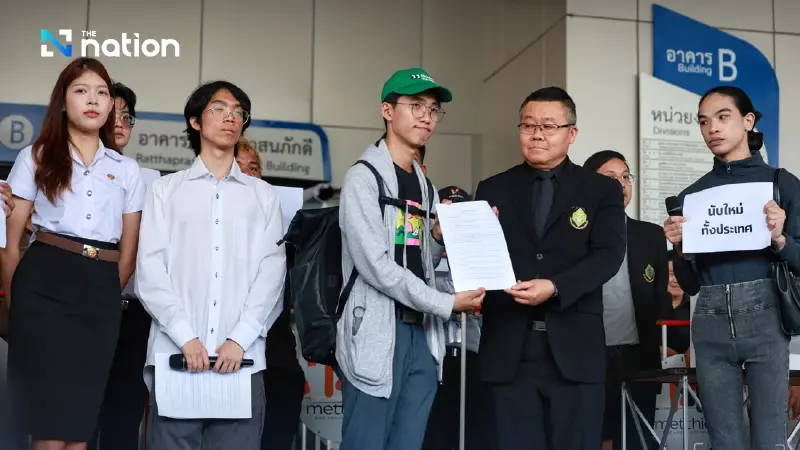


Protesters urge a transparent nationwide recount, investigations into alleged irregularities, and full disclosure of polling-unit results as the EC promises uploads soon.
A small group of people rallied at the Election Commission’s (EC) head office on Wednesday, calling for a nationwide ballot recount amid allegations of irregularities and non-transparent vote tallies.
The group of about 30 people and student activists, led by Thirapop Tengraprawat, said they were dissatisfied voters and insisted the People’s Party—the election’s first runner-up and the most vocal critic of the results—was not behind the protest.
They chanted “Nationwide recount” in unison as they waited for EC representatives to come out and meet them.
“Today we are here to stand in solidarity with members of the public who have been monitoring polling stations where there are suspicious signs in the vote count—whether in Chonburi, Suphan Buri, or Samut Prakan,” Thirapop said.
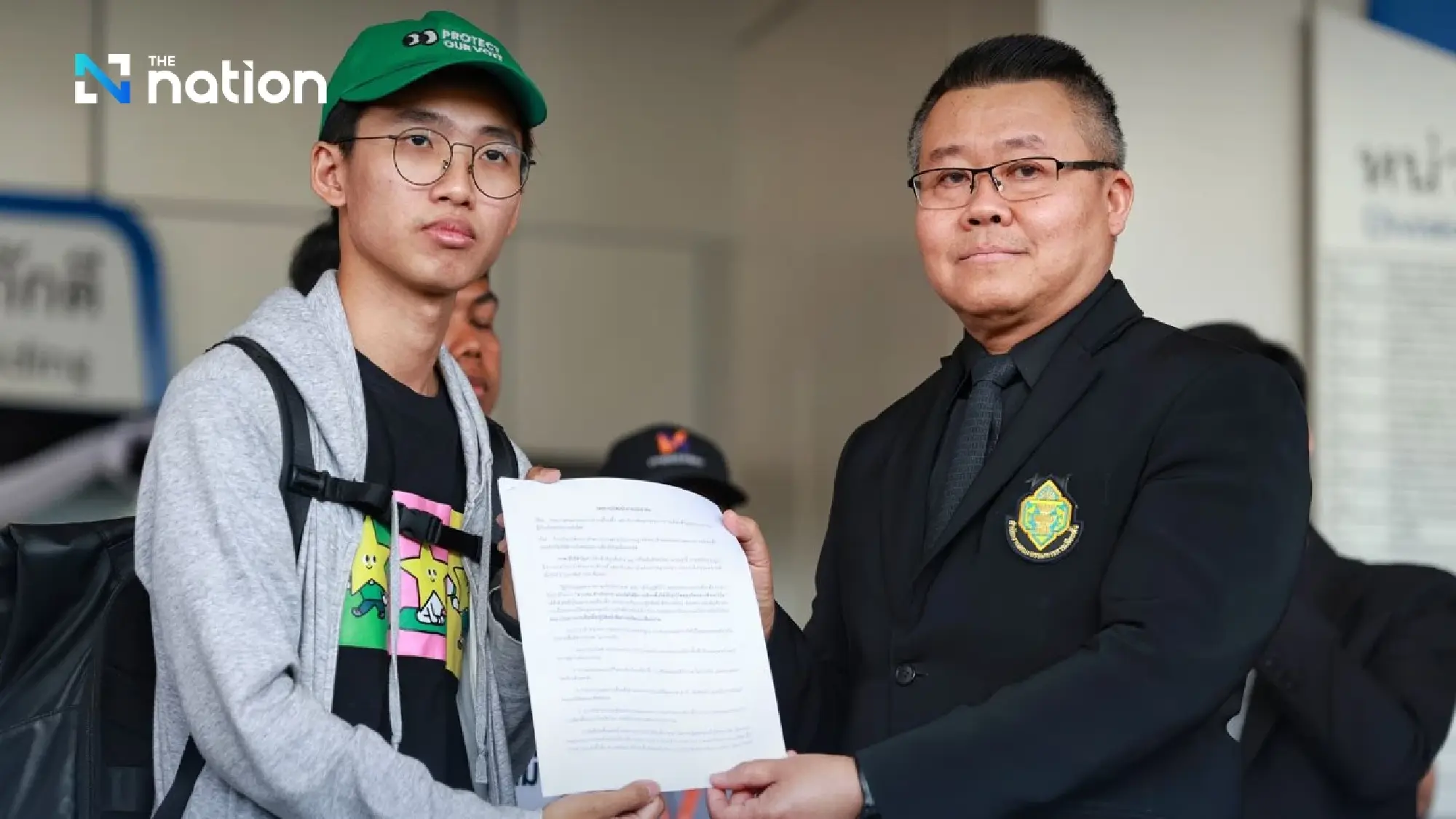

Five demands: recount, probes and possible re-votes
Thirapop said the group’s demands were as follows:
- A nationwide recount must be conducted openly, with public oversight, as irregularities appear widespread and existing verification mechanisms can no longer inspire confidence.
- Disciplinary and criminal investigations should be initiated against officials involved, or those believed to have neglected their duties, enabling electoral fraud to occur.
- Detailed polling-unit results must be disclosed immediately so the public can re-check them.
- If a nationwide recount still finds irregularities in any constituency—such as missing ballots or “ballot inflation” (ballots exceeding the number of voters by more than three)—the EC must declare that election void and hold a new election in that constituency.
- Once issues in points 1–4 have been addressed, all seven EC commissioners must resign to take responsibility for the events.

Thirapop added that his group was also willing to receive complaints about alleged irregularities in the election process and vote counts at polling stations nationwide.
“We are only representatives of the public—people who cannot accept electoral fraud in this election. We can accept defeat, but what has happened is a lack of transparency. If, by the end of today, the EC still takes no action, we will consider escalating the protest. Everything now depends on the EC and how it chooses to show responsibility,” he said.
EC says complaints will be examined under legal procedures
Pol Lt Col Natthawat Sangiamsak, the EC Office deputy secretary-general in charge of receiving complaints, said all doubtful issues and complaints would be examined in accordance with legal procedures.
On the daily reporting of results from around 100,000 polling stations nationwide—including out-of-area and overseas polling stations—he said the process would follow standard steps. In particular, the vote-count results from each polling station would be uploaded to the websites of each provincial EC office and the central EC office so the public could verify their accuracy.
He added that officials were expediting the process and expected it to be completed within the next one to two days.
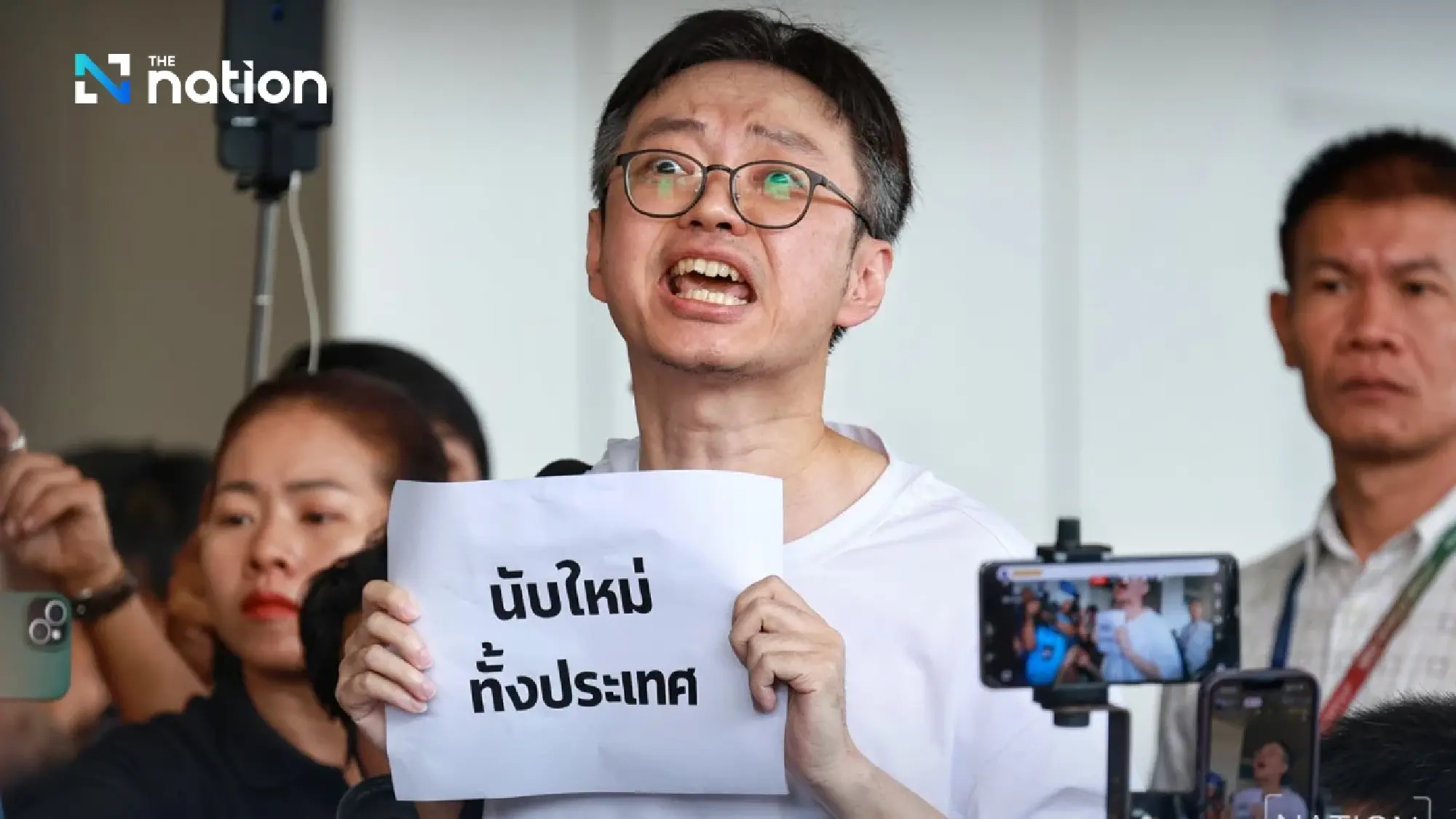

Sombat “Bor Kor Lai Jut” questions EC vote-aggregation process
On the same day at the EC office, Sombat Boonngamanong—better known as “Bor Kor Lai Jut”—also arrived to submit a letter about problems in the management of the 2026 election. Upon arrival, he met Pol Lt Col Natthawat, the EC’s deputy secretary-general. Sombat questioned the vote-counting process and the areas where problems had been reported.
The deputy secretary-general said every question could be answered, but would need to come from the officials responsible for each specific area of work. He added that the EC was currently compiling the facts in every case.
Sombat then asked whether votes from every polling station were consolidated at the EC’s head office. The deputy secretary-general replied that the ECT Report results had already concluded on 8 February and were unofficial figures.
Sombat asked whether the data in the system might not match the figures posted at polling stations. The deputy secretary-general said the figures displayed at polling stations should be treated as the primary reference, and that data had continued to flow into the system up to now.
Sombat also asked why the information had still not appeared online after three days of counting. The deputy secretary-general said the EC could only release unofficial results for the public to view for the time being, adding that all steps were in line with the law and it was not yet possible to report 100% official results.
Sombat later told reporters he had come because the election had entered its third day and the EC still could not announce official results. While the official announcement had yet to come, he said many questions had emerged about whether the election had been honest, transparent and fair.
He said the public had never been informed how the EC’s vote-aggregation system worked. After polling-station officials (PPOs) finished their duties and announced the results, he asked how those results were delivered to the EC, where the “war room” was located, and whether experts from other agencies were brought in to audit the process. He said journalists, relevant agencies or external observers should be allowed to monitor the process, because it was unclear where it was taking place.
Sombat also questioned why the EC’s published figures moved up and down, and why turnout and valid-ballot figures differed. This, he said, raised questions about where data was being keyed in and adjusted, for what reason, and by whom. During the count, he noted, the EC website stalled, and afterwards the information appeared chaotic. He said the EC must disclose how the system works.
“From the explanation that data was flowing in and caused the system to glitch, that suggests the EC’s system is poor,” Sombat said. “So it must be explained whether that is really true as the EC claims. And now this is day three—why can’t the public access polling-station data for every unit?”
He added that the EC had explained each polling station must submit documents to the district office, and that all documents were still at the provincial level and had not yet been processed, meaning provincial data could not be sent to the central office. He said this highlighted delays and raised questions about whether they were reasonable. In his view, election data should not be delayed to this extent, as it was not complicated.
He urged the EC to expedite all procedures, saying the delays reflected a lack of transparency, inefficiency and a lack of accuracy. If the process were accurate and transparent, he said, the public would have been able to see it from day one—yet things had now become chaotic.
“Human error has been happening all along, since 2023. Why is it still happening—and on such a large scale? I want an explanation of what will be done about it,” Sombat said.
