
Abhisit presses EC to release polling-station figures for scrutiny
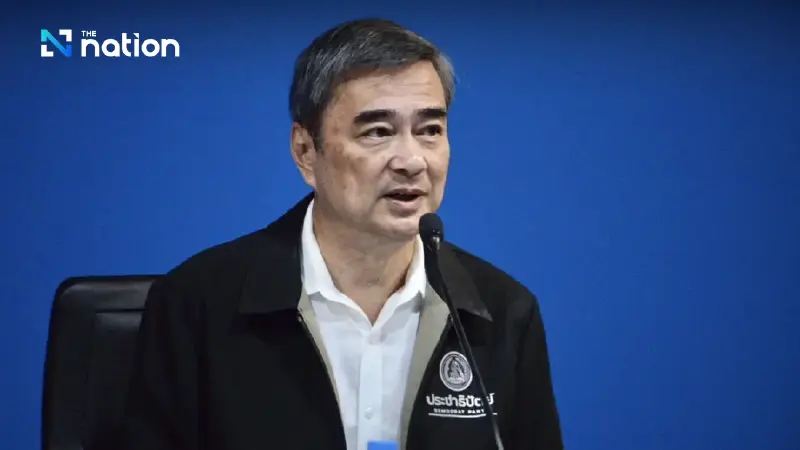


Abhisit Vejjajiva urges the EC to publish detailed election and ballot data within five days, warning delays could fuel recount calls and unrest.
Abhisit Vejjajiva, leader of the Democrat Party, on Wednesday (February 11) urged the Election Commission (EC) to disclose key election information—such as vote totals and discrepancies in ballot numbers reported in multiple areas—to strengthen transparency.
He said that if the data indicates irregularities, the EC should swiftly use its authority to order a recount, or, where necessary, a fresh vote, as problems reported in many areas risk escalating into broader doubts about election management.
“In a democratic process, a clean and fair election is what builds legitimacy and public faith in the system, including in the next government,” Abhisit said. “If doubts are allowed to linger and time is dragged out, more people will lose confidence in the system, which could severely affect the political situation.”
“Discontent arising from irregularities must also be watched carefully to prevent it from spilling over into an undesirable situation that would affect stability and the image of Thai politics.”
Asked about vote-counting issues in Chonburi—where the EC said it needed two days to consider the matter—Abhisit said the EC should expedite its work and not treat the issue as minor, noting similar problems have been reported elsewhere and are eroding trust in the electoral process.
He said that within five days of the election, the EC should present information such as polling-station vote figures so the public can scrutinise them. If abnormalities are found, the EC should be able to order a repeat process or a recount to ensure the election is conducted cleanly and fairly.
On whether the growing push for a nationwide recount could lead to nationwide turmoil or protests, Abhisit said it was still too early to conclude there had been fraud. However, he said images circulating in multiple cases in today’s environment have amplified calls for recounts.
The best course, he said, is for the EC to urgently build transparency by releasing the information already in its possession to reassure the public. The Democrat Party, he added, fears any escalation would be damaging to the political system as a whole.
Asked about comparisons to the 1957 election, which is often cited for alleged fraud, Abhisit said history shows that whenever an election process is questioned and not accepted, unrest is inevitable.
If the EC is confident in its process, he said, it must quickly publish the information; otherwise, delays could deepen mistrust and allow the situation to spread.
“Both at home and abroad, experience shows this is highly sensitive. This is not the time to think the job can be done as usual,” Abhisit said. “The situation has reached the point where it is spreading—from one area to calls and campaigning that it must be handled at a national level.”
Asked whether the party has been compiling complaints from its candidates about election problems, Abhisit said candidates should pursue the process themselves—for example, in cases where ballot counts do not match or where they observe irregularities—while the party has a working team to provide legal and verification support.

Democrat leader says party will not wait for any call on coalition talks
Abhisit also responded to questions about approaches to join a coalition government, saying it was not yet appropriate for any contact.
He said the party has already made its position clear on the conditions for joining—or not joining—a government, as stated during the campaign, and it is adhering to those conditions in full, without needing to wait for any call.
Asked whether “not waiting for a call” means closing the door on joining hands with anyone, Abhisit said it remains subject to the conditions the party has already set—particularly on which parties it would not join.
If it were to join, he said, it would have to be on policy grounds, with no additional conditions beyond what the party has stated.
Asked whether some people fear the Democrat Party and the People’s Party serving together as the opposition, Abhisit said that if the administration is transparent, there is nothing to fear.
On when he expects government formation to take place, Abhisit said he had listened to remarks by the prime minister of the party with the most votes, who suggested the election results should first be clearly certified.
The key, he said, is the EC process: while the law allows 60 days, it should be completed within that timeframe or sooner. The Democrat Party wants the process to move quickly, he added, but it must also be clear.
“The Election Commission has been criticised since the last election for taking action against very few people, even though there was widespread talk in almost every area of violations of election law,” Abhisit said.
“This time, the issue is even more serious than allegations of vote-buying. That is why I want the EC to urgently provide clarity on this matter.”
