
From ‘Spectre C’ to ‘Laser ID’: The Risk of ‘Party Dissolution’ for ‘Orange Party’
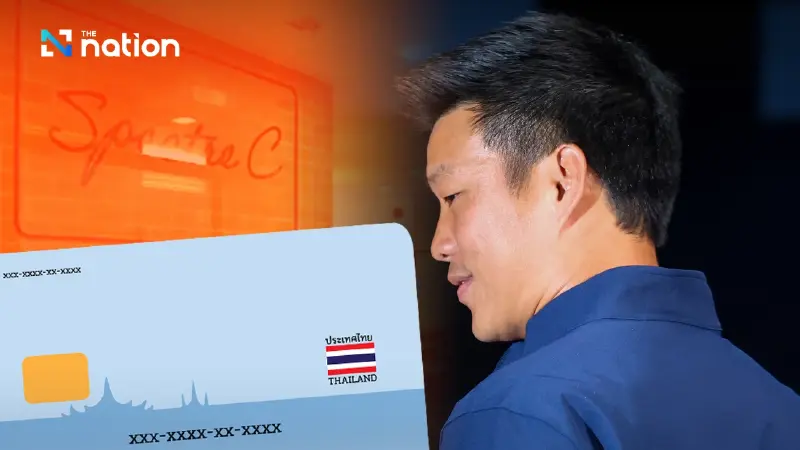


People's Party faces legal risks over Spectre C media hire and Laser ID data collection, raising concerns of potential dissolution after 2026 elections
- The People’s Party faces the risk of being charged with misusing funds after hiring the media company “Specter C,” which has close ties with party executives, using funds granted to the party by the Election Commission (EC).
- The party's registration process, which requires applicants to provide their Laser ID number after their citizen ID number, has raised concerns about potential violations of the Personal Data Protection Act (PDPA) and regulations from the Department of Local Administration, as the party has not received official approval.
- However, on February 18, the People’s Party clarified that requesting Laser ID from applicants is separate from requesting permission to link data with the Department of Local Administration, a process that parties like Future Forward and Move Forward previously received approval for.
- Both the “Specter C” and “Laser ID” cases have become legal issues that could lead to the People’s Party facing the risk of being asked to dissolve the party in the future.
Amid the “dusty” process of forming the “Blue Government” and criticism of the Election Commission (EC), especially over the “election ballots” issue involving QR codes and barcodes, the concerns arise that the 2026 election may not have been conducted transparently and secretly as per Article 85 of the Constitution.
Currently, “plaintiffs, political factions, and the public” have filed petitions with independent organizations to ask the Constitutional Court to rule whether the election should be declared “void.”
The “Orange Party,” in its third iteration as the People’s Party , ranked second in the recent election, securing 118 seats in the House of Representatives, 33 fewer than in 2023. Although it is not part of the government coalition this time, it has been in the media spotlight daily due to facing three events that could push the party back into a “crisis point” again.
1. The Case of 44 Former MPs from Move Forward Party
These former MPs, who signed and submitted proposals to amend Section 112 of the Criminal Code in 2022, are now facing charges, with 10 “future” MPs from the People’s Party at risk of being involved in this case. Most of these MPs are key members of the party, including two of its prime minister candidates, "Teng" Natthaphong Ruengpanyawut., the party leader, and “Mai” Sirikanya Tansakun, the deputy leader for economic affairs. This case has led to the unanimous decision by the Anti-Corruption Commission (ACC) to file charges and prepare to submit a petition to the Supreme Court for consideration by March 9. If the court accepts the case and no order is issued, the 10 “future MPs” from the People’s Party will be automatically suspended from office. Notably, “Natthaphong” will face a legal deadlock because he is also the “leader of the opposition,” and thus must resign to resolve this conflict.
The People’s Party is preparing to hold a special general meeting to restructure its executive board. It is anticipated that Natthaphong will resign after the Supreme Court accepts the case and may push “Fourth-Generation Leaders” to take over. Prominent names include “Itim” Parit Wacharasindhu, the party spokesperson, and “Ton” Veerayooth Kanchoochat, the party’s deputy leader, who is a prime minister candidate ranked third and one of the policy architects from the Future Forward era.
The push to promote “Fourth-Generation Leaders” may not cost the party its seats in Parliament, as they have already prepared for that, but the new leadership’s performance may not be as sharp as the previous leaders, which could affect debates or question sessions in the House.
2. The Spectre C Media Company
The media company, Spectre C, was one of the reasons behind the “Orange Landslide” in 2023, which helped the People’s Party secure 151 seats in the House of Representatives. Under the strategy of “Ting” Sarayut Jailak, one of the “Friends of Eak” members, the company was later pushed to become the secretary-general of the People’s Party when the “Future Forward Party” was dissolved in early 2025.
The issue with Spectre C is not only about allegations from “former insiders” like “Tisana Choonhavan,” the former MP from Bangkok, but also about how the party has established a “corporate communications department” directly controlled by party executives. The party must allocate expenses for this, whether from donations or product sales. However, the People’s Party set up Spectre C after the Future Forward Party was dissolved, with Sarayut being close to “Thanathorn Juangroongruangkit” and holding significant shares and controlling the company. The party also moved personnel from its corporate communications department into Spectre C and holds minor shares in the company, relying on funds from the Election Commission’s political party development fund, which is taxpayer money. This fund has been significant, with the party receiving over 96 million THB in 2026.
Although the issue of “information operations” (IO) still lacks clear evidence, the money used to hire Spectre C must be disclosed in detail to the EC. The fact that the People’s Party hired a media company closely tied to the party raises questions from opponents about whether the funds have been misused.
3. The Laser ID Case
The People’s Party’s registration process, which requires applicants to provide their Laser ID number after their citizen ID number, has raised concerns about potential violations of the Personal Data Protection Act (PDPA). The Political Parties Act does not designate the party as a government agency or financial institution, which are typically permitted to access personal data. Moreover, collecting Laser IDs must comply with laws and regulations from the Department of Local Administration.
The People’s Party issued a statement explaining that collecting Laser ID data is separate from requesting permission to connect data with the Department of Local Administration, which parties like Future Forward and Move Forward have been authorized to do. The Laser ID is needed to verify applicants' identities, prevent fraudulent registrations, and confirm qualifications. This process has been used since the Future Forward era.
However, the issue lies in the fact that the People’s Party has not yet received permission from the Department of Local Administration to collect Laser ID information. Preliminary reports from the Department suggest that the People’s Party has only applied for permission to use smart card-based ID verification to confirm that applicants are not foreign nationals, but there has been no confirmation regarding Laser ID collection.
As a result, the collection of Laser ID data from over 100,000 applicants without official permission could potentially violate the PDPA and the Department of Local Administration’s regulations, risking legal action and possibly leading to a petition for the party's dissolution.
However, as of 5:00 PM on February 18, the People’s Party clarified that the request for Laser ID from applicants is separate from the request for permission to link data with the Department of Local Administration, a process that was previously approved for Future Forward and Move Forward. The party emphasized that it is not collecting Laser ID data and has temporarily removed the input field from its membership registration page until full authorization is obtained.
These are the three key legal issues surrounding the People’s Party, amid ongoing discussions about forming a government and calls for the EC to rerun the election nationwide. The outcome of these issues will determine the party’s future.
