
Roadmap for new Thai government takes shape


Thailand’s post-election roadmap points to a mid-March parliament opening, a PM vote by early April, and a policy statement in May
- The first parliamentary session is expected to be convened by mid-March in order to elect the Speaker of the House of Representatives.
- A parliamentary vote to choose the next prime minister is expected between late March and early April.
- The formation of the new cabinet is expected to be completed, with ministers’ qualifications submitted for vetting, within April.
- The new government is expected to deliver its policy statement to parliament and begin fully administering the country in May.
The process of forming a new government has begun to move forward in concrete terms after the Election Commission certified the results of the House of Representatives election for more than 95% of all seats, a key constitutional condition for convening parliament and moving to the next stage of electing the Speaker of the House and voting for a new prime minister.
The situation has made the timeline for the formation of an “Anutin 2” government clearer, with expectations that a new cabinet could be formed within April 2026, before delivering its policy statement to parliament in May and beginning to fully administer the country.

EC certifies 100 party-list MPs
Most recently, on March 4, 2026, the Election Commission approved the election results for 100 party-list MPs. It had previously certified 396 constituency MPs, and later endorsed three more.
The additional constituency MPs certified were Surapol Viratyosin of the Bhumjaithai Party for Chanthaburi Constituency 1, Khamphi Chuenban of the Bhumjaithai Party for Chanthaburi Constituency 2, and Akkara Promphao of the Kla Tham Party for Phayao Constituency 1.
However, one constituency seat remains uncertified: Suphan Buri Constituency 2, won by Nattawut Prasertsuwan of the Bhumjaithai Party. The result is still under review after the Election Commission ordered an investigation into polling station officials.

Formula for party-list MPs
Acting Sub Lt Phasakorn Siriphakyaporn, deputy secretary-general of the Election Commission and spokesman for the EC Office, said the calculation of party-list MPs was carried out under Section 128 of the election law by combining all party-list votes and dividing the total by the 100 available party-list seats.
Based on the nationwide total of around 35 million party-list votes, the average came to about 350,305 votes per party-list MP.
Under this formula, the allocation of party-list MPs was as follows: 32 for the People’s Party, 19 for Bhumjaithai, 16 for Pheu Thai, 11 for the Democrat Party, 3 for the Economy Party, and 1-2 each for 16 other parties.
When combined with constituency MPs, Bhumjaithai remains clearly the largest bloc in the House.
Bhumjaithai leads with 192 seats
When all constituency and party-list MPs are combined, the structure of the House of Representatives is as follows:
Bhumjaithai Party: 192 seats (including Suphan Buri Constituency 2 of Nattawut Prasertsuwan), People’s Party: 120 seats, Pheu Thai Party: 74 seats, Kla Tham Party: 58 seats, Democrat Party: 21 seats, United Thai Nation Party: 6 seats, Palang Pracharath Party: 5 seats, and smaller parties with the remainder.
These figures show that the Bhumjaithai Party remains firmly in the leading position to form the next government and holds considerable bargaining power in shaping the political direction of the country. Reuters and AP also reported after the February election that Bhumjaithai emerged as the leading party, with Anutin Charnvirakul at the centre of coalition talks.
Parliament set to open in mid-March
Under the constitution, once the Election Commission has certified more than 95% of MPs, 475 out of 500, the first parliamentary session must be convened within 15 days.
Counting from March 4, parliament is expected to be opened by no later than March 19.
Sirote Patpan, secretary-general of the House of Representatives, said parliament is ready to receive members reporting in. It is not necessary for 95% of MPs to have formally reported before the opening session can be held, as long as there are enough members present for the constitutional procedures and opening ceremony.
It is expected that more than 300 MPs will have reported in during early March, which would be sufficient for the required process.
Attention turns to Speaker vote
After the opening of parliament, the first step will be the election of the Speaker of the House of Representatives and deputy speakers.
Under parliamentary rules, the oldest MP serves as temporary chair. In this term, that is Phairoj Lohsuntorn, a party-list MP for Pheu Thai, aged 89, and a 10-time MP.
The Speaker’s post is considered one of the most important political positions because it carries responsibility for controlling House proceedings and setting the agenda for legislation and motions.
As for the allocation of House posts, the expectation is that the Speaker will come from Bhumjaithai, the first deputy speaker will also be from Bhumjaithai, and the second deputy speaker will come from Pheu Thai.
The name most closely watched for the Speakership is Sophon Saram, a seven-time MP for Buri Ram, a former transport minister, and currently a deputy prime minister. He is regarded as being close to Newin Chidchob, a key figure behind the formation of the government.
Timeline for the new government
Based on the full process, the political timetable is expected to unfold as follows:
- Mid-March: First parliamentary session and election of the House Speaker.
- Late March to early April: Parliamentary meeting to vote for a new prime minister.
- April: Formation of the new cabinet and submission of ministers’ names for qualification checks.
- May: Government policy statement to parliament and the start of full administration.
Anutin says all problems must be addressed quickly
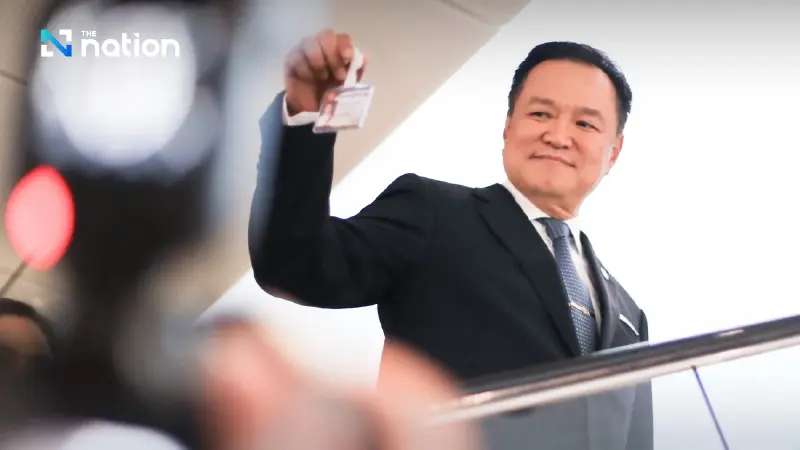
Meanwhile, on March 5 at the Election Commission Office, Prime Minister and Bhumjaithai Party leader Anutin Charnvirakul led the party’s list MPs to receive their certificates of election.
Anutin said the government’s tasks at this stage are all important, especially the unrest in the Middle East, which could affect Thailand.
The government must therefore prepare measures to minimise the impact on Thai people as much as possible.
As for progress on the allocation of ministerial posts, Anutin said everything must proceed according to process and that clarity should be awaited at the appropriate time.
Politics enters government-formation mode
Thailand’s political landscape after the election is now moving into a crucial transitional phase. The formation of a new government under Bhumjaithai’s leadership will shape the country’s direction on the economy, investment and major policies over the next four years.
At the same time, the role of the House of Representatives, especially the Speaker, will be another key mechanism in maintaining government stability and managing relations between the government and the opposition.
All of this will help determine how far an “Anutin 2” administration can drive the country forward amid economic challenges and global geopolitical uncertainty.
