
Supa disputes NACC case, says tax pursuit shifted to Thaksin
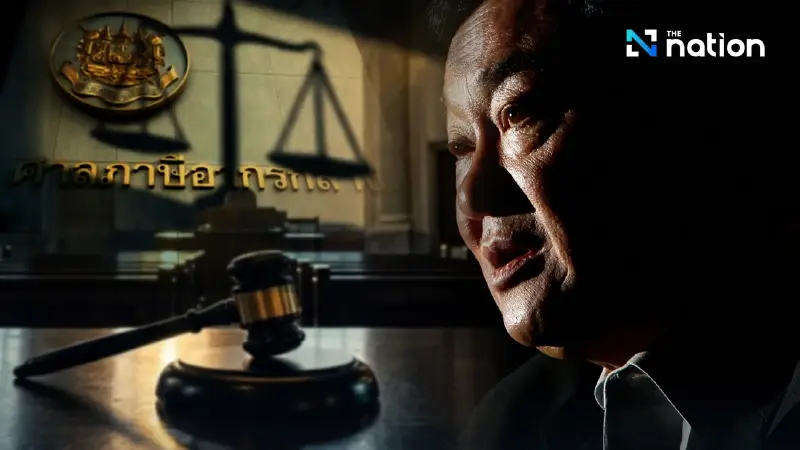


Former finance official Supa Piyajitti says the decision not to appeal the Shin Corp tax case did not cost the state revenue, but redirected the claim to the alleged true owner.
Former deputy permanent secretary for finance Supa Piyajitti has pushed back against the National Anti-Corruption Commission’s finding against her in the Shin Corp share tax case, arguing that the state’s tax claim was not abandoned but redirected towards the person whom the courts had identified as the true owner of the shares.
The case returned to the political spotlight after reports on May 1 said the NACC had voted 4-3 to find grounds against Supa and related officials over the failure to appeal a Central Tax Court ruling in the tax assessment case involving Panthongtae and Pinthongta Shinawatra.
Reports said the vote was taken at an NACC meeting on April 28, while the decision was reported on May 1.
NACC finding puts old Shin Corp tax row back in focus
The NACC alleges that the failure to appeal the Central Tax Court’s ruling caused the state to lose the opportunity to collect around 17.9 billion baht in tax revenue from the Shin Corp share transaction. The commission has accused Supa, who was then a senior Finance Ministry official, and other officials of failing to protect the state’s interests in a high-value tax case.
Supa, however, said in a written clarification that the 2011 decision not to appeal did not amount to waiving the state’s tax claim. She argued that the decision was based on the court rulings and the opinions of agencies involved in the case, including public prosecutors, the Revenue Department and the Comptroller General’s Department.
At the heart of her defence is the argument that officials stopped pursuing Panthongtae and Pinthongta only after the courts had ruled that they were not the true beneficial owners of the shares. Instead, she said, the Finance Ministry instructed the Revenue Department to continue tax assessment against the person deemed to be the real owner.
Supa says tax pursuit shifted to true owner
The legal basis for that position, according to Supa’s explanation, was the Supreme Court’s Criminal Division for Holders of Political Positions ruling in the 46-billion-baht asset seizure case, which found that the Shin Corp shares held by family members had in reality belonged to former prime minister Thaksin Shinawatra and Khunying Potjaman.

Once that finding had been made, the Central Tax Court revoked the Revenue Department’s tax assessment against Panthongtae and Pinthongta on the grounds that they were not the true beneficiaries of the shares. Supa’s side argues that, in those circumstances, pursuing the two children further would not have matched the court’s finding on beneficial ownership.
Her clarification said the public prosecutor handling the case advised against an appeal because the Supreme Court had already ruled on the issue of the shares’ true ownership. The Revenue Department agreed with that view before forwarding the matter to the Comptroller General’s Department, which also supported the decision not to appeal.
Finance Ministry ordered further checks
Supa said the Finance Ministry did not simply accept the matter without review. It ordered further checks on two issues: whether the state had previously appealed in cases involving nominee shareholding, and whether the shares held by Panthongtae and Pinthongta were part of the same shares covered by the Supreme Court’s asset seizure ruling.
According to her statement, the Revenue Department later confirmed that the shares were the same batch referred to in the Supreme Court judgement. The department then informed prosecutors in April 2011 that it would not appeal the case.
The Finance Ministry later acknowledged the outcome of the review and instructed the Revenue Department to proceed under the law with tax assessment against the person deemed to be the true beneficial owner. Supa said more than one year still remained within the tax collection period at that time.
Core defence challenges NACC’s damage claim
Supa’s strongest argument is therefore one of causation: the failure to appeal against Panthongtae and Pinthongta did not cause the state to lose its tax claim because the ministry had ordered officials to pursue tax collection from the alleged true owner instead.
That position has gained political weight because the Revenue Department later used the same approach in assessing tax against Thaksin. In November 2025, the Supreme Court ordered Thaksin to pay 17.6 billion baht in taxes linked to the 2006 Shin Corp share sale.
The NACC majority, however, has taken a different view. It argues that officials should have appealed the Central Tax Court ruling first to preserve the state’s legal position, especially because the case involved a large tax claim. The commission also cited Finance Ministry rules for civil cases involving claims worth more than 10 million baht.
Shin Corp case remains politically charged
The Shin Corp share sale has remained one of Thailand’s most politically sensitive tax disputes. In 2006, Thaksin’s family sold shares in Shin Corp, the telecoms group he founded, to Singapore’s Temasek, a transaction that triggered allegations of tax avoidance and conflict of interest and helped fuel political protests before the military coup later that year.
Supa maintains that the 2011 decision was made according to the facts and law available at the time. She said the ministry’s instruction to continue tax action against the true owner showed that officials did not neglect the state’s interests.
The dispute now turns on whether the non-appeal was a lawful legal judgement based on court findings, as Supa argues, or a failure to follow mandatory procedures to protect state revenue, as alleged by the NACC.
