
People’s Party warns ฿400bn loan decree must not become blank cheque



People’s Party shadow Cabinet warns Anutin government’s now-approved 400-billion-baht borrowing decree must not be used for blanket handouts, while also raising concerns over the Land Bridge scheme.
The People’s Party’s shadow Cabinet has warned the government against using its 400-billion-baht borrowing decree as a short-term popularity rescue package, urging targeted relief for transport and fisheries operators instead of blanket spending through the Khon La Khrueng co-payment scheme.
The warning came after the Cabinet of Prime Minister Anutin Charnvirakul on Tuesday (May 5) approved an emergency decree authorising the Finance Ministry to borrow up to 400 billion baht to cushion the impact of the energy crisis and support Thailand’s energy transition.
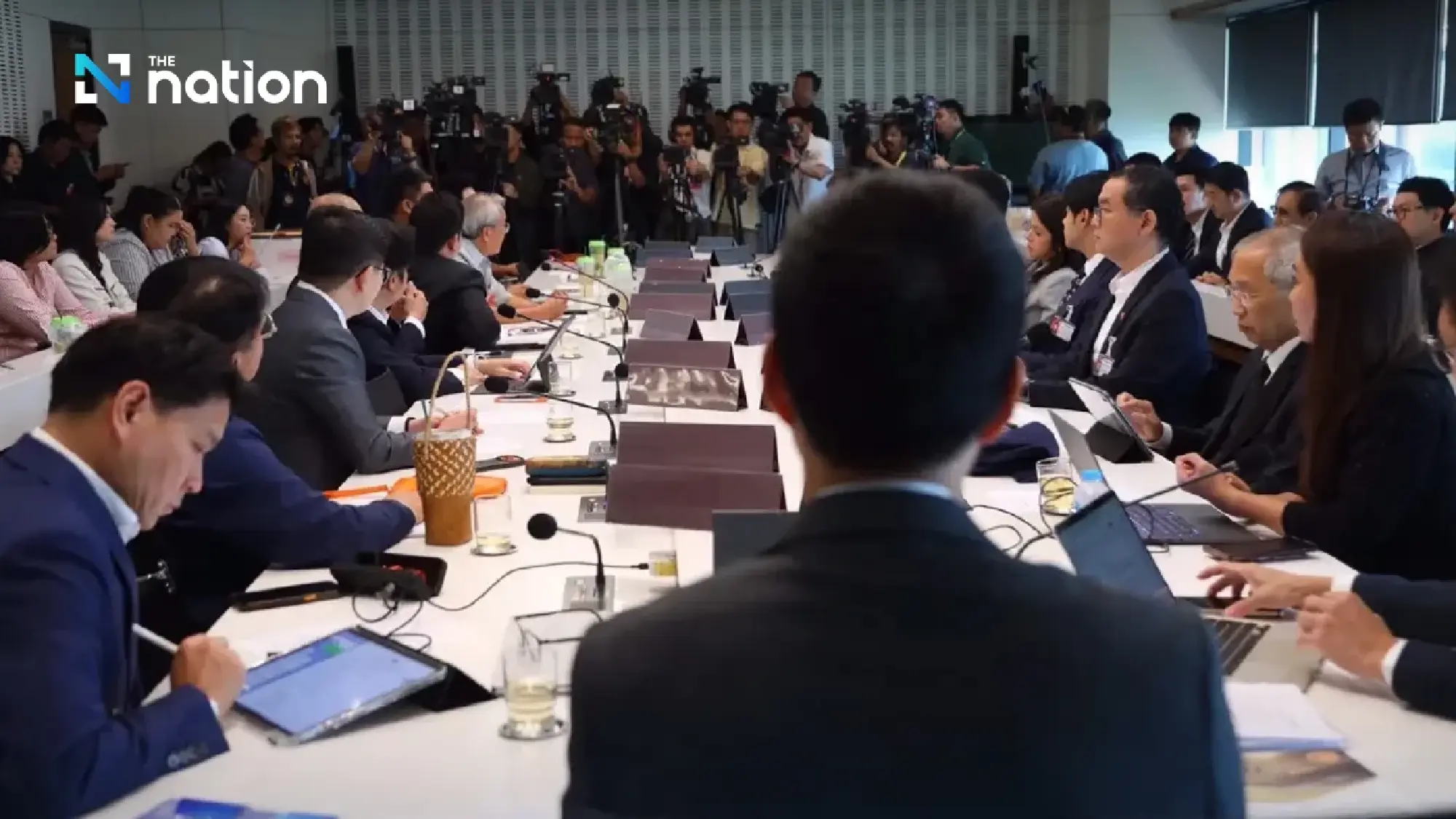
The People’s Party, led by party leader Natthaphong Ruengpanyawut, held the first meeting of its shadow Cabinet on Wednesday (May 6), saying the mechanism would work on an agenda-based basis to strengthen scrutiny of the government and offer policy alternatives for society to consider.

Relief must target those hit hardest by fuel costs
The shadow Cabinet called on the government to compensate the transport and fisheries sectors, saying both were bearing some of the highest energy costs but had been left behind by previous relief measures.
It said the energy crisis had affected different sectors to varying degrees, depending on their cost structures. The government, it said, should manage the country based on empirical data to ensure relief budgets were allocated as effectively as possible.
The party said fisheries operators and transport businesses must not be overlooked because they sit upstream in the economic system and have knock-on effects on consumer goods prices.
Representatives from both sectors attended the meeting to explain their hardships and discuss assistance measures that would be more targeted and appropriate.
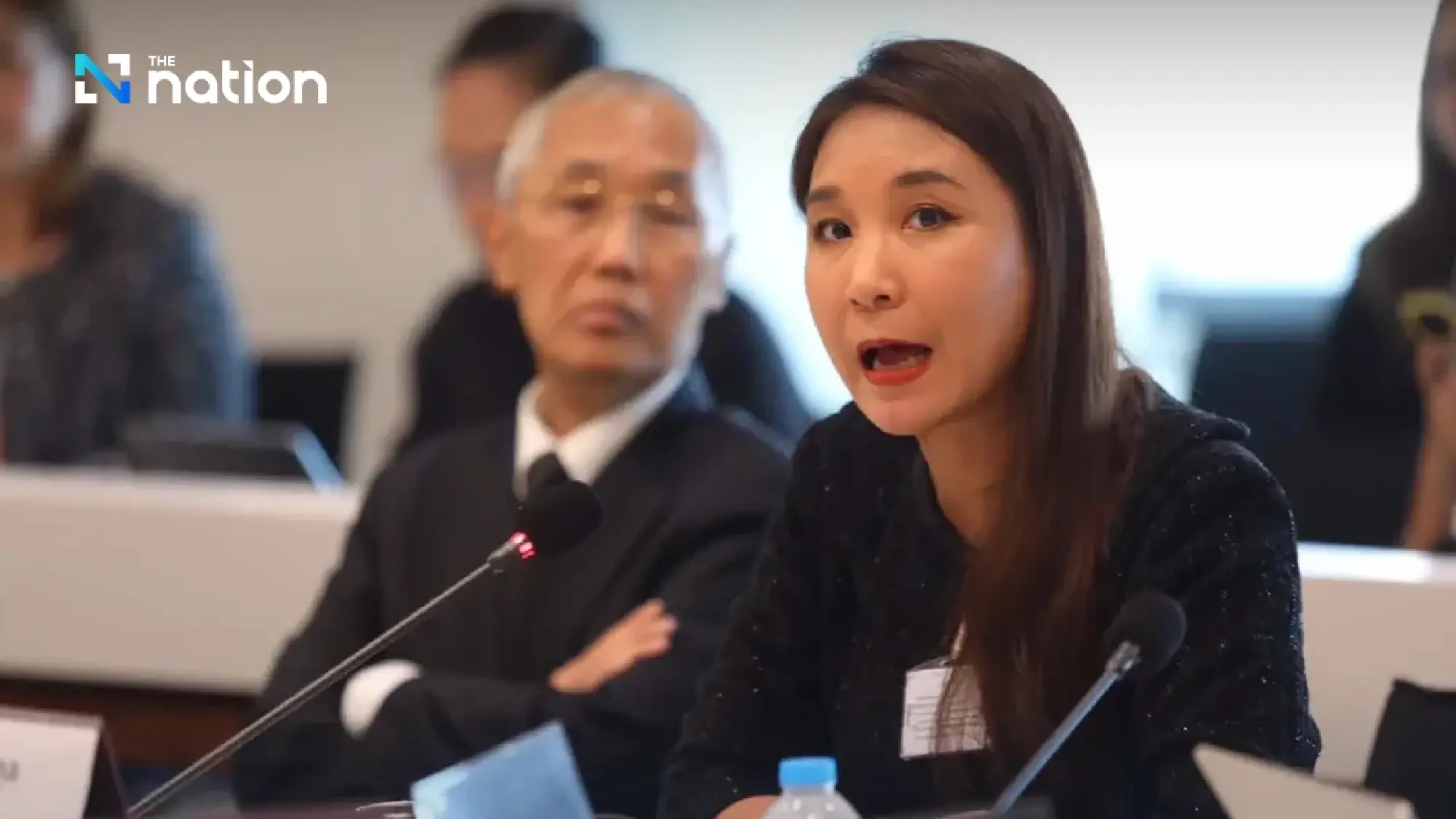

Sirikanya warns against ‘blank cheque’ borrowing
Sirikanya Tansakul, deputy leader of the People’s Party and head of the shadow Cabinet’s state reform team, said previous relief measures remained incomplete, uneven and inadequate.
She said the measures had not been properly targeted at groups that should receive help. Transport operators, she said, had been heavily affected but had received too little support, while fisheries operators, especially small-scale fishers, had still received no compensation.
Sirikanya said the government planned to spend 200 billion baht on relief in a single round within four months, with most of the money channelled into the Khon La Khrueng scheme.
She described this as blanket compensation, warning that those genuinely suffering might not receive help, while some recipients might not actually be in hardship.
Fears over another round of borrowing
Sirikanya questioned what the government would do if the war did not end and energy prices remained high.
Would the government need to borrow again, she asked, adding that Thailand’s current fiscal position could be seen as its last round of borrowing, with little room left for another loan.
She said this raised the question of whether the government was using the loan to compensate the public, or to rescue its falling popularity.
The government has said the decree is intended to alleviate cost-of-living pressure, support energy costs and help accelerate the country’s energy transition. The Cabinet-approved plan is divided into two broad parts: 200 billion baht for relief measures and 200 billion baht for longer-term energy and economic restructuring.
Long-term energy plan should face House scrutiny, party says
Sirikanya said she did not object to emergency borrowing of 200 billion baht under the first work plan to compensate those affected, as this was necessary to ease public hardship.
However, she said the second 200-billion-baht portion, intended for long-term economic restructuring, should not be included in an emergency decree.
That portion covers support for more efficient energy use, preparation for reducing reliance on fossil fuels, and a transition towards renewable and alternative energy technologies.
Sirikanya said these goals were important but not urgent enough to justify emergency legislation. She proposed that the government instead prepare a clear budget plan with detailed project proposals and submit them as a bill for parliamentary scrutiny, a process she said should take around three months.
“Therefore, the shadow Cabinet proposes that the government improve the design of its relief measures to make them more targeted and avoid blanket budget spending. There must be no smuggling in of long-term projects, and the government must clearly disclose its debt repayment plan to the public,” Sirikanya said.
Land Bridge scheme could repeat EEC mistakes
The shadow Cabinet also warned that the government’s Land Bridge scheme risked repeating the mistakes of the Eastern Economic Corridor and could place Thailand under the shadow of major powers.
It said that if the government decided to push ahead with the Land Bridge project on geopolitical grounds, despite questions over its financial worthiness, Thailand would need to be especially cautious.
The party warned that the country must not throw away a “key card” or place its economic and environmental future in the hands of any single major power.
“The People’s Party affirms that the shadow Cabinet mechanism will operate in parallel with the work of the government to show that national administration based on the people’s interests can improve the quality of life of Thai people every week,” the party said.
