
Heat warning — Bangkok faces ASEAN’s hottest future
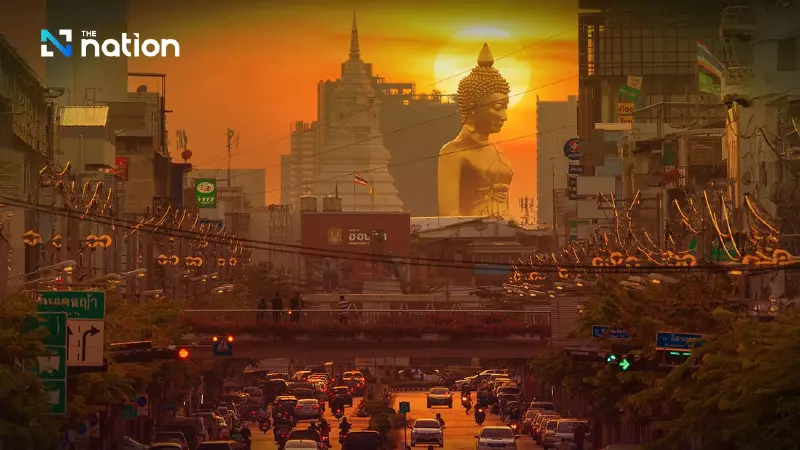


Bangkok could become ASEAN’s hottest major city by 2050, with extreme heat days nearly tripling and temperatures reaching 38.1C
Bangkok is set to become the hottest major city in Southeast Asia by 2050, with temperatures projected to rise above 38C as climate change and the urban heat island effect intensify across the region.
The warning comes from the report “Roadmap for Extreme Heat Protection through Passive Cooling in ASEAN Region” by the ASEAN Centre for Energy (ACE), which says Thailand’s capital faces a far more severe heat crisis in the decades ahead.
In 2025, Bangkok has around 45 “extreme heat days” a year, defined as days when temperatures exceed 35C. By 2050, that number is expected to rise to 120 days a year, meaning residents could face almost three times more days of accumulated extreme heat within just a few decades.
The report also projects that Bangkok’s average daily maximum temperature will climb to 38.1C by mid-century, up nearly 5C from 33.3C in 2000.
Compared with other major ASEAN cities, Bangkok is forecast to record the highest temperature in 2050, followed by Ho Chi Minh City in Vietnam at 37.7C, Manila in the Philippines at 37.2C, Kuala Lumpur in Malaysia at 36.9C, Jakarta in Indonesia and Singapore at 36.1C.
Such conditions could push the city’s infrastructure, public health system and economy towards unprecedented limits.
The report identifies climate change and rapid urbanisation as the two main forces driving ASEAN’s worsening heat crisis. In Bangkok, the urban heat island effect is a major factor, as concrete and asphalt absorb heat during the day and release it at night.
Data from the Asian Disaster Preparedness Centre (ADPC) shows that dense central areas of Bangkok can be up to 3C hotter than greener outer areas. Rising heat directly threatens public health by increasing the risk of heatstroke, chronic fatigue and sleep problems that damage quality of life.
Economically, severe heat could hit labour productivity, especially among more than 1.3 million outdoor workers in Bangkok. The report says that without proper adaptation, economic losses from heat and humidity could reach 6% of the city’s gross product by 2050.
Households are also facing higher electricity costs. Some 90% of survey respondents said their energy bills rose by 10-50% during heatwaves. Low-income residents in congested communities are among the most affected, as many live in poorly ventilated buildings.
As heat intensifies, air conditioning is becoming more essential, widening inequality in access to cooling. At the same time, heavy use of air conditioners releases more heat outdoors, creating a cycle that further worsens urban heat.
Irma Ramadan, a senior officer at the ASEAN Centre for Energy, said urbanisation was pushing heat towards almost unbearable levels, while current policies were failing to keep pace with the changing climate.
Pornphrom Vikitsreth, adviser to the Bangkok governor on environment and the city’s chief sustainability officer, agreed that expanding green space was a low-cost, high-impact measure that must be taken urgently.
“In the long term, we need to significantly increase green space. This is a relatively low-cost measure but offers major benefits. At the same time, preserving existing green areas and preventing them from being replaced by concrete structures is also essential,” Pornphrom told CNA.
Dr Peeranan Towashiraporn, director of geographical information at ADPC, said Bangkok was right to treat heat as a disaster, rather than merely a seasonal condition. He said the city needed cooling shelters across all areas, along with public alerts during periods of extreme heat.
The report says the most sustainable solution is to integrate passive cooling into building design and urban planning. Measures include natural ventilation, tree shade and heat-reflective roof colours.
Building upgrades and high-performance glass could cut cooling energy demand by 35-70%. The government also needs to revise building regulations to require passive cooling features in new developments.
The report adds that public awareness and training for experts in tropical building design will be crucial for long-term change, alongside public-private cooperation, funding support and tax incentives to encourage the real-world use of cooling technologies.
