
Private sector calls for corruption crackdown to lift Thai standards
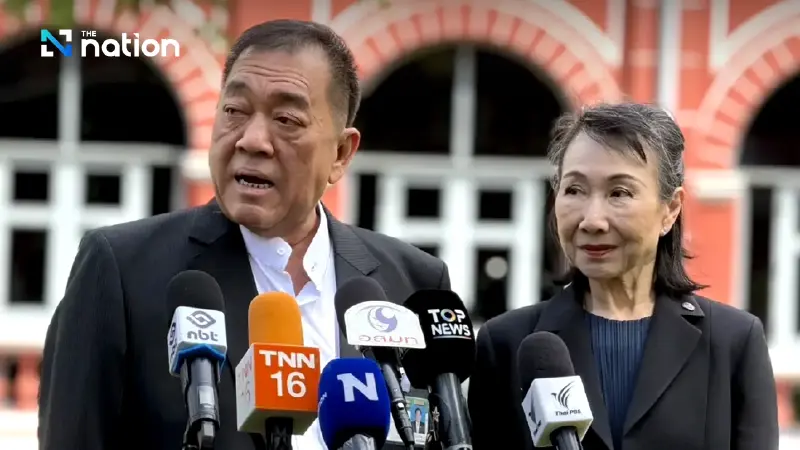


Thai private sector leaders urge the Cabinet to crack down on bribery and corruption, improve transparency and support vulnerable groups.
Private sector leaders have urged the Cabinet to make bribery and anti-corruption efforts a national priority, warning that Thailand must raise transparency standards if it wants to strengthen economic confidence and move closer to international benchmarks.
Poj Aramwattananont, chairman of the Thai Chamber of Commerce and the Board of Trade of Thailand, and Pimjai Leeissaranukul, chairwoman of the Federation of Thai Industries, joined talks with the “Zero Corruption: JSCCIB and Friends Won’t Tolerate It” working group on Friday (May 15).
Prime Minister Anutin Charnvirakul assigned Deputy Prime Minister Pakorn Nilprapunt to receive the private sector’s proposals.
Poj said the Thai Chamber of Commerce and the “Friends Won’t Tolerate It” group had sought a meeting with the Prime Minister to discuss the next steps in tackling corruption, which he described as a major issue drawing serious attention worldwide.
He said the private sector wanted to see serious action that delivers tangible results, particularly as Thailand seeks to become a member of the Organisation for Economic Co-operation and Development (OECD).
“If we cannot join, the Thai economy will face great difficulty,” Poj said, adding that Thailand’s transparency rating remains low and must be improved urgently.

Pimjai said that, amid the current crisis, Thailand must accelerate efforts to boost national competitiveness while strengthening transparency. She also urged the government to prioritise assistance for vulnerable groups.
Poj added that urgent proposals from CEOs would be presented to the government later in the day at the “Entrepreneurs Speak, Government Listens” forum.
He said the government should act as a facilitator and policy-setter, while the private sector should drive the economy because businesses understand real problems on the ground best.

Looking back to discussions held in May 2025, Poj said the private sector had already made clear that “the country cannot carry on like this”, as businesses had received repeated complaints over several problems, especially the dangers posed by corruption.
Although Parliament was dissolved in December 2025, he noted that the Thai Chamber of Commerce, together with the Thailand Development Research Institute and the University of the Thai Chamber of Commerce, had continued conducting surveys on vote-buying and bribery.
The findings were based on factual survey data and had been presented to political parties before the election, he added.
Now that the Cabinet has been formed, Poj confirmed that the private sector is ready to continue pushing its proposals, especially on the investigation into alleged bribery, which was raised at a press conference on Thursday (May 14).
Earlier, a survey by the Joint Standing Committee on Commerce, Industry and Banking (JSCCIB) found that 89.1% of Thai businesses view corruption as a major obstacle, warning that graft remains a structural crisis weakening the country’s business environment and competitiveness.
The survey, conducted among 401 business executives and representatives nationwide between March 26 and April 10, 2026, also disclosed agency-level data for the first time, pointing to high alleged bribery risks in dealings with some state agencies.
