
Severe Climate warning — ‘Super El Niño’ risk puts world on alert
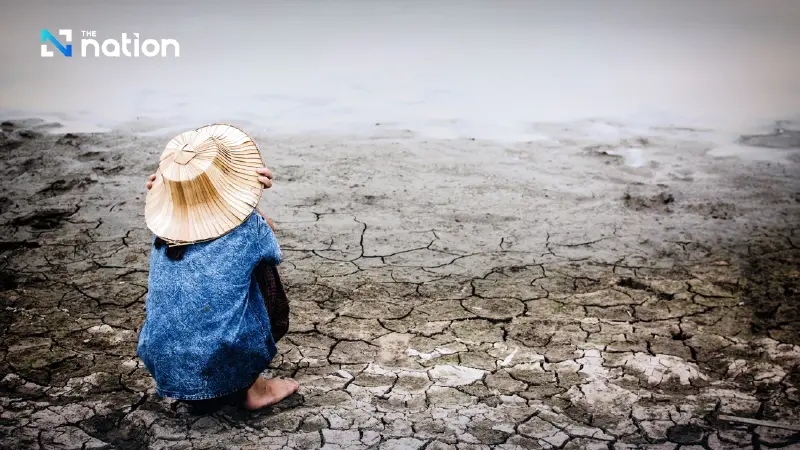


NOAA’s Climate Prediction Center warns El Niño could strengthen later this year, raising risks of heatwaves, drought and floods
The world is being urged to prepare for the possibility of a powerful El Niño event later this year, with the US National Oceanic and Atmospheric Administration’s Climate Prediction Center (CPC - NOAA) warning that conditions in the Pacific are developing faster than scientists had initially expected.
The latest assessment has raised the likelihood that the event could intensify into what is widely described as a “Super El Niño” during the autumn or winter this year. According to the report, there is now a two-in-three chance that the event could reach either strong or very strong intensity.
The warning has prompted concern over major global impacts, including drought, heatwaves, flash floods and pressure on water supplies.

What is El Niño and how does it affect the world?
El Niño is a natural climate cycle that begins when waters in the tropical Pacific Ocean become warmer than usual, altering wind patterns in the atmosphere.
Few regions of the world can avoid its effects. Some areas face drought and severe heatwaves, which can fuel wildfires and water shortages. Others may see heavier rainfall and sudden flooding.
El Niño can also suppress storm formation during the Atlantic hurricane season. Most importantly, it acts as an extra driver of global temperatures, which are already elevated by human-induced climate change.
The stronger the event becomes, the earlier and more severe these impacts are likely to be.
Earlier climate coverage has also cautioned that the term “Super El Niño” is commonly used in media reports, but is not an official scientific category. Official agencies have not yet confirmed that this year’s event will reach that level, although they have warned that the chance of El Niño developing from mid-2026 is increasing and that its eventual strength remains uncertain.
Scientists see rising chance of a powerful event
El Niño usually occurs every two to seven years and typically lasts around nine to 12 months.
Scientists assess its intensity by measuring sea surface temperatures in the equatorial Pacific against the long-term average. The phenomenon usually reaches its strongest phase during the Northern Hemisphere winter.
If sea temperatures remain 0.5 degrees Celsius above average, the event is classified as weak. If temperatures rise more than 2 degrees Celsius above average, scientists classify the event as very strong, a level often referred to as “Super El Niño”.
The CPC’s monthly report said average sea surface temperatures are now only slightly below the 0.5C threshold and are expected to move above that mark next month. The signal is being closely watched because last month’s outlook still expected neutral conditions, meaning neither El Niño nor La Niña, to continue until June.

If temperatures rise past the threshold, the phenomenon is expected to strengthen steadily through summer and into autumn.
Scientists also estimate a 96% chance that the event will continue affecting conditions into winter.
However, while experts are increasingly confident that El Niño will develop, the CPC has stressed that its peak intensity still cannot be predicted with certainty. The latest assessment says the chance of El Niño reaching its strongest phase between November and January has risen from one in four last month to one in three.
Could El Niño break historical records?
Several highly trusted computer models are pointing in the same direction, suggesting that this event could become one of the strongest ever recorded.
If the forecasts prove correct, it would be the first “Super El Niño” in nearly a decade, following the 2015-2016 event.
NOAA data show that since records began in 1950, the world has experienced only a few very strong El Niño events, including those in 1972-1973, 1982-1983 and 1997-1998.
One impact that is difficult to avoid is extreme heat. El Niño acts like an accelerator that could help make either 2026 or 2027 the hottest year ever recorded.
NOAA also said on Monday that this year is highly likely to rank among the five hottest years on record and that estimate does not yet include the full effect of the latest warming cycle.
For Southeast Asia, earlier assessments have warned that a stronger El Niño could bring hotter weather, lower rainfall, greater pressure on water resources and higher wildfire risk. Thailand has already been warned to prepare for drought-related impacts, especially in areas where water demand is rising.
Global weather risks under El Niño
Whether the event remains at a normal level or strengthens to its upper range, several regions are being urged to monitor extreme weather risks closely through early next year.
Tropical cyclone volatility
El Niño often creates conditions that are less favourable for storm formation in the Caribbean and the tropical Atlantic, reducing the number of tropical storms and hurricanes.
At the same time, it can strengthen storm activity in the central and eastern Pacific, posing a direct threat to Hawaii and the south-western United States.
An unusual US winter
Northern parts of the United States, along with western Canada and Alaska, are likely to see a warmer-than-average winter.
By contrast, the southern United States may experience cooler and wetter conditions, as a stronger jet stream carries storms repeatedly into the region.
Extreme swings between drought and heavy rain
During summer, monsoon rainfall in India and Southeast Asia is expected to decline, while the Caribbean may face worsening drought.
Parts of South Asia and East Asia could also experience warmer and drier winter weather.
In south-eastern Africa, widespread drought may develop during the Southern Hemisphere summer from December to February.
Thailand has already begun preparing for El Niño-related risks, with authorities moving to strengthen drought-response measures, improve water storage, manage water releases, adjust crop plans and promote 3R water-use measures: reduce, reuse and recycle, to improve efficiency. The country has also deployed rainmaking units nationwide to help boost reservoir levels, protect crops and ease drought risks as hotter and drier conditions are expected through much of 2026.

