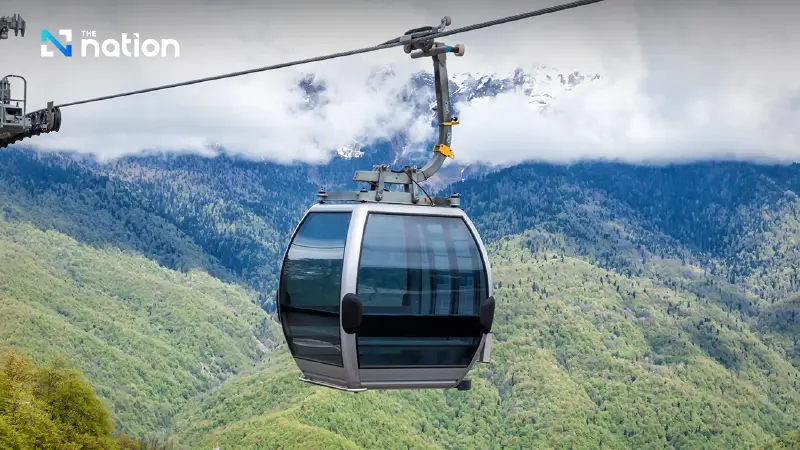
Phu Kradueng cable car targets first pillar in Dec 2026 as EIA advances
SATURDAY, JANUARY 17, 2026
Play
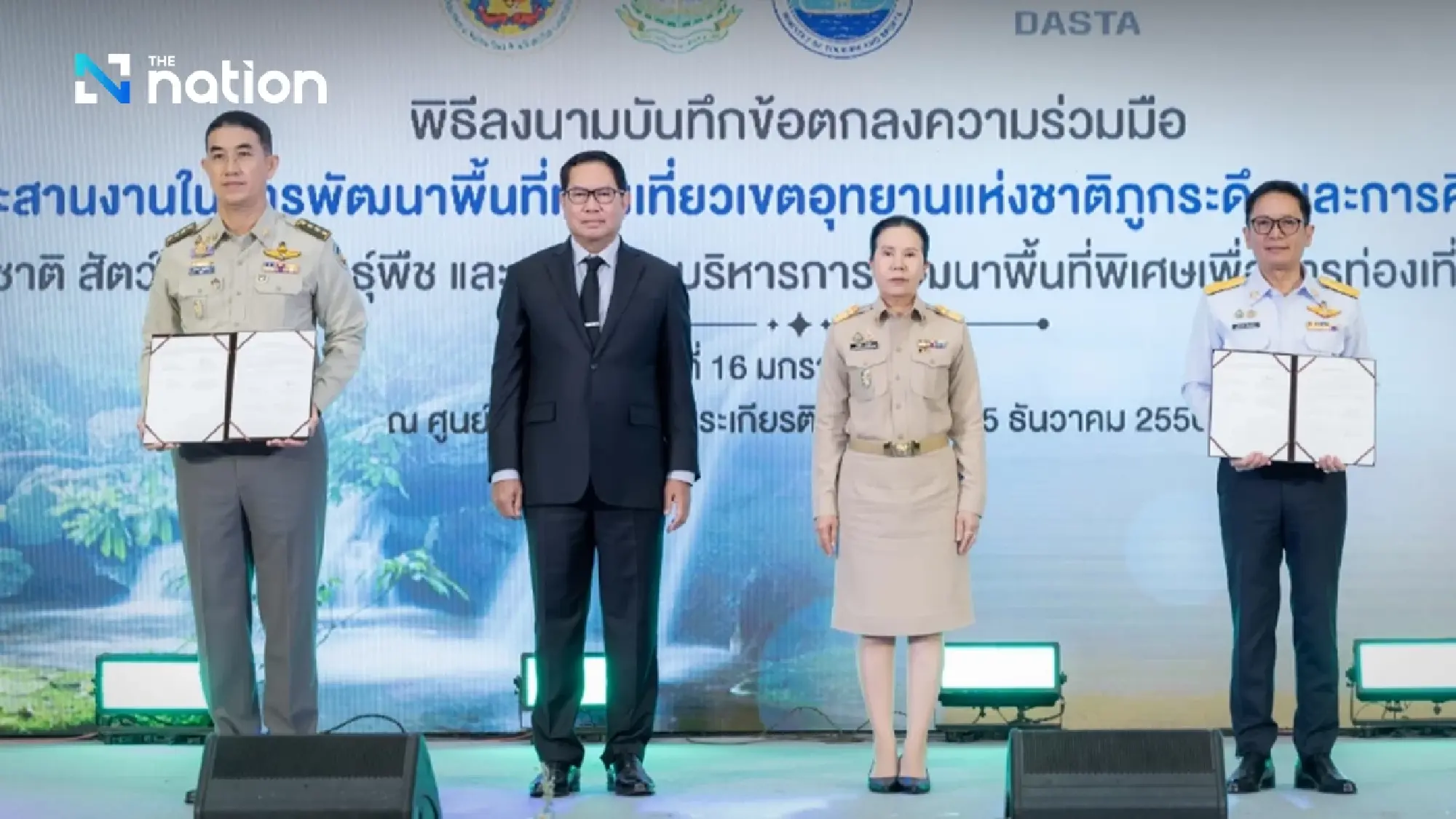
DASTA and the parks department sign two MOUs to drive the Phu Kradueng cable car. EIA is under way, with the first pillar eyed for Dec 2026
A long-running “legendary” project has taken a major step forward after the Designated Areas for Sustainable Tourism Administration (DASTA) joined hands with the Department of National Parks, Wildlife and Plant Conservation to sign two memoranda of understanding (MOUs) to push ahead with the Phu Kradueng cable car project under a strict conservation and sustainable tourism approach.
Siripakorn Cheawsamoot, Director of DASTA (Public Organisation), said DASTA and the parks department signed two MOUs to support development of the Phu Kradueng cable car and related eco-tourism attractions within the designated area. The aim, he said, is to meet objectives for conserving natural resources and the environment while developing sustainable tourism that benefits people in the area—through public consultations and cooperation from all sectors.
Two MOUs
The two MOUs are:
MOU 1: Promoting support and coordination for tourism development within Phu Kradueng National Park, with the goal of jointly studying, planning, managing and developing the designated area under DASTA’s remit that relates to the cable car project inside the park.
MOU 2: Studying, researching and developing related tourism areas within DASTA’s designated area, with the goal of jointly setting operational guidelines to raise Thailand’s tourism potential while conserving natural resources and the environment. This includes supporting operational data and research to develop tourism attractions sustainably.
“Tourism for All” rather than revenue-first
From a business perspective, the project is not primarily aimed at maximising revenue, Sirikorn said, describing income as a secondary issue. The main priority is to ensure people of all groups can access tourism more equally under the concept of “Tourism for All”—including children, older people and families.
He said the project will be managed strictly, respecting natural value and the spirit of the area, alongside design work and impact studies in all dimensions. A draft design is expected to take no more than one year to prepare before being submitted again to relevant agencies for consideration.
Timeline and area management
The latest update is that the project is in the process of preparing a full EIA report, with key milestones stated as:
July 2026: Submit the EIA report for consideration by expert reviewers and the National Environment Board.
December 2026: Targeted timeframe to plant the first cable car pillar.
October 2027: Submit to the Cabinet for consideration of the EIA report and budget approval.
November–December 2027: Planned completion and opening (construction time estimated at around one year).
To minimise environmental impacts, the plan would cap overnight stays at no more than 5,000 people per day, while encouraging day trips. This approach is expected to increase overall visitation capacity to 8,000 people per day without adding pressure from overnight accommodation and waste on the summit.
An initial comparison with neighbouring countries suggested fares of around 800 baht per trip, but officials said the main idea is to set a suitable return fare as a public service.
“We are not aiming to make a profit directly from ticket sales,” Sirikorn said. “The goal is to distribute income to communities below—restaurants, accommodation and other tourism services.”
Parks chief: forest impact will be limited
Atthapol Charoenchansa, Director-General of the Department of National Parks, Wildlife and Plant Conservation, said the cable car would have a limited impact on forest areas, confined to the pillar foundation zones only. He said there would be no deforestation, and impacted areas could naturally recover within a relatively short period, with the project carried out under strict EIA oversight.
He also described cable cars as one option for future tourism management aimed at organising travel and land use. With wildlife—particularly wild elephants—moving closer to tourist areas, he said systematic planning is needed for both safety and tourism management.
Oversight, safety and longer-term plans
The MOUs set a framework for cooperation at both policy and operational levels to ensure careful, transparent implementation with conservation as the core principle. The parks department will serve as the main legal supervisor and provide technical information to ensure development meets conservation standards.
The Phu Kradueng cable car is described as a key government policy under “Tourism for All”, focusing on equal access and sustainable development. DASTA has studied the project’s feasibility since 2012, and has been assigned to proceed with the cable car design to move the project forward in concrete terms.
Overall, the project is positioned as a key mechanism to upgrade Phu Kradueng tourism—attracting higher-potential visitors while setting an appropriate carrying capacity.
Infrastructure plans would begin with establishing a service centre and learning centre before boarding, providing information on ecology, geology and responsible tourism. Development would then proceed in phases. In future, there may be consideration of transport on the plateau, such as electric vehicles (EVs), under conditions that clearly separate routes from pedestrain trails.
Safety measures and rules would also apply: all visitors would be required to register and attend briefings before entering the area. The park would continue seasonal closures for ecological recovery during the rainy season, and authorities would monitor wildlife at risk points—especially elephant crossing zones—where areas may be temporarily closed if risks are detected.