
Rapid urban growth deepens inequality across Asia-Pacific
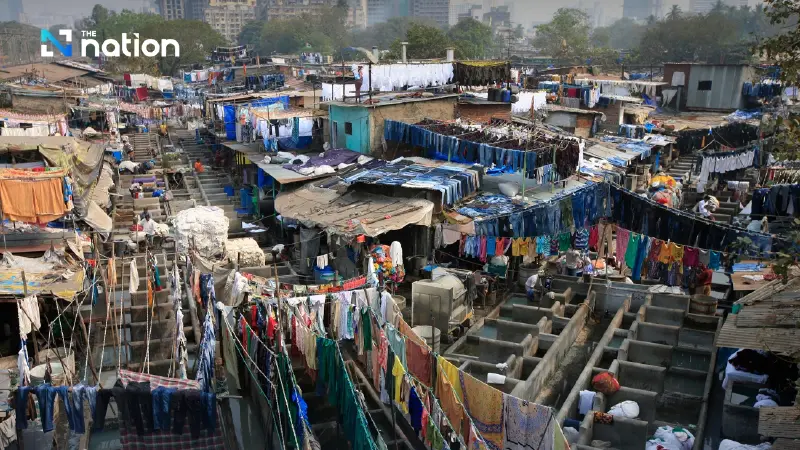


The Asia-Pacific SDG 2026 report warns that rapid urban growth across the region is widening inequality, with nearly 700 million people living in slums or informal settlements.
The Asia-Pacific region is undergoing rapid economic and social transformation driven by urbanisation. The region is now home to more than half of the world’s urban population, or over 2.2 billion people, and that figure is projected to rise by a further 1.2 billion by 2050.
While urban growth has created new economic opportunities and development prospects, the Asia-Pacific SDG Partnership Report 2026 shows that the benefits of such development remain unevenly distributed.
A summary of the report by Bangkokbiznews found that inequality is deeply embedded across multiple dimensions — from the hundreds of millions of people still living in slums, to the large number of workers employed in the informal economy, and the vast population exposed to dangerous levels of air pollution.
The report was produced through a collaboration between the Economic and Social Commission for Asia and the Pacific (ESCAP), the Asian Development Bank (ADB), and the United Nations Development Programme (UNDP) under the Asia-Pacific SDG Partnership framework.
It aims to reflect the scale of urban challenges facing the region, while proposing policy pathways to make urban development more inclusive, safe and sustainable, and to help Asia and the Pacific make tangible progress towards the Sustainable Development Goals.
Three dimensions of inequality
The report highlights urban inequality in three interconnected areas:
Access to housing and basic services: Although access to electricity and basic drinking water has expanded to near-universal levels, major gaps remain in access to clean cooking fuel, digital connectivity, and safe public transport. Nearly 700 million people in the region currently live in slums or deprived settlements, accounting for almost two-thirds of the world’s slum population. The “furthest behind” groups — such as low-income households, persons with disabilities, and informal workers — are twice as likely as average to live in slum conditions.
Informal urban employment: More than 65% of urban workers remain in the informal economy, where jobs are often low-paid and lack social protection. This inequality affects women, young people and older persons most severely, with four in five workers in the youngest and oldest age groups employed informally. Although the digital transition has opened up new opportunities, such as platform work, these workers still lack sufficient bargaining power and social protection.
Environmental liveability: Environmental risks are not shared equally. More than 2.3 billion people in the region are exposed to unsafe air quality under World Health Organisation standards, with informal outdoor workers among the hardest hit. Urban green space has also been in steady decline since 1990, as land has increasingly been diverted to activities offering higher economic returns.
Solutions and good practices
The report also presents case studies and scalable solutions to reduce urban inequality, including:
Community-led approaches: One prominent example is Thailand’s Baan Mankong programme, which has been in operation since 2003. It places communities at the centre of planning and upgrading their own housing through financial support and low-interest loans. Another example is UN-Habitat’s People’s Process, which shifts the focus from state-led control to community-based planning. This approach has been applied successfully in Bangladesh and Mongolia.
Promoting decent and inclusive work: Several countries have begun introducing measures to protect workers in the new economy. Singapore’s Platform Workers Act (2025), for example, requires platforms to provide protection for work-related injuries and retirement savings. In Thailand, a ministerial regulation has been issued to extend protection to domestic workers, both Thai and migrant.
Strengthening disaster resilience through nature-based solutions: Cities such as Colombo in Sri Lanka have redefined urban wetlands not as wasteland, but as critical infrastructure for flood control and wastewater treatment.

Key enablers for transformation
The report says four enabling factors are essential to make the transition to sustainable cities a reality:
Finance: Cities require massive investment, and public budgets alone will not be enough. Financial innovation — such as green bonds and municipal bonds — will be needed to attract private capital, alongside blended finance models to reduce investment risk.
Science and technology: The use of digital twins, as seen in Singapore and Seoul, can improve the accuracy of urban planning and strengthen disaster preparedness. However, care must be taken to avoid widening the digital divide and leaving behind those without the necessary skills.
Governance: Governments need to establish national urban policies that integrate all dimensions of development, while also granting greater fiscal authority to local administrations.
Partnerships: Cooperation among cities — such as through the ASEAN Smart Cities Network (ASCN) — and partnerships with the private sector and research institutions are key to sharing knowledge and resources.
Urban growth in Asia and the Pacific could become a major engine for reducing poverty and inequality if it is planned and managed with clear purpose, the report says.
It stresses that cities must shift away from unequal development and become drivers of inclusive progress, guided by the principle of “leaving no one and no place behind” through people-centred policymaking and sustainable investment.
