
‘Koh Kret Pottery’ GI Product Becomes Cultural Landmark
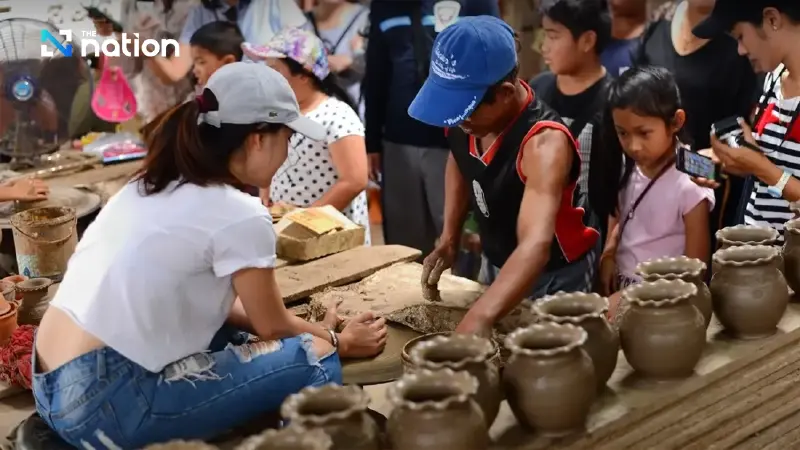


Koh Kret Pottery, a unique GI product, aims to become a cultural tourism landmark, promoting local craftsmanship and boosting sustainable community income
- Koh Kret Pottery is a Geographical Indication (GI) product with a unique characteristic from the fine clay found in the area, giving the pieces a natural reddish-orange color and intricate carvings.
- The Department of Intellectual Property has plans for multi-dimensional promotion, including modernizing packaging, expanding marketing channels, and increasing publicity to enhance the product’s value.
- The goal is to push the Koh Kret pottery production area to become a cultural tourism landmark, attracting tourists and creating sustainable income for the local community.
“Koh Kret Pottery” in Nonthaburi is a valuable cultural heritage of the Mon Thai people, with knowledge of craftsmanship passed down since the Thonburi period. It was registered as a Geographical Indication (GI) product by the Department of Intellectual Property, Ministry of Commerce, in 2010, to protect its identity and promote its economic value.
The key characteristic of "Koh Kret Pottery" is the use of fine clay, influenced by the geographical features of Koh Kret, a large island in the Chao Phraya River, covering more than 2,820 rai. It is one of the most abundant sources of high-quality clay in Thailand. The clay is fine, dense, and non-grainy, making it ideal for shaping and carving detailed, intricate designs like lotus and leaf patterns without the need for glazing.
Additionally, the clay from Koh Kret contains small amounts of iron, which causes the pottery to develop a natural reddish-orange color after being fired at high temperatures. The finished products are strong, durable, and have a unique beauty that distinguishes them from pottery produced elsewhere. This characteristic is one of the charming aspects of Koh Kret pottery.

Recently, the Department of Intellectual Property, led by Oramon Sapthaweetham, Director-General of the Department, visited the GI product production site of "Koh Kret Pottery" at the Koh Kret Pottery Craft Centre in Nonthaburi Province. The visit aimed to observe the production process, from preparing the clay, shaping, carving intricate designs, to traditional firing methods.
Oramon met with local producers and entrepreneurs to listen to their problems, challenges, and discuss ways to develop and expand the GI product to meet current market demands.
Oramon stated that following discussions with local entrepreneurs and the Nonthaburi Provincial Commercial Office, the Department of Intellectual Property has prepared a proactive plan to promote the GI product, Koh Kret Pottery, in several dimensions. These include modernising the packaging to make it more beautiful and suitable for gifts or souvenirs, while clearly conveying the identity and story of the product.
Additionally, they plan to expand marketing channels through partnerships with the private sector, such as Iconsiam Shopping Centre, to increase access for both Thai and international consumers.
Moreover, there is an idea to turn the Koh Kret pottery production area into a cultural tourism landmark. Located close to Bangkok, the area is accessible by both car and boat along the Chao Phraya River, which could attract tourists to experience, learn, and understand the lifestyle of the local Mon community directly.
In terms of communication and public relations, the Department of Intellectual Property also plans to promote the GI product, Koh Kret Pottery, through both offline and online media to build broader awareness. This will lead to an increase in the product's value and drive sustainable growth for the local economy.

Apisit Praditwong, a sculptor and carver from the Koh Kret Pottery Craft Centre in Nonthaburi Province, commented that Koh Kret pottery remains a valuable local wisdom, although the transmission of this knowledge to younger generations has declined.
However, the community continues to strive to preserve and pass on this knowledge by allowing tourists and interested individuals to come and learn, study, and try making pottery themselves. Several shops on the island offer classes that teach everything from shaping the clay to firing the pottery.
For learning the process, no prior experience is needed, as there are instructors who provide close guidance. A key technique is setting the clay in the centre before shaping it, which is considered a fundamental aspect of pottery making.
"Currently, both Thai and foreign tourists continue to show interest in visiting and purchasing the products. Even though direct sales have been trending down, local artisans have adapted by focusing on organising workshops to create shared experiences and help preserve the knowledge simultaneously," said Apisit.
The promotion of Koh Kret Pottery as a GI product is thus not only about preserving cultural heritage but also creating new trade opportunities and stable income for artisans, while contributing to the sustainable long-term growth of Thailand's creative economy.
