
Songkran tourism takes a hit as fuel prices continue to surge
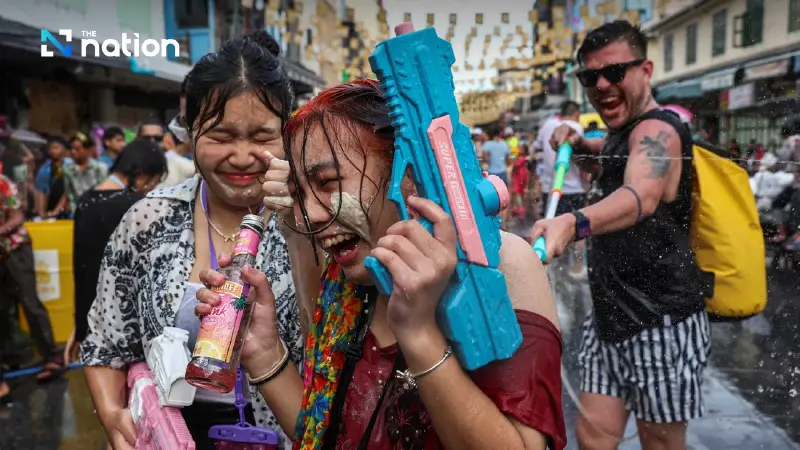


Songkran travel across Thailand has softened as soaring fuel prices and PM2.5 pollution weigh on bookings, forcing hotels to cut rates to attract late demand.
Thailand’s tourism sector has slowed during Songkran 2026 compared with the same festival period last year, as the impact of the Middle East war has caused new bookings to soften. Long-haul markets such as Europe, the Middle East and Israel have all contracted.
At the same time, Thai travellers are worried about rising fuel prices, meaning average hotel occupancy in major tourist cities is no longer reaching the usual peak levels.
Hotels in destinations near Bangkok, such as Hua Hin, Bang Saen and Pattaya, are still hoping domestic travellers may decide to make last-minute trips, while secondary destinations are facing even greater difficulty as they rely heavily on Thai tourists.
This year, people are therefore more likely to celebrate Songkran locally rather than travelling across provinces as they normally do. To stimulate travel during the holiday, many hotels, including luxury brands, have adjusted their strategies by offering Thai resident promotions to attract domestic tourists in place of the slowing foreign market.
They are also focusing more on market diversification, targeting new groups such as Asian travellers and Chinese tourists, who are beginning to show encouraging signs of recovery.

Southern beach destinations see domestic demand soften
Wichupan Phukaoluan Srisanya, president of the Thai Hotels Association Southern Chapter, told Thansettakij that this year’s Songkran festival may be less lively than expected.
Phuket currently has bookings of 70-75%, based on guests who made reservations three to six months in advance, mostly foreign visitors. In previous Songkran periods, Thai tourists would help fill the remaining rooms and push occupancy to full capacity, but domestic bookings have so far remained flat.
Krabi is in a similar position, with current bookings at 60%, largely from long-haul travellers who booked in advance. In Phang Nga, meanwhile, European tourists have started to disappear, prompting operators to roll out promotions to attract Thai visitors.
“Normally, Thai tourists travel to Krabi and Phuket during Songkran and help fill hotel bookings to 100% every year. But this year’s Songkran is not especially buoyant, because the energy crisis has not only affected travel decisions, it has also pushed up operating costs, forcing businesses such as tour boats to raise prices,” Wichupan said.

Khao San Road expects fewer visitors than last year
Sanga Ruangwattanakul, president of the Khaosan Business Association, said tourism during this year’s Songkran festival is not as lively as last year. He said bookings from long-haul markets such as Europe have fallen from a year earlier because Middle East aviation hubs such as Dubai and Kuwait are facing problems.
As a result, some travellers have been unable to travel to Thailand. Although there are direct flights from Europe to Thailand, fares have doubled, creating another barrier. However, the shortfall has been partly offset by visitors from Asia, especially Chinese tourists.
Overall hotel bookings in Bangkok are running at around 70% in areas without Songkran festivities, while hotels in water-splashing zones such as Silom Road, Surawong Road and Khao San Road are expected to record occupancy of about 80-90%.
Even so, that is down from last year, when Songkran occupancy on Khao San Road typically stood at 98-100%.
Visitor numbers to Khao San Road during Songkran this year are expected to reach around 80,000 people per day, down from more than 100,000 a day during the same period last year.
One reason is that Sanam Luang, which was a major Songkran venue last year, will not host the event this time. Activities have instead been moved to Benjakitti Park, meaning some tourists who would previously have continued on to Khao San Road after visiting Sanam Luang may be lost.
Songkran activities on Khao San Road this year will begin on April 12, focusing on traditional activities such as merit-making and Thai cultural performances. Normal water play will take place from April 13-15, with a strong emphasis on tighter safety measures.
The biggest concern, Sanga said, is tourists’ spending power, particularly among Thai visitors, which has clearly weakened, while operating costs have increased.
Hotels have not yet been hit as hard on costs as restaurants, but still need to manage carefully. Restaurants, meanwhile, have been affected heavily by fuel costs, transport expenses and higher raw material prices, with seafood such as prawns and fish up by 15-20%.
At the same time, selling prices cannot be raised by much, prompting warnings to operators to be cautious about stockpiling goods for Songkran sales, as the risk of losses is high amid expensive products and weaker purchasing power, Sanga said.

Chiang Mai faces severe pressure from haze and high oil prices
Paisan Sukcharoen, acting chairman of the Chiang Mai Tourism Industry Council, said the tourism situation in Chiang Mai is facing major challenges from PM2.5 pollution and persistently high fuel prices.
Because of the haze problem, some European tourists have asked to cut short their stays and check out early in order to escape the pollution and holiday in Phuket instead. Hotels have had to shoulder the cost of refunds in order to preserve customer relationships.
Even so, there are some positive signs from Asian markets, including China, South Korea, Taiwan and Malaysia, most of whom booked in advance.
That has kept bookings during Songkran this year at around 60%, with Chinese tourists in particular beginning to play an important role again after being largely absent for more than two years.
Hat Yai-Songkhla loses Malaysian group bookings
Sitthipong Sitthiphataraprabha, president of the Hat Yai-Songkhla Hotels Association, said hotel bookings during Songkran this year are averaging only around 60-70%, a sharp drop from the usual 100% occupancy seen every year.
The decline followed advice from the Malaysian Consulate-General in Songkhla urging civilians to postpone travel to southern Thailand during the Eid al-Fitr holiday.
The impact has been compounded by Thailand’s fuel shortage problems and images showing long queues at petrol stations, which have undermined confidence. As a result, Malaysian tour groups have already cancelled more than 1,000 bookings for the Songkran period.
Agents who would normally block-book hotel rooms for resale have also disappeared this year as tourist numbers have fallen and confidence in the situation has weakened.
Most Thai visitors are locals or people from nearby provinces, who tend to make day trips for the water festivities without staying overnight. Hotels have therefore had to market directly online and focus more on walk-in customers making sudden decisions.
They are also having to compete with Airbnb-style accommodation and illegal hotels dumping prices during a period of weak demand.
This has prevented many hotels from raising room rates during Songkran as they normally would. Some have had to hold prices steady or even cut them by 10-30% to attract customers.
Bang Saen and Pattaya pin hopes on last-minute Thai travellers
Watcharapong Khunpluem, president of the Thai Hotels Association Eastern Chapter, said Songkran occupancy in Bang Saen is currently averaging 50% and is expected to rise to nearly 70% by the holiday itself.
Bang Saen depends on the Thai market and is within easy driving distance of Bangkok, helping travellers save on transport costs in an era of expensive fuel. This year’s Songkran period will also stretch from April 11-19, thanks to the Wan Lai Bang Saen tradition on April 16-17, which remains a major draw.
In Pattaya, current Songkran bookings stand at 70%, supported by long-stay foreign tourists. However, he expects Thai travellers to help fill more rooms during the holiday period, lifting occupancy to around 80%.

Tour operators warn package prices may rise 20%
Thanapol Cheewarattanaporn, president of the Association of Thai Travel Agents (ATTA), said Songkran tourism in 2026 is facing a major test from economic conditions and sharply rising travel costs, driven by unstable and upward-trending oil prices.
This has pushed up costs across the board, from fuel taxes and transport to hotel and restaurant expenses, meaning package tour prices may need to rise by at least 20% to reflect actual costs.
Outbound tourism has also been hit hard, as fuel taxes have pushed airfares sharply higher. Although large numbers of people are still travelling abroad during Songkran, consumer behaviour has changed clearly compared with previous years.
Travellers are no longer confident enough to book tours several months in advance as they once did, because they are uncertain about prices and the wider situation. Tour companies have therefore had to adjust strategies quickly, such as issuing tickets earlier to reduce the impact of oil price volatility.
TAT still forecasts more than 30 billion baht in Songkran revenue
Thapanee Kiatphaibool, governor of the Tourism Authority of Thailand (TAT), said the agency expects this year’s Songkran festival to generate more than 30.35 billion baht in tourism revenue nationwide, up 6%, from around 500,000 foreign tourists and 5.96 million domestic visitor-trips.
This year, TAT is preparing two highlight events in Bangkok:
- Maha Songkran World Water Festival 2026, to be held from April 11-15 at Benjakitti Park, aimed at presenting the identity of the Songkran tradition in a format that blends the classic beauty of Thai ways of life with modern elements. The event will feature major entertainment from leading artists, cultural performances, contemporary shows and a drone light show involving more than 1,200 drones.
- Saneh Art by Songkran Festival 2026, to be held throughout April at Lumpini Park in Bangkok, presenting the charm of Thai Songkran by combining the concept of Saneh (charm) with art through the creative perspectives of Thai artists. The event will showcase six large-scale 3D sculptures by well-known Thai artists.
TAT is also supporting Songkran celebrations across all five regions of Thailand, including IconSiam Thaiconic Songkran Celebration 2026, Siam Paragon Ultrasonic Summer Festival 2026, the “Yen Thua La Maha Songkran Sukhothai” festival in Sukhothai, the “Songkran Playing Water with Elephants” festival in Ayutthaya, the Phra Pradaeng Songkran festival in Samut Prakan, the “Ultimate Isan Songkran, Dok Khun Siang Khaen and Khao Niao Road Festival” in Khon Kaen, and Samui Songkran Klang Lay 2026 in Surat Thani, in a bid to attract both Thai and foreign tourists.
