
ILO warns of dangers of working in extreme heat, polluted air
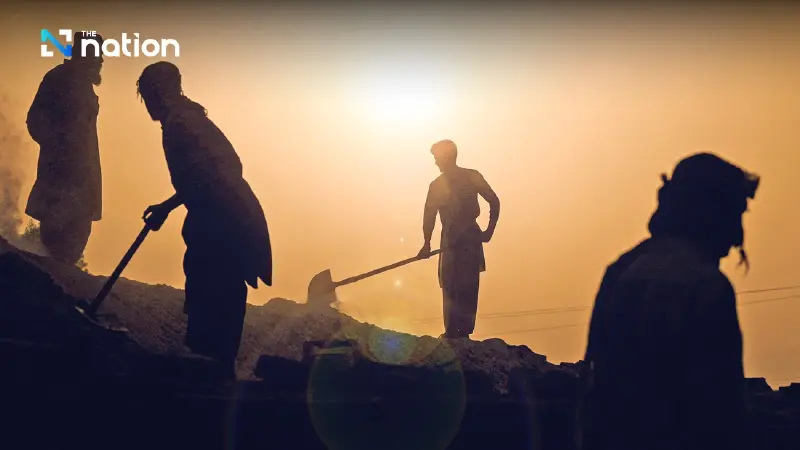


Extremely hot weather and pollution pose a major threat to workers, according to the International Labour Organisation.
The ILO, an agency of the United Nations, said in its latest report that working in hot weather and polluted air poses serious risks to the health and safety of workers around the world.
More than 70% of the global workforce or about 2.4 billion people must endure working in extremely hot weather conditions at any given time, according to Manal Azzi, senior health and occupational safety specialist at the ILO.
The agency’s Health Policy Watch report said: “More than 22 million workers are suffering from illnesses and injuries related to excessive heat. Moreover, nearly 20,000 workers die at work each year due to high temperatures.”
The report states that the impact of climate change on the workforce also comes in the form of health problems such as cancer, respiratory diseases and kidney problems.

Currently, more than 1.6 billion workers around the world are at risk from ultraviolet (UV), rays which results in annual deaths of more than 18,960 workers from non-melanoma skin cancer.
Rising temperatures have led to increased use of pesticides in agriculture. Consequently, more than 870 million workers are in danger.
About 300,000 deaths annually are attributed to pesticide use in agriculture.
Meanwhile, the warmer also causes vector-borne diseases – infectious illnesses spread by insects. Diseases carried by parasites and insects kill 15,000 workers annually.

Chihoko Asada-Miyakawa, Asia Region director at the ILO, said this phenomenon has a significant impact on the safety and well-being of workers in the Asia-Pacific region.
"For delivery drivers or the street vendors who breathe in air pollution every day, they must be aware of protective equipment and the necessity to make some adjustments in the workplace to reduce this impact," Asada-Miyakawa said.
She added that while employees working outdoors, such as in agriculture, construction, fishing or transportation, face the risk of heatstroke, indoor workers are at risk from excessive heat and poor ventilation in factories and warehouses.
A study by Cornell University's Global Labor Institute warns that extreme heat and flooding could cost Asia's textile sector up to US$65 billion in lost export revenue and 950,000 jobs by 2030. It will affect businesses and harm workers.
Among these challenges, the ILO called for concerted efforts to protect the safety and health of workers facing climate change, such as by implementing a strong regulatory framework that can enforce safety standards and protect employees from climate-related hazards.
The International Labour Conference (ILC) declared in 2022 that “a safe and healthy work environment" is a fundamental ILO concept.
This covers arrangements for sufficient rest periods and the availability of personal protective equipment. This is particularly valid for high-risk industries.
Although some countries in the Asia-Pacific region such as China, India, Singapore, Vietnam and Thailand have taken measures to deal with excessive heat in the workplace, operations are still fragmented.
Therefore, the ILO has scheduled a conference in 2025 to involve governments, employers and worker representatives to propose policy guidelines for dealing with climate hazards.
