
MPs Petition Constitutional Court to Remove Anutin and Natthaphong
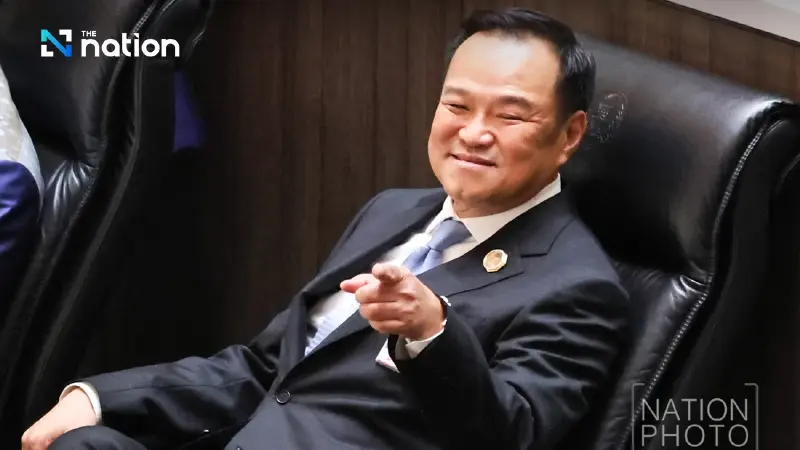


Sixty MPs file a motion against the Bhumjaithai and People's Parties, alleging a power-sharing pact undermines the monarchy and constitution
- Sixty Members of Parliament have petitioned the Constitutional Court to remove Anutin Charnvirakul and Natthaphong Ruengpanyawut from their MP positions.
- The petition alleges that a Memorandum of Agreement between their parties, made to support Anutin's bid for Prime Minister, is unconstitutional and violates the organic law on political parties.
- Key accusations claim the agreement subverts democracy by forcing MPs to act under the "domination" of the People's Party and includes undemocratic conditions, such as a premature dissolution of parliament.
- The motion also asserts that the agreement undermines party independence, alleging it was a "quid pro quo" that allowed the People's Party to "control, dominate, or direct" the Bhumjaithai Party's activities.
Sixty Members of Parliament (MPs) have formally petitioned the Constitutional Court to remove Bhumjaithai Party leader Anutin Charnvirakul and People's Party leader Natthaphong Ruengpanyawut from their positions as MPs.
The petition alleges that a Memorandum of Agreement (MoA) between the two parties violates the constitution and the organic law on political parties.
The motion, officially received by the Parliament Secretariat on 5 September 2025, was submitted by at least one-tenth of all MPs. It seeks the court's ruling on whether the membership of Anutin and Natthaphong has been terminated under Section 101 (2) combined with Section 185 (1) and (2) of the constitution.
The dispute centres on an agreement to support Anutin's bid for Prime Minister, under the condition that the People's Party would not join the government and that specific terms would be met by both parties.

The petition argues that the actions of Anutin and Natthaphong contravene several laws, citing two key issues:
1. Subverting Democracy
The petition claims the agreement constitutes an attempt to overthrow the democratic system with the King as Head of State.
It alleges that the agreement forces MPs from both parties to act under a "mandate or domination" of the People's Party, thereby failing to represent the Thai people as a whole, as required by Section 114 of the constitution.
The petitioners further argue that the agreement's conditions—specifically, a four-month deadline for the new Prime Minister to dissolve parliament (despite the House's term lasting until May 2027) and a clause preventing the Bhumjaithai Party from forming a majority government—are antithetical to democratic principles.
They contend that a stable and efficient government requires a majority in the House of Representatives.
The petitioners also claim that the agreement violates Section 164 of the constitution, which requires the Cabinet to act with honesty and integrity for the benefit of the nation and its people.

2. Undermining Party Independence
The motion also asserts that the agreement represents a "quid pro quo" to secure Anutin's appointment as Prime Minister, which violates Sections 28, 29, and 46 of the organic law on political parties.
The petition alleges that the Bhumjaithai Party allowed the People's Party to "control, dominate, or direct" its activities, compromising the independence of both the party and its MPs.
It further claims that this action subverts the country's governance, violating Section 42 of the organic law on political parties, which prohibits actions that are not in line with the constitution's provisions for obtaining power.
The petition concludes that if the Bhumjaithai Party forms a government under the People's Party's conditions, MPs from the People's Party would be using their status to interfere in government affairs for their own or their party's benefit.
Therefore, the actions of Anutin, Natthaphong, and other MPs from both parties are in violation of Sections 185 (1) and (2) of the constitution, leading to the termination of their MP status under Section 101 (7).
House Speaker Wan Muhamad Noor Matha has not yet forwarded the petition to the Constitutional Court. On 5 September, he spent the day verifying the signatures on the motion, which reportedly numbered over 60, and stated that the petition would be submitted on the next working day, 8 September.
It is believed that the MPs who signed the petition are from the Pheu Thai and Prachachat parties, with several MPs having voiced support for sending the matter to the Constitutional Court during the House meeting on 5 September.
