
China’s Golden Week 2025 sees Japan top list as Chinese travellers flock abroad
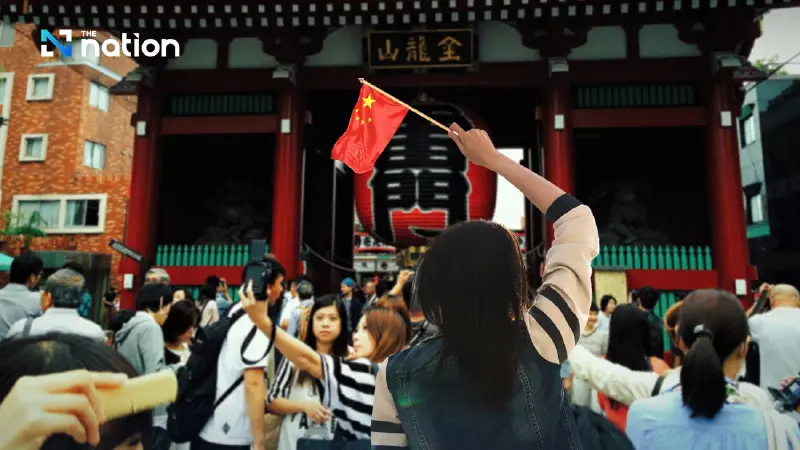


During China’s National Day Golden Week 2025, travel surges with 2.36 billion trips expected. Japan tops the list of destinations as Chinese tourists seek premium and emotional travel experiences.
China’s “Golden Week 2025” holiday, which coincides with the Mid-Autumn Festival, has sparked a surge in travel both within the country and overseas, with Japan emerging once again as the top destination for Chinese tourists.
China’s Ministry of Transport estimates that during National Day week, from October 1-8, 2025, there will be as many as 2.36 billion passenger journeys across the country, averaging around 295 million trips per day — a 3.2% increase compared with last year.
Of this, road transport accounts for the bulk, with some 1.87 billion car journeys expected, or 80% of the total. The single busiest day of travel is forecast to be 1 October, when passenger numbers could exceed 340 million.
Chinese online travel platforms report that domestic travel intent has risen by 30% compared with the same period last year, while overseas travel intent has jumped by 40%.
According to the Daily Economic News, searches for international trips during Golden Week have doubled compared with 2024, with tourists showing interest in a wider range of destinations.
Chinese travellers are increasingly willing to spend more for premium experiences, including four-star hotels and bespoke services. Industry analysts say this points to strong growth in the luxury travel sector.
Another defining trend is the so-called “Joy Economy”, in which tourists seek not only to travel, but also to gain “emotional value” from their trips — such as making memories with family, finding photogenic spots, and enjoying unique, novel experiences.
According to Airbnb China, the ten most-searched overseas destinations for Golden Week 2025 are: Japan, Italy, France, Spain, New Zealand, South Korea, Indonesia, Australia, the United States, and the United Kingdom.
Japan remains the clear favourite, boosted by a 15% drop in travel costs due to favourable exchange rates.
South Korea has also gained traction, helped by its recent policy allowing Chinese tourists travelling in groups of at least three people through government-approved travel agencies to enter the country without a visa for up to 15 days. This scheme, running from 29 September 2025 to 30 June 2026, is expected to attract more Chinese group tours.
Travel company Guangzhou Tour noted that Chinese outbound tourists continue to prefer destinations that are long-haul or visa-free. Within Southeast Asia, Thailand remains a “safe choice” for families thanks to visa exemptions.
Singapore and Malaysia are also popular, with some tour routes priced 6% lower than in 2024. Laos is attracting attention through travel on the China–Laos railway, while Vietnam enters its peak tourism season in October.
Among long-haul destinations, several “dark horses” are gaining momentum. Kazakhstan and Uzbekistan in Central Asia are drawing growing interest, while South Africa has seen a 30% increase in Chinese arrivals following the introduction of e-visas.
In the Middle East, Qatar and the United Arab Emirates are entering peak travel season this month. In Europe, France, Switzerland, and Spain have become popular group-tour choices, with demand rising 110%.
Australia and New Zealand are also in strong demand, particularly among family travellers.
Adith Chairattananon, Secretary-General of the Association of Thai Travel Agents (ATTA), revealed that travel during China’s National Day holiday continues to present opportunities from outbound Chinese tourists, particularly to short-haul destinations such as Japan, South Korea, Thailand, and Malaysia. Thailand remains one of the most popular choices for Chinese travellers seeking short trips. This creates high potential for “premium + unique experience” packages.
He stressed that Thai operators must adapt their products to meet the demands of the Joy Economy, ensuring trips have a “story” for Chinese tourists to share — such as curated cultural experiences, high-quality photo opportunities, and deeper immersion. Enhancing a premium image offers opportunities to increase stays at four- and five-star hotels and boost demand for personalised services such as private guides, private chefs, or chartered transport, since Chinese consumers are willing to pay for quality. He suggested releasing promotions early and running content campaigns two to three months in advance, in line with the trend of longer planning horizons. Effective capacity and logistics management will also be crucial.
“High crowd density is inevitable, so Thailand must prepare its domestic transport systems, manage traffic flows, and strengthen crowd-handling measures. It is also essential to highlight selling points that matter most to the Chinese market, such as natural attractions, scenic photo spots, wellness, and cultural experiences,” Adith concluded.
