
ECB keeps interest rate at 2%, cautious on policy shift despite inflation target success
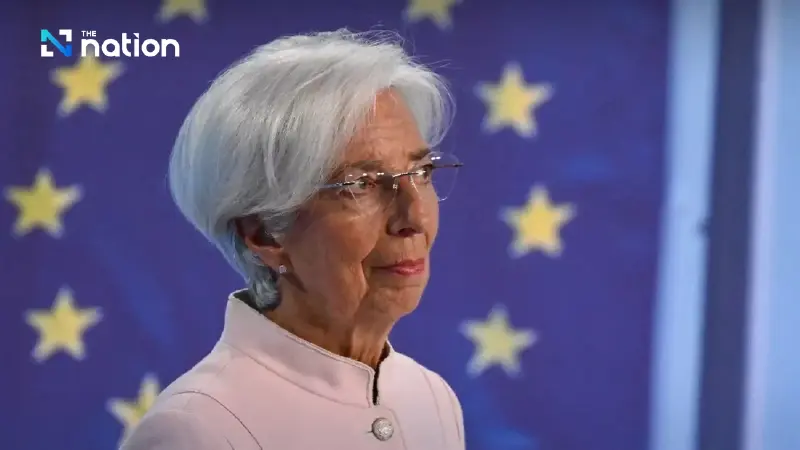


The ECB holds interest rates at 2% for a third time, saying inflation is at target and trade deals ease global risks, though industrial weakness remains a concern.
The European Central Bank (ECB) has decided to keep its benchmark interest rate at 2% for the third consecutive meeting on October 30, signalling no rush to alter its monetary policy stance amid stable inflation at target levels and moderate economic growth, despite ongoing trade uncertainties.
According to Nikkei, the central bank for the 20 eurozone nations had cut rates by a total of 2% in the year ending June but has since held steady, stating clearly that it is “not in a hurry” to move further, as inflation has reached the target — a milestone still elusive for other major central banks such as the US Federal Reserve, the Bank of England, and the Bank of Japan.
Christine Lagarde, President of the ECB, said that recent trade agreements, including the US decision to reduce tariffs on Chinese imports following the meeting between President Donald Trump and President Xi Jinping, have helped ease global economic risks — though significant uncertainty remains.
“I would not complain too much about growth at this point in time,” Lagarde remarked, referring to new data released the same day showing the eurozone economy grew by 0.2% in the third quarter, slightly above expectations, driven by strong performances in Spain and France.
An ECB Governing Council statement noted that a robust labour market, solid private-sector balance sheets, and the effects of past rate cuts have all contributed to supporting growth, reflecting the region’s economic resilience.
Despite signs of improvement — such as better-than-expected GDP figures, a pickup in business activity (PMI), and rising confidence in Germany — the ECB remains concerned about the industrial sector, citing weaker exports to the United States and indications that China may be redirecting unsold goods from the US to European markets.
