
Panama celebrates two national days of independence
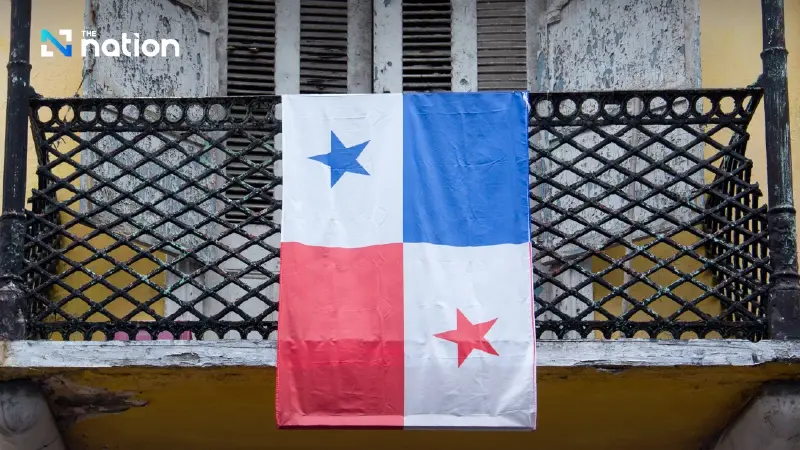


Panama celebrates two key national days: its secession from Colombia on November 3, 1903, and its independence from the Spanish Empire on November 28, 1821. Both are recognised as public holidays.
Independence from Spain
Panama’s path to independence began when rebels in the small provincial town of Villa de los Santos issued the Primer Grito de Independencia de la Villa de los Santos (Shout for Independence) on November 10, 1821. Their call inspired uprisings across the Panamanian countryside demanding independence from Spanish rule.
By offering bribes to Spanish troops and persuading them to desert, the rebels managed to seize control of Panama City without bloodshed. An open meeting was then convened with merchants, landowners, and elites, who—fearing Spanish retaliation and disruption to trade—resolved to join the Republic of Gran Colombia. The meeting resulted in the drafting of the Independence Act of Panama.
The Declaration of Independence of Panama, proclaimed on November 28, 1821, in the Cathedral Plaza of Panama City, formally declared Panama’s separation from the Spanish Empire. The document outlined twelve key points calling for the severance of ties with the Spanish Crown and Panama’s union with the newly formed Republic of Gran Colombia.
Secession from Colombia
Panama’s separation from Colombia was formalised on November 3, 1903, with the establishment of the Republic of Panama and the abolition of the Colombia–Costa Rica border.
Following its independence from Spain, Panama had simultaneously declared independence and voluntarily joined the confederation of Gran Colombia through the Independence Act of Panama. However, its connection to the rest of the country remained tenuous due to the geographical distance from Bogotá and the absence of a practical overland link.
In 1840–41, Panama briefly declared independence under Tomás de Herrera, forming a short-lived republic that lasted just 13 months before rejoining Colombia. The region continued to experience unrest, including the Panama crisis of 1885, which prompted intervention by both the United States Navy and the Chilean Navy.
During the construction of the Panama Canal, the initial French attempt to build a sea-level canal through the isthmus was secured by treaty with Colombia but later abandoned due to financial difficulties. During the ensuing decade, separatist sentiment grew amid political instability and the chaos of the Thousand Days’ War.
When the United States sought to revive the canal project, Colombia’s legislature rejected the proposed treaty. With the support of French lobbyist Philippe-Jean Bunau-Varilla and US President Theodore Roosevelt, Panamanian separatists declared independence from Colombia and signed a treaty granting the United States rights to construct the canal.
The United States was the first nation to recognise Panama’s independence, deploying its navy to prevent Colombian forces from retaking the territory. In return, the US received a perpetual lease over the land surrounding the canal—known as the Panama Canal Zone—which was returned to Panama in 1979 under the Torrijos–Carter Treaties.
Following US recognition, many other countries quickly acknowledged the new republic. Colombia initially refused but eventually recognised Panama’s independence in 1909 after receiving a payment of US$500,000 to settle outstanding debts dating from the time of separation.

What is Panama?
Panama, officially the Republic of Panama, lies at the southernmost tip of Central America, forming a bridge between the continents of North and South America. It is bordered by Costa Rica to the west, Colombia to the southeast, the Caribbean Sea to the north, and the Pacific Ocean to the south.
Its capital and largest city, Panama City, is a vibrant financial and cultural hub, with nearly half of the country’s more than 4 million residents living within its metropolitan area.
The Panama Canal remains the nation’s economic backbone, with toll revenue accounting for a significant share of GDP. Following the canal’s expansion in 2016, which doubled its capacity, Panama has strengthened its role as a global centre for commerce, banking, and tourism.
Around 40% of the country is covered by tropical rainforest, home to an extraordinary diversity of flora and fauna, including many species found nowhere else on Earth.
Panama is a founding member of the United Nations and participates actively in international bodies such as the Organisation of American States, the Latin American Integration Association, the Group of 77, the World Health Organisation, and the Non-Aligned Movement.
Where to travel in Panama?
According to Expedia, Panama offers far more beauty and intrigue than many travellers expect — and best of all, it is visa-free for Thai visitors.
Panama canal
A visit to the Panama Canal is an absolute must. As one of the world’s most important man-made waterways, it connects the Pacific Ocean with the Atlantic, cutting maritime travel distance by up to 22,500 kilometres. The canal’s system of locks allows ships to rise or descend between sea levels, an extraordinary feat of global engineering and a landmark that symbolises Panama’s identity.
Casco Viejo
Casco Viejo, or the Old Quarter, lies at the heart of Panama City. This UNESCO-listed historic district is lined with charming colonial-era buildings, churches, and cobbled streets. Visitors can spend the day exploring landmarks such as the National Theatre of Panama, the Panama Canal Museum, Independence Square, and the Cathedral Basilica of St Mary.
San Blas Islands
The San Blas Islands, located off Panama’s northeastern Caribbean coast, are a diver’s paradise. Comprising nearly 400 islands, only a few are inhabited by the Guna Yala people. Visitors can snorkel among vibrant coral reefs, kayak across turquoise waters, or simply relax on powder-soft beaches. The area also promotes eco-tourism and offers the opportunity to experience local culture in a pristine natural setting.
Volcán Barú
Rising 3,475 metres above sea level, Volcán Barú in Chiriquí province is Panama’s highest peak — and a dream destination for seasoned hikers. The challenging climb takes around six hours and rewards trekkers with breathtaking views of both the Pacific and Caribbean oceans.

Relationship with Thailand
According to Thailand’s Ministry of Foreign Affairs, relations between Thailand and Panama have remained cordial since the establishment of diplomatic ties on August 20, 1982 — marking the 43rd anniversary in 2025.
High-level visits have taken place on several occasions. Her Royal Highness Princess Maha Chakri Sirindhorn paid an official visit to Panama from April 14 to 17, 2019, while Isabel de Saint Malo de Alvarado, then Vice President and Minister of Foreign Affairs of Panama, visited Thailand in October 2018.
Panama is one of Thailand’s key targets under its new market policy in Latin America, thanks to the country’s strong purchasing power, positive response to Thai products, and its strategic location as a regional logistics hub. Thailand also views Panama as a potential base for manufacturing and distribution to neighbouring markets.
In 2023, Panama ranked as Thailand’s fifth-largest trading partner in Latin America, with total bilateral trade valued at US$516.87 million, up 9.76% from 2022. Thai exports to Panama totalled US$172.41 million, while imports from Panama reached US$344.46 million.
Thailand’s main exports to Panama include automobiles and parts, computers and components, canned and processed seafood, rubber products, and machinery. Imports from Panama consist of ships and floating structures, iron and steel products, metal ores and scraps, fertilisers and pesticides, and animal products.
Both nations share comparable levels of development and are well positioned to strengthen academic and technical cooperation, exchanging expertise in areas such as e-commerce systems, agriculture, tourism, and logistics development — particularly through knowledge-sharing on the economic use of the Panama Canal.
Thailand has also extended technical assistance to Panama through its Annual International Training Course (AITC). Between 2015 and 2023, a total of 33 Panamanian participants received AITC scholarships.
