
Hungary Celebrates National Day as Nobel Prize Amplifies Cultural Renaissance
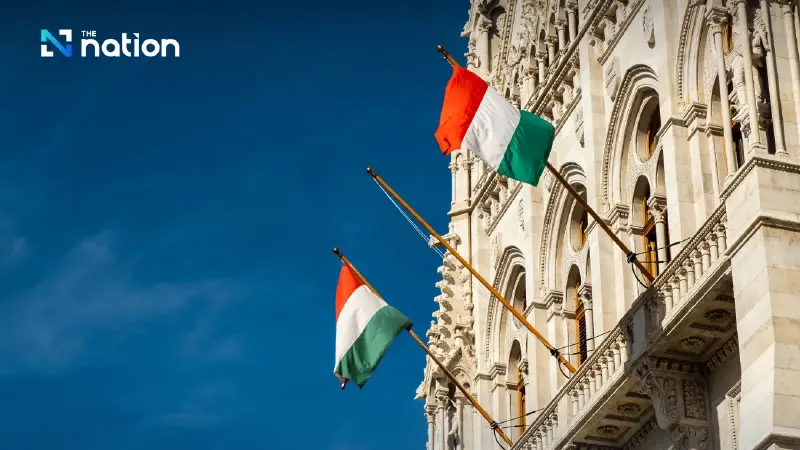


Nation marks 1956 Revolution anniversary whilst strengthening economic ties with Thailand amid growing recognition of its literary heritage
- Hungary is celebrating its National Day, which commemorates the 69th anniversary of the 1956 Revolution against Soviet oppression.
- The national celebration is amplified by novelist László Krasznahorkai winning the Nobel Prize in Literature, bringing renewed international acclaim to the country.
- The Nobel award is seen as a key part of a cultural renaissance, thrusting Hungarian literature and its heritage into the global spotlight.
- The commemoration also highlights Hungary's evolving global role, exemplified by its "Eastern Opening" policy to strengthen economic partnerships with nations like Thailand.
Nation marks 1956 Revolution anniversary whilst strengthening economic ties with Thailand amid growing recognition of its literary heritage.
Hungary commemorates its National Day today, marking the 69th anniversary of the 1956 Revolution against Soviet oppression, as the nation basks in renewed international acclaim following novelist László Krasznahorkai's Nobel Prize in Literature.
The dual celebration underscores Hungary's enduring cultural legacy and its evolving role as a bridge between East and West, exemplified by deepening economic partnerships with countries such as Thailand.

Literary Triumph Honours Hungarian Vision
Krasznahorkai's Nobel Prize, awarded "for his compelling and visionary oeuvre that, in the midst of apocalyptic terror, reaffirms the power of art," has thrust Hungarian literature into the global spotlight.
His 1985 debut Satantango, a raw critique of life under Communism written in mesmerising, unbroken paragraphs, defied censors and established him as a cornerstone of contemporary European literature.
The award arrives as Hungary reflects on October 23rd's dual significance: the 1956 uprising that symbolised national courage against totalitarian rule and the 1989 proclamation of the Third Hungarian Republic that completed the nation's democratic transition.
Economic Dynamism Anchors Eastern Partnership
Hungary's relationship with Thailand exemplifies its "Eastern Opening" foreign policy, initiated in 2012 to diversify economic ties beyond Western Europe.
Bilateral trade reached approximately US$770 million in 2024, with Hungary ranking as Thailand's 11th largest business partner.

The partnership centres on strategic sectors, particularly automotive and battery manufacturing.
Thai President Foods' establishment of a "Mama" instant noodles factory in Hungary demonstrates Thailand's use of the country as a gateway to European Union markets.
Hungary exports electrical equipment, machinery, vehicles, and pharmaceuticals to Thailand, whilst importing automobiles, computer components, and consumer electronics.
Both nations actively pursue a Free Trade Agreement between Thailand and the EU to further enhance commerce.

Historical Bonds Extend Beyond Commerce
The relationship traces back to an 1872 treaty between the Austro-Hungarian Monarchy and the Kingdom of Siam.
Today, cultural diplomacy and regular official commemorations sustain the partnership, with pre-pandemic tourism seeing over 29,000 Hungarian visitors travelling to Thailand annually.
Investment flows remain critical, with Thailand focusing on food processing and hospitality sectors in Hungary whilst encouraging Hungarian investment in agriculture, automotive, and the Eastern Economic Corridor development zone.

As Hungary navigates complex EU negotiations over national sovereignty whilst maintaining its Fidesz government's distinctive foreign policy approach, partnerships with Asian economies continue to anchor its trade-dependent economic strategy.
The nation's focus on attracting Foreign Direct Investment, particularly in high-value manufacturing and research, positions it as an increasingly important player in global supply chains.
The convergence of cultural achievement and economic pragmatism on this National Day reflects a country determined to honour its past whilst forging a dynamic, globally connected future.

