Trump’s Greenland bid turns Arctic into a new flashpoint
WEDNESDAY, JANUARY 07, 2026
Play
Trump’s renewed push to control Greenland puts the Arctic’s GIUK Gap, Pituffik base and rare earths in focus, raising NATO tensions and sovereignty stakes
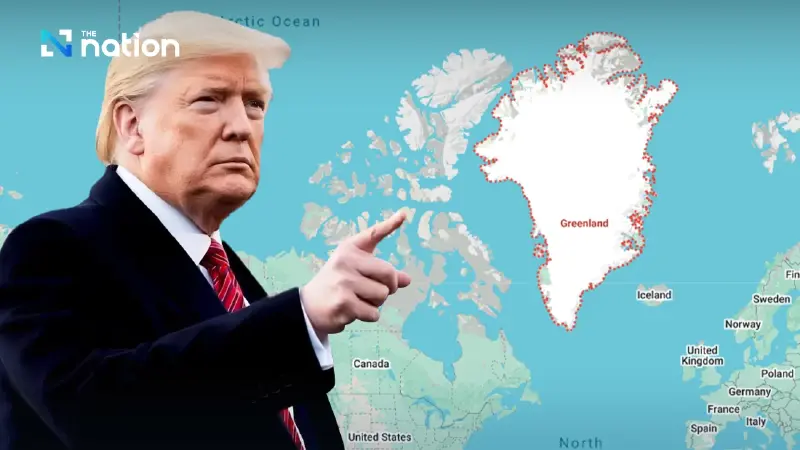
After sending special forces to raid Venezuela and capture President Nicolás Maduro to face prosecution in the United States, Donald Trump has continued to send shockwaves through global geopolitics by reaffirming his desire to take control of Greenland — an icy landmass that is rapidly becoming a new global flashpoint.
Amid volatility on the world political stage, Donald Trump has ignited fresh tensions by clearly declaring his intention to take possession of “Greenland”, citing “national security” — and not hesitating to mention the use of military force as one possible option. This declaration has abruptly turned a remote, ice-covered territory into the centre of a geopolitical storm.
Trump’s return and the push to take Greenland
Donald Trump’s interest in Greenland is not new. It is an effort rooted in a longer history of US interest, but the approach today is different: tougher, more direct, and more openly confrontational than ever before. The shift from an earlier “offer to buy” to outright “threats” has elevated Greenland’s status from a quiet Arctic island to an arena for great-power rivalry.
The history of US interest
The United States has long seen Greenland as strategically important. During World War II, the US occupied Greenland to prevent it from falling into Nazi Germany’s hands. After the war, that interest continued. In 1946, President Harry Truman’s administration formally offered to buy Greenland from Denmark for US$100 million at the time. Although the offer was rejected, these events reflect Washington’s long-held view that Greenland is a crucial piece of the puzzle for North American security.
Trump’s strategy: from “offer to buy” to “threats”
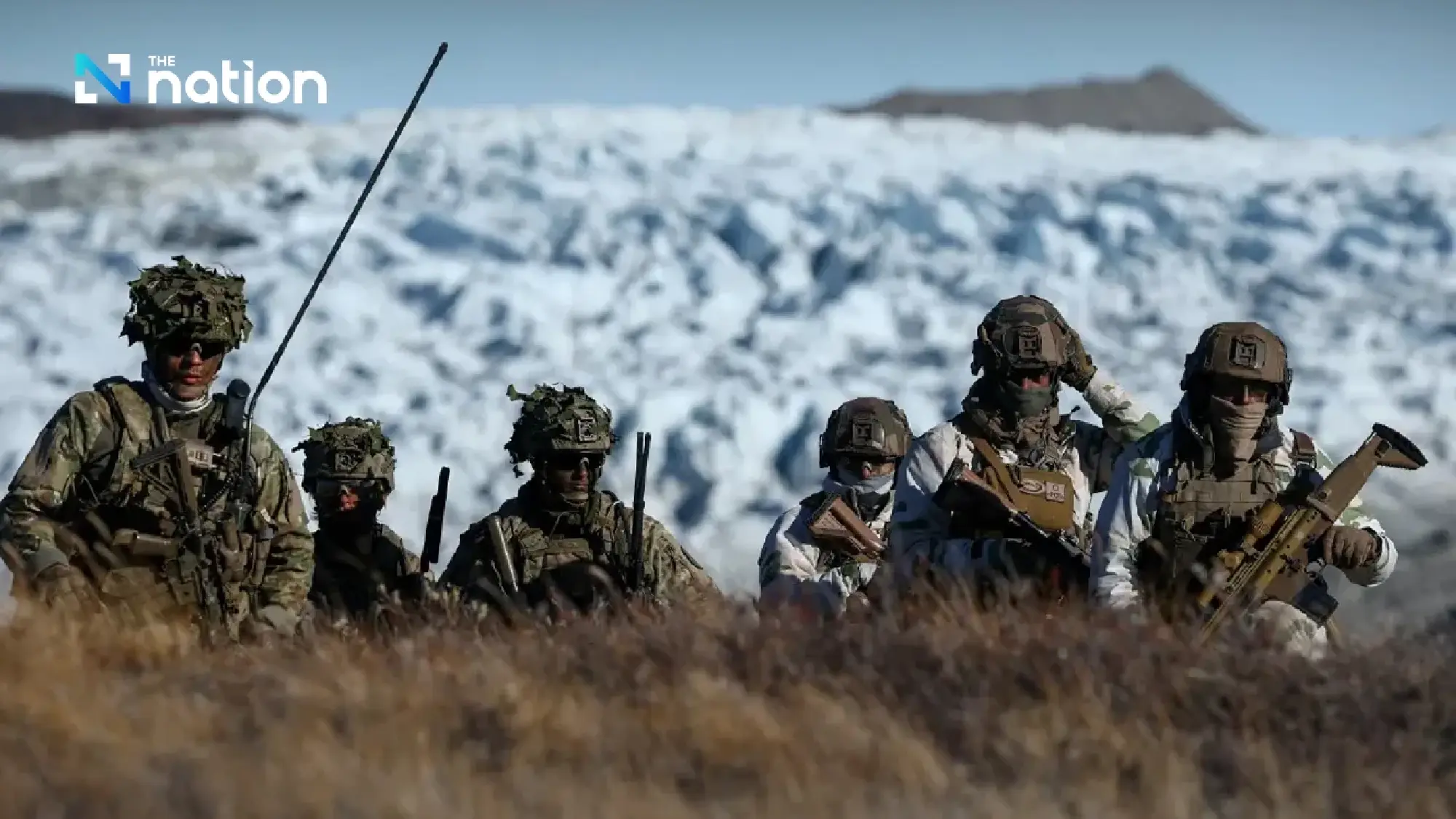
Trump’s current approach is completely different from the past. After proposing to buy the island in 2019 during his first presidency, he returned after the 2024 election with a markedly more aggressive stance. He threatened harsh tariff measures against Denmark if it did not cooperate, appointed Jeff Landry as a special envoy specifically for this mission, and — most concerning — did not rule out using military force to achieve the goal, shocking allies and the international community.
Global reactions: responses to the US stance
Trump’s declaration has sent ripples across the world, creating diplomatic tension and forcing Greenland, Denmark, and European allies to take clear positions to defend sovereignty and regional stability.
Greenland: “We are not for sale” — and an opening for independence
Greenland’s leaders have unanimously rejected Trump’s proposal. Prime Minister Múte Bourup Egede and Jens-Frederik Nielsen, leader of the Democrats, spoke with one voice: “Greenland is not for sale” and “Greenland is Greenlandic.” Some politicians view the situation as an opportunity to accelerate the push for independence from Denmark. This aligns with a January 2025 poll by Verian indicating that while more than 85% of Greenlanders do not want to be part of the US, a majority still supports independence.
Denmark: defending sovereignty and the burden of being an ally
Denmark’s government reacted strongly. Prime Minister Mette Frederiksen called Trump’s proposal “absurd” and warned that if the US used military force to seize Greenland, it could mean “the end of NATO”. Denmark has also taken symbolic steps in response, including King Frederik X ordering changes to the royal coat of arms to emphasise Greenland’s importance, and announcing a major increase in defence spending to strengthen military capabilities in Greenland.
European allies and NATO: fears over stability
The European Union and key member states such as Germany, France, and the United Kingdom have expressed unified support for Denmark. European leaders have voiced concern that Trump’s stance could create deep fractures inside NATO — a pillar of European security for decades. If the US continues to pressure Denmark, a founding member, alliance cohesion and confidence could be severely shaken.
Why Greenland? The Arctic’s geopolitical treasure trove
Greenland’s strategic value has risen sharply in the 21st century due to its geography, untapped natural resources, and climate change reshaping the Arctic. It is also seen as a key strategic position for defending North America against rival great powers such as China and Russia.
Military and security value
Greenland’s location matters greatly for US and NATO security in several ways:
The GIUK Gap (Greenland–Iceland–UK Gap): A strategic sea corridor linking the Arctic Ocean to the North Atlantic. NATO uses it as a key barrier for monitoring and intercepting movements of Russian submarines and naval forces.
Pituffik Space Base: Formerly Thule Air Base, the northernmost US base. It serves as a hub for missile early warning, missile defence, and space surveillance — critically important for protecting North America.
New Arctic trade routes: Global warming is melting polar ice and opening two new trade routes: the Northwest Passage and the Transpolar Route. These could dramatically shorten shipping times between Asia, Europe, and North America and reshape future global trade. Control of areas near these routes therefore carries major strategic weight.
A future natural-resource vault
Beneath Greenland’s ice lies vast natural wealth still awaiting full exploration and extraction, especially:
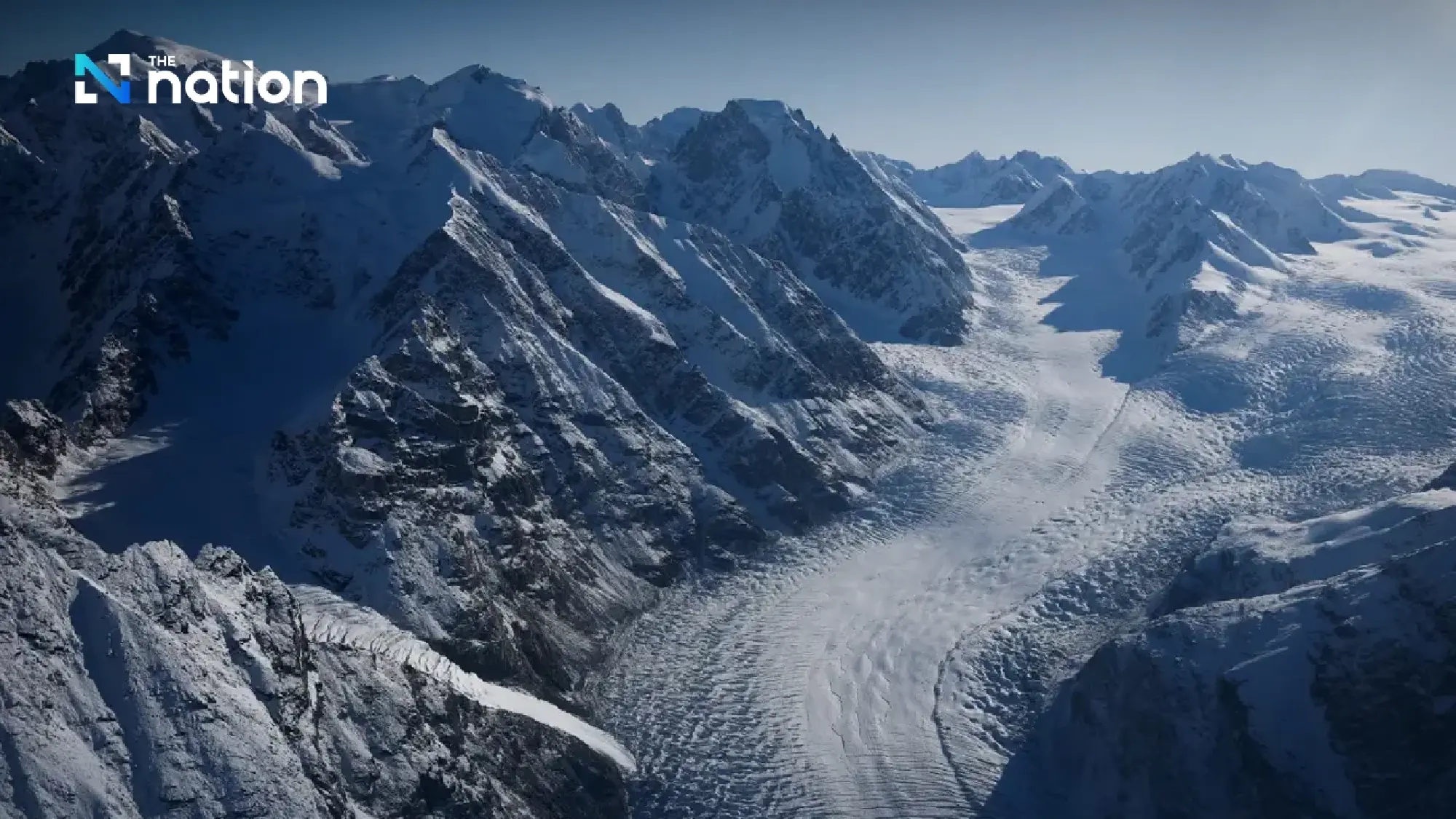
Rare earth minerals: Greenland is described as holding the world’s largest rare-earth reserves outside China — key inputs for advanced technology, from smartphones and EV batteries to modern weapons systems.
Uranium: A radioactive mineral that is a key fuel source for nuclear power plants.
Offshore oil and natural gas: Estimated potential reserves as high as 50 billion barrels.
These resources are central to global economic and technological competition — especially efforts to reduce dependence on China in rare-earth supply chains — acting like a magnet drawing other powers into the Arctic power equation.
The great-power chessboard: China, Russia and the EU
Trump’s interest in Greenland is not happening in a vacuum. It is directly tied to intensifying strategic competition in the Arctic, where several major players are seeking to expand their influence.
China and the “Polar Silk Road”
China has declared itself a “near-Arctic state” and is seeking a role in the region through the “Polar Silk Road”. Chinese proposals to invest in infrastructure and mining in Greenland are seen as attempts to build a strategic foothold — expanding economic and military influence into NATO’s traditional sphere — which has raised serious concerns in Washington.
Russia: rebuilding military power in the Arctic
Russia, with the longest Arctic coastline, has steadily reinforced its military presence in the region by refurbishing old Soviet-era bases and building new ones, positioning itself as a key power there. This is described as “strategic denial” aimed at limiting NATO’s freedom of movement through the GIUK Gap and directly challenging the US and its allies.
The EU: waking up to protect its interests
The EU has also recognised Greenland’s rising importance. In 2023, the EU and Greenland signed a memorandum of understanding on cooperation in strategic raw materials. In 2024, the EU opened a representation office in Nuuk, Greenland’s capital — signalling the EU’s intent to secure access to resources important for Europe’s economic and energy security.
Greenland’s future at a crossroads
Given the complexity of interests and pressure from major powers, Greenland’s future sits at a crossroads, facing both challenges and major opportunities. Three broad scenarios are outlined:
More negotiation and cooperation: The US could shift from aggressive pressure to offering deeper economic, investment and military cooperation in exchange for security assurances and sustainable resource access — potentially the most acceptable outcome for all sides.
Prolonged tension: If Trump continues economic and diplomatic pressure, the situation could evolve into a long-term conflict with Denmark and European allies, affecting NATO stability and transatlantic relations.
Greenlandic independence: External pressure could accelerate Greenland’s decision to seek independence. This would not be an endpoint but a gateway to a new strategic order, with Greenland as a sovereign state likely pursuing security and economic ties with major powers through a Compact of Free Association (COFA)-style model — turning today’s competition into a contest to become a future patron.
Higher stakes in the land of ice
Trump’s attempt to take Greenland, by any means, has shattered the post–Cold War illusion of the Arctic as a “low-tension zone”. His actions have transformed Greenland from a remote icy island into a “catalyst” forcing a major realignment of NATO strategic posture. Greenland’s future may no longer be only a matter for Greenlanders and Denmark — it will directly affect the balance of power in the Arctic, NATO stability, and the future world order in ways that are hard to avoid.