
Trump exit from 66 bodies raises global policy risk
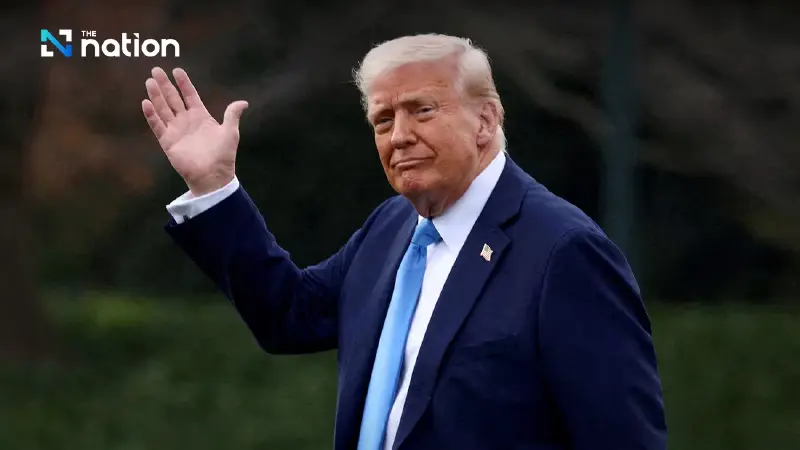


US plans to quit 66 international bodies including UNFCCC, IPCC, UNCTAD and ESCAP, adding uncertainty for trade, climate policy and development cooperation.
- Trump is preparing to withdraw the United States from 66 international organisations, arguing that they do not benefit the nation, waste budget resources, and conflict with the “America First” policy.
- The withdrawals cover climate, trade and development bodies, which will reduce global cooperation and open space for China and the European Union to expand their influence.
- Thailand will be directly affected through regional trade and development forums, meaning it must adapt by relying more on regional cooperation mechanisms such as ASEAN and by finding new partners.
On 7–8 January 2569 (2026), President Donald Trump signed executive orders and proclamations from the White House to have the United States withdraw from 66 international organisations worldwide. He explained the main reasons that these organisations:
- conflict with the national interests of the United States;
- use budgets and resources in a “wasteful and inefficient” way;
- have overlapping missions, or are controlled by progressive “globalist” ideological groups, such as DEI standards, gender equality policies, and countries overseeing climate issues, which Trump views as threatening US sovereignty and freedom;
- US taxpayers’ money should be used for domestic benefit rather than abroad.
He called these organisations “wasteful, ineffective, or harmful”, and said they no longer serve the national interest.
This explanation is consistent with Trump’s “America First” policy, which prioritises domestic interests over engagement on the global stage. It views multilateral cooperation as often “unfair” to the United States and as giving more benefit to strategic competitors such as China.
What groups are the 66 organisations being withdrawn from?
The withdrawals are mainly divided into two categories:
- Organisations outside the United Nations system (about 35 organisations)
This group includes international organisations working on:
• climate, renewable energy and the environment;
• economics, international trade and development;
• various kinds of global policy cooperation.
Examples include the Intergovernmental Panel on Climate Change (IPCC), the International Renewable Energy Agency (IRENA), the International Solar Alliance (ISA), and others (a full list of 35 organisations was announced).
- Organisations, agencies or bodies under the United Nations system (about 31 organisations)
This group consists of agencies related to: the United Nations and specialised agencies, such as the UNFCCC (the framework convention on climate change), UN Women, the UN Population Fund, UNCTAD, and UN economic and social bodies.
Overall, the list covers organisations focused on climate, development, trade, energy, education and various global policies, which the US views as conflicting with its “national interest”.
This is not the first time Trump has pushed the US away from multilateral forums. Earlier examples include:
- withdrawing from the World Health Organization (WHO) under a previous order in 2025;
- withdrawing twice from the Paris Agreement; both earlier and after taking office;
- suspending or ending support for resources for the UN Human Rights Council and UNESCO.
These moves signal a trend of withdrawing from “progressive” multilateral platforms and reducing the US role in global organisations.
Trump’s announcement was made through executive orders and proclamations from the White House, instructing agencies to begin action “immediately” to end participation and funding support.
However, each organisation has its own withdrawal process under its rules. In some cases, formal notification is required and there is a “notice period” before the withdrawal takes effect. For example, under the UNFCCC’s legal conditions, withdrawal takes effect one year after notification. And although it has been announced, some organisations have not yet received official withdrawal documents, according to UN reporting.
Therefore, not every withdrawal will take effect immediately automatically under international law. It depends on each organisation’s rules, and in many cases it is still in the process of ending membership status and stopping funding support.
Impacts on the economy, the world and Thailand
This withdrawal has impacts in many dimensions, both globally and regionally:
- Economy, trade and investment
The United States is a major funder of many international organisations. Withdrawal and cutting funding could create budget gaps and resource shortages for important projects such as international trade, labour development and production standards.
Some international trade and investment standards may lack framework control from international mechanisms, causing US companies to face foreign standards without influence over how they are set.
Capital markets and foreign investors may slow investment in the United States because of uncertainty in international trade rules and business standards.
- Tackling global warming and the environment
Withdrawal from the UNFCCC and the IPCC, which are foundations of global climate cooperation, is the biggest shock in the fight against climate change. Scientists and world leaders see it as “greatly weakening international agreements”.
The withdrawal of a major economy like the US may become an “excuse” for other countries to slow their efforts to reduce greenhouse gas emissions.
- International politics and regional cooperation
This withdrawal reflects a reduction of the US role in setting global rules, and opens space for China and the European Union to expand influence in multilateral forums.
The world may see a “new geopolitical order”, with developing countries and other partners responding by creating their own mechanisms or expanding cooperation in other groups, such as the G20, CPTPP or ASEAN+ frameworks.
- Impacts on Thailand and ASEAN
For Thailand and ASEAN:
Thailand is directly affected by withdrawal from UNCTAD and ESCAP (based in Bangkok), because they are important forums for analysing trade policy, development and the regional economy.
Cooperation on free trade, labour development and product standards may need to be reviewed through regional mechanisms or bilateral cooperation.
On climate and clean energy, Thailand may need to strengthen regional cooperation, or work with the EU, China and Japan in other forums so as not to lose opportunities in clean energy markets and green technologies.
Future trend: the world after the withdrawals
The overall future picture may be as follows:
-
“The second era of world ordering” — The world is entering a second era of world order (World Order 2.0), because the US reduces participation in the structure of traditional multilateral forums; China and the EU push standards together; developing countries such as India and Brazil increase their roles in specialised forums.
-
Regional cooperation will become stronger — Regions such as ASEAN, APEC and CPTPP may become the main forums for economic and trade cooperation, replacing organisations the US withdraws from. Thailand has an opportunity to become a hub for such cooperation in Southeast Asia.
-
Climate cooperation must go through new mechanisms — Solving global warming will need to emphasise: economic partnerships such as the EU-Japan Climate Partnership; state-to-state cooperation; clean energy technology markets and carbon markets that do not rely on the UNFCCC.
-
How Thailand should prepare — To cope with a world changing quickly, Thailand should expand multilateral cooperation in the region; invest in ASEAN+ frameworks; build other economic partners such as the EU, India and Japan; strengthen economic capability in global forums; use CPTPP and RCEP; develop its own product and service standards consistent with major markets; accelerate clean energy plans; focus on renewable energy investment; strengthen capacity in climate technologies; increase its role in global policy-setting forums;
Thailand should play a role in UN bodies that still have diverse membership, and be an important voice for developing countries and the region.
The US withdrawal from 66 international organisations is a major move reflecting changes in foreign policy principles and the US role in the world, driven by the “America First” ideology that views many forms of multilateralism as no longer meeting US interests.
However, the impacts will not happen immediately everywhere, because they must pass through the withdrawal process under each organisation’s conditions. But when all take effect, it will be clear that traditional multilateral forums are changing. The world is entering a new balance in which groups of countries and regions play larger roles, and Thailand must accelerate adaptation to preserve opportunities in trade, investment and international cooperation.
