
Death toll exceeds 2,000 as Trump supports Iranian protests
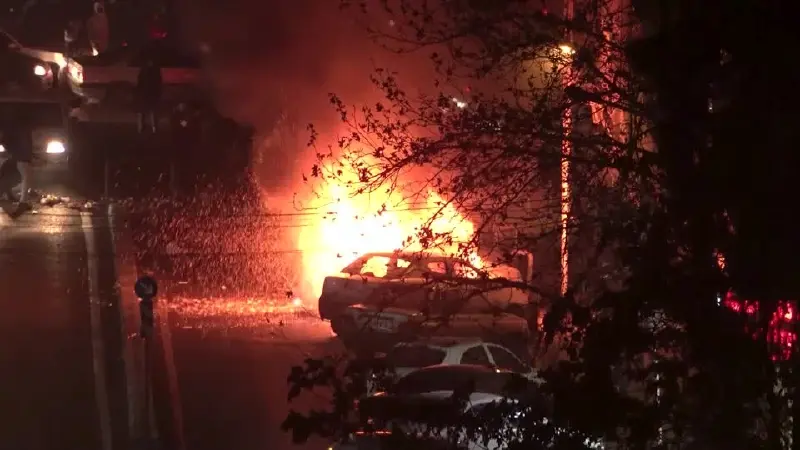


The death toll in Iran’s ongoing protests surpasses 2,000, as President Donald Trump expresses support for the demonstrators, promising that help is on the way. Tensions rise as the Iranian government intensifies its crackdown on the largest unrest in years.
- An Iranian official and a US-based rights group have reported that the death toll from ongoing protests has exceeded 2,000, with the majority being protesters.
- President Trump has publicly encouraged the protests, telling Iranians via social media to "Keep protesting" and promising that "Help is on its way."
- In response to the crackdown, Trump has cancelled meetings with Iranian officials and suggested that military action is a possible option being considered.
- Iran's government has accused Trump of inciting violence and political instability, with its UN Ambassador claiming the U.S. is threatening Iran's sovereignty.
US President Donald Trump, on Tuesday (January 13), urged Iranians to continue protesting, emphasising that help is on the way and calling on them to remember the names of those abusing them.
This came as Iran's clerical regime escalated its crackdown on the largest demonstrations in years.
Iran responded by accusing Trump of inciting violence and political instability.
"Keep protesting, Iranian patriots, take over your institutions! Help is on its way," Trump posted on Truth Social, though he did not specify what form the help would take.
Trump also said he had cancelled all meetings with Iranian officials until the "senseless killing" of protesters ceased, later adding that Iranians should "save the names of the killers and abusers... because they'll pay a very big price."
An Iranian official reported that around 2,000 people had been killed in the unrest, marking the first time the authorities disclosed an overall death toll from the more than two weeks of protests.
US-based rights group HRANA confirmed the deaths of 2,003 people, with 1,850 of them being protesters, and reported that 16,784 individuals had been detained, significantly higher than previous figures.

When asked about his statement, "help is on its way," Trump told reporters that they would have to "figure that out."
He also suggested military action could be among the options being considered to respond to Iran's crackdown.
"The killing looks significant, but we don’t know yet for certain," Trump said, adding he would receive a report later on Tuesday regarding the protests in Iran and would act accordingly.
In the meantime, the US State Department urged American citizens to leave Iran immediately, recommending they use land routes through Turkey or Armenia.
Iran has accused both the US and Israel of inciting the unrest.
In response to Trump's "help is on its way" post, Iran's UN Ambassador Amir Saeid Iravani claimed that Trump was inciting violence, threatening Iran's sovereignty, and attempting to destabilise the government.
He accused the US and Israel of bearing legal responsibility for the loss of innocent lives, particularly among the youth, in the protests.
Russia also condemned any external interference in Iran’s internal affairs, warning of "disastrous consequences" for the Middle East and global security should there be further US military action.
In an interview with CBS News, Trump warned of "very strong action" if Iran begins executing protesters, although he did not specify what measures would be taken.
The Norway-based Iran Human Rights Society confirmed that executions are common in Iranian prisons, and an Iranian Kurdish rights group reported that a 26-year-old man arrested during the protests in Karaj is facing execution.
However, the report could not be independently verified, and state media have not reported any death sentences thus far.
Information flow has been severely restricted in Iran, with an internet blackout hampering communications.
The UN reported that while phone services were restored, internet access remains limited. Meanwhile, Elon Musk’s Starlink satellite internet service has been made available for free in Iran to expand information access.
The protests, initially sparked by economic hardship, have become a broader call for the downfall of the clerical government.
Despite the ongoing crackdown, there are no signs of significant fractures within the security elite, and the regime remains in control.
Several European countries, including Britain, France, Germany, and Italy, have summoned Iranian ambassadors to protest the ongoing repression.
The European Commission President, Ursula von der Leyen, described the rising death toll in Iran as "horrifying."
While the international community remains divided over Iran’s future, German Chancellor Friedrich Merz suggested that the regime may be nearing its end, stating, "If it has to maintain power through violence, it is effectively at its end."
Reuters
