
Moon First: Musk Pivots SpaceX Strategy to Build ‘Self-Sustaining City’ Within a Decade
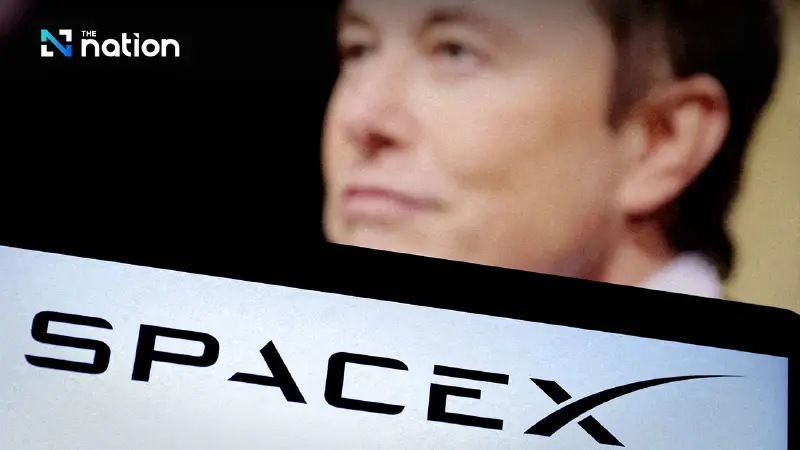


Elon Musk prioritises a ‘self-growing’ lunar colony over Mars to secure humanity’s future, as SpaceX targets its first uncrewed Moon landing for March 2027
- Elon Musk has pivoted SpaceX's primary objective to establishing a "self-growing city" on the Moon, prioritizing it over the more complex mission to Mars.
- The new goal is to build this sustainable lunar settlement within the next ten years, viewing it as a more immediate "insurance policy" for humanity.
- Reflecting this strategic shift, SpaceX is now targeting its first uncrewed lunar landing for March 2027, pushing back a previously planned uncrewed Mars mission.
Elon Musk prioritises a ‘self-growing’ lunar colony over Mars to secure humanity’s future, as SpaceX targets its first uncrewed Moon landing for March 2027.
Elon Musk has announced a profound strategic pivot for SpaceX, declaring that the establishment of a "self-growing city" on the Moon is now the company’s paramount objective.
The billionaire chief executive believes that a sustainable lunar settlement can be achieved within the next ten years—offering a more immediate safeguard for human civilisation than the more logistically complex journey to Mars.
In a statement shared on his social media platform, X, on Sunday, Musk explained that while SpaceX remains committed to Mars in the long term, the immediate focus must shift to the Moon.
He argued that the development of lunar infrastructure can be accelerated far more rapidly than Martian projects, providing a vital "insurance policy" for humanity.
This strategic recalibration mirrors a recent report by the Wall Street Journal, which suggests SpaceX has formally advised investors of a "Moon-first" hierarchy.
The company is now targeting March 2027 for its first uncrewed lunar landing, effectively pushing back previous aspirations for a 2026 uncrewed Mars mission.
The shift comes at a time of escalating international competition. China has intensified its own lunar programme, aiming to return taikonauts to the Moon within the decade—the first human footfall on the lunar surface since the American Apollo 17 mission in 1972.
The announcement follows the seismic news of SpaceX’s acquisition of xAI, Musk’s artificial intelligence venture. The deal values the rocket and satellite titan at a staggering $1 trillion, while xAI is valued at $250 billion.

This combined $1.25 trillion powerhouse reflects Musk’s vision of a deep-tech synergy, where advanced AI is integrated into the very fabric of space exploration and extra-terrestrial colonisation.
Industry analysts suggest that by focusing on the Moon, Musk is leveraging the more frequent launch windows and shorter travel times to prove his "city-building" technology before embarking on the multi-month voyage to the Red Planet.
