
Obituary: Ayatollah Ali Khamenei, the Revolutionary Architect of Modern Iran
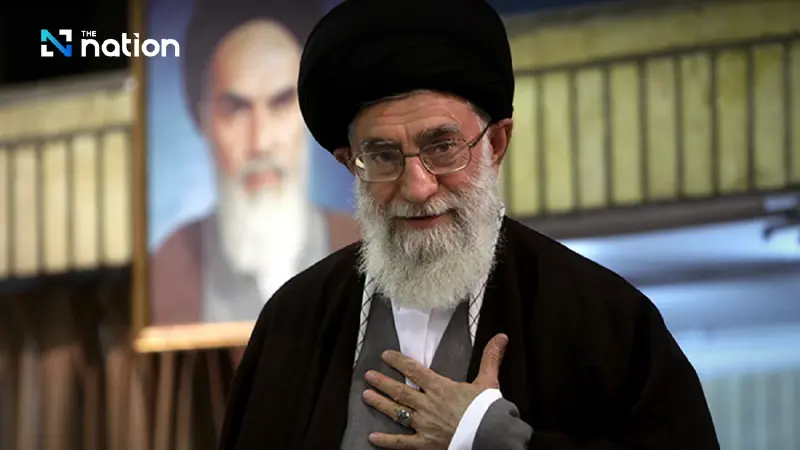


Born in the shadow of the Imam Reza Shrine, the man who steered Iran through four decades of defiance leaves a legacy of absolute power and regional conflict
- Ayatollah Ali Khamenei, who served as Iran's Supreme Leader for 36 years with absolute authority over all state policy, was reportedly killed in a joint US-Israeli military strike on February 28, 2026.
- A key figure in the 1979 Revolution and a protégé of Ayatollah Khomeini, he was appointed Supreme Leader in 1989 and consolidated his power to become the final arbiter of Iran's domestic, military, and nuclear affairs.
- He was the chief architect of the "Axis of Resistance," a foreign policy strategy that built a network of regional allies and militias, including Hezbollah, to project Iranian influence and counter the US and Israel.
- Domestically, his rule was defined by a refusal to compromise on revolutionary principles, leading to the suppression of major protest movements such as the 2009 Green Movement and the 2022 "Woman, Life, Freedom" demonstrations.
Born in the shadow of the Imam Reza Shrine, the man who steered Iran through four decades of defiance leaves a legacy of absolute power and regional conflict.
The death of Ayatollah Ali Khamenei on 28 February 2026, following a joint US-Israeli military strike, brings to an end one of the most consequential and controversial political lives of the 21st century.
As the Supreme Leader of the Islamic Republic for 36 years, Khamenei was the final arbiter of Iran's domestic, military, and nuclear policies.
Early Life and Theological Roots
Sayyid Ali Hosseini Khamenei was born on 19 April 1939 in the holy city of Mashhad, in north-eastern Iran. The second of eight children, he was raised in a family of modest means; his father, Ayatollah Sayyid Javad Khamenei, was a traditional religious scholar of Azeri descent.
His education began at a traditional maktab before he progressed to the theological seminaries of Mashhad and, later, the prestigious centres of learning in Najaf and Qom.
It was in Qom during the early 1960s that he became a devoted student and confidant of Ayatollah Ruhollah Khomeini, the future father of the 1979 Revolution.
The Revolutionary Firebrand
Khamenei’s political awakening was defined by his fierce opposition to the pro-Western monarchy of Shah Mohammad Reza Pahlavi. Between 1963 and 1978, he was arrested at least six times by the Shah’s intelligence service, SAVAK, and spent significant periods in internal exile.
These years of imprisonment and clandestine activism cemented his ideological commitment to Velayat-e Faqih (the Guardianship of the Islamic Jurist).
Following the 1979 Revolution, he was appointed to the Revolutionary Council. In 1981, while serving as Tehran’s Friday prayer leader, he survived an assassination attempt by the Mujahideen-e Khalq (MEK).
A bomb concealed in a tape recorder exploded during a speech, leaving his right arm permanently impaired—an injury he frequently referenced as a "badge of honour" for the revolution.

Presidential Years and the Rise to Supreme Power
Elected as Iran’s third president in October 1981, Khamenei served two terms during the height of the devastating Iran-Iraq War.
It was during this eight-year conflict that he forged his symbiotic relationship with the Islamic Revolutionary Guard Corps (IRGC), viewing them as the essential vanguard against foreign "Arrogance."
Upon Khomeini’s death in June 1989, the Assembly of Experts appointed Khamenei as Supreme Leader. Though initially considered a junior cleric in terms of religious rank, he rapidly outmanoeuvred rivals to consolidate absolute authority.
He effectively placed the Office of the Supreme Leader at the apex of the state, overriding presidents and parliament alike.

A Legacy of 'Maximum Resistance'
Khamenei’s 36-year tenure was defined by a foreign policy of "Strategic Patience" and "Maximum Resistance."
He was the chief architect of the "Axis of Resistance", a network of regional allies including Hezbollah in Lebanon and various militias in Iraq and Yemen, designed to project Iranian influence and deter US and Israeli intervention.
Domestically, his rule was marked by a refusal to compromise on the Islamic Republic’s core tenets. He oversaw the suppression of the 1999 student riots, the 2009 Green Movement, and the widespread "Woman, Life, Freedom" protests of 2022.
His final months in late 2025 were spent managing further mass unrest, where he prioritised the survival of the clerical establishment over popular reform.

The Final Chapter
Khamenei’s death comes at a moment of extreme regional tension. Having spent a lifetime attempting to insulate Iran from Western influence through nuclear development and military self-reliance, his sudden removal leaves a profound power vacuum.
As Tehran prepares for a transition in the shadow of war, his 1939 birth in a humble Mashhad home seems a world away from the global firestorm his death has now ignited.
