
Thai Industry Chiefs Demand Emergency Energy Summit as Middle East Conflict Escalates
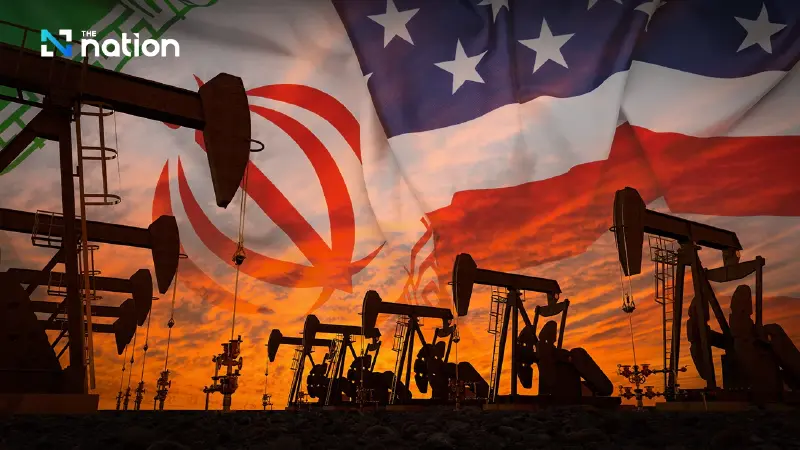


The Federation of Thai Industries warns of a "direct threat" to national recovery, urging the Ministry of Energy to audit fuel reserves and map new routes
- The Federation of Thai Industries (FTI) is demanding an emergency summit with the Ministry of Energy and fuel traders over the escalating Middle East conflict.
- Industry leaders fear the conflict will cause a catastrophic spike in global oil prices and disrupt supply through the vital Strait of Hormuz.
- The FTI has proposed a three-point plan, including an immediate audit of the nation's strategic oil reserves and identifying alternative shipping routes.
- The call for action is driven by Thailand's heavy reliance on crude oil imports from the Middle East, which the FTI calls a "direct threat" to the national economy.
The Federation of Thai Industries warns of a "direct threat" to national recovery, urging the Ministry of Energy to audit fuel reserves and map new routes.
The Federation of Thai Industries (FTI) has issued an urgent call for the Ministry of Energy to convene an emergency summit with the nation’s leading fuel traders.
The move follows growing fears that the military confrontation between Iran, Israel, and the United States will trigger a catastrophic spike in global oil prices.
Kriengkrai Thiennukul, chairman of the FTI, warned that Thailand’s heavy reliance on Middle Eastern crude makes the domestic economy uniquely vulnerable to regional instability.
With the Strait of Hormuz—a vital maritime artery for Thai energy imports—facing potential closure, industry leaders are demanding an immediate assessment of the nation's strategic oil reserves.
"In the short term, we are seeing a psychological surge in commodity prices, particularly gold and oil," Kriengkrai told Thansettakij. "However, the long-term risk is far more severe. If this conflict mirrors the war in Ukraine and begins to target refineries or oil fields, the global economic recovery could be derailed entirely."
The FTI has proposed a three-point survival strategy for the government:
Immediate Consultations: A formal meeting between the Ministry of Energy and domestic oil majors to synchronise contingency plans.
Logistical Redesign: Identifying alternative shipping lanes to bypass high-risk zones, despite the inevitable increase in freight and insurance costs.
National Reserve Audit: A transparent evaluation of how many days Thailand’s current oil stocks can sustain the economy in the event of a total regional blockade.
Kriengkrai noted that while the Russia-Ukraine war was geographically distant, the current situation in the Persian Gulf strikes at the heart of Thailand’s supply chain.
"Thailand imports the vast majority of its oil from this specific region. We must determine exactly how long we can hold out if the Gulf is closed to navigation," he added.
While acknowledging that Thailand lacks the geopolitical weight to halt the conflict, the FTI suggests that Bangkok should join international diplomatic efforts to call for a ceasefire.
In the meantime, the Federation is urging the government to identify which specific industrial sectors are most at risk from soaring energy costs to prepare targeted support measures.
"This is no longer a distant diplomatic issue," Kriengkrai concluded. "It is a direct threat to our industrial heartbeat."
