
Hormuz becomes war’s pivot as analysts warn of six energy chokepoints
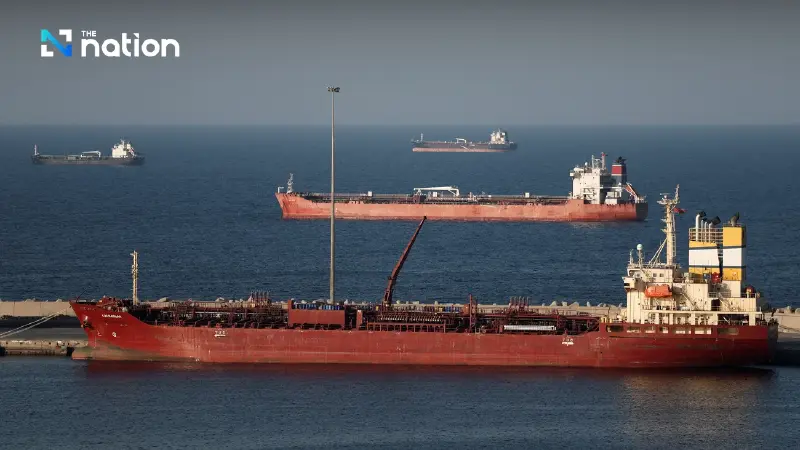


Analysts warn the Strait of Hormuz could determine the Middle East war’s outcome as attacks on shipping escalate and six key energy hubs face rising risk
The Strait of Hormuz is emerging as the decisive flashpoint of the Middle East conflict, with analysts warning that the outcome of the war could hinge on control of the strategic waterway after a Thai vessel was attacked in the area.
The crisis in the Strait of Hormuz now directly affects Thailand rather than indirectly, following the attack on the Thai-flagged cargo ship Mayuree Naree. As a result, strategic assessments and possible war scenarios are becoming increasingly important.
Professor Emeritus Dr Surachart Bamrungsuk, a prominent Thai security scholar, said the maritime security crisis surrounding the Strait of Hormuz – where Iran has threatened to block oil shipments and heavy weapons have already been used against vessels – could significantly affect global energy security.
He said the situation also challenges the United States’ role in maintaining security for the transport of oil and natural gas in the region. At present, the strait has not returned to normal shipping operations and may become increasingly difficult to reopen fully.
From Iran’s perspective, he added, the war is unlikely to end quickly. Tehran has indicated that it will decide for itself when the conflict ends, rather than following declarations from US leaders, suggesting the war may not conclude as quickly as previously predicted by President Donald Trump.
Looking at the overall situation during the past two weeks, Surachart said the United States may be “winning without victory”. Using a boxing analogy, he said Washington has yet to deliver a true knockout blow against Iran.
Gulf states becoming “hostages of war”
A security source who previously headed a national security agency said the latest developments show the Strait of Hormuz has become the most critical strategic point determining victory or defeat in the conflict.
Countries around the Gulf that rely heavily on oil revenue are directly threatened, while oil-importing nations also face severe indirect impacts as energy prices rise and goods and services become more expensive.
If the crisis in the Strait of Hormuz continues, Gulf economies could suffer the most serious consequences, with disrupted revenues and possible shortages of essential goods.
“In effect, the countries around the Gulf are becoming hostages of the war, along with nations dependent on oil imports,” the source said.
Iran’s strategy: forcing a decisive confrontation
The source said the conflict could escalate further because the situation may push the United States into launching an operation to reopen and secure the Strait of Hormuz.
“This could be Iran’s strategy – to provoke a final battle that determines the outcome once and for all,” the source said.
Such a confrontation could inflict heavy losses on both sides. The United States would likely need to deploy aircraft carrier strike groups to secure the waterway, while Iran could concentrate its forces to attack US naval assets in a single area.
That prospect could force President Trump to weigh his options carefully. Although the United States may hold military advantages, the potential losses could still be substantial.
Aircraft carriers are among Washington’s most important offensive military assets. Significant losses could also affect future strategic planning against other potential adversaries such as China or North Korea.
Trump described as “an armed negotiator”
Associate Professor Dr Panitan Wattanayagorn, an expert on international relations and security affairs, said Trump should be seen as “a businessman-negotiator with weapons”.
Because of this, he said, Trump’s decisions can be difficult to predict. However, the US president likely wants any outcome to favour the United States, leaving rivals weakened or defeated.
Israel’s role will also influence the direction of the conflict, particularly how long it can maintain military pressure before negotiations begin.
Panitan suggested a potential turning point could occur toward the end of March, when Trump is expected to meet China’s leadership. If Washington wants the conflict to end earlier, it may need to increase military pressure first.
Reopening Hormuz may not be easy
Another independent security analyst said more than ten vessels from various countries have already been attacked in the region, and the Thai ship was not the first.
Several countries have urged the United States to help reduce the impact of the disruption to shipping through the strait, but success has so far been limited.
The United States has attempted to weaken Iran’s naval capabilities and reduce its ability to strike vessels in the waterway, but those efforts have not yet produced decisive results and operations are expected to continue.
Six strategic energy sites that could shake the world
Analysts warn that closing the Strait of Hormuz might only be the first stage of the crisis. An even greater risk could come from attacks on key global energy facilities.

Six major strategic locations frequently cited as critical to global energy supply include:
1. Abqaiq, Saudi Arabia
- This is not just an oil site, but the largest crude oil processing plant in the world.
- More than 70% of Saudi Arabia’s crude oil, around 7 million barrels per day, must be sent here to separate gas and sulphur before export.
- It was previously hit by a drone attack in 2019, shocking the world.
2. Ras Tanura, Saudi Arabia
- The world’s largest crude oil export port and refinery.
- Located on the Persian Gulf, it is Saudi Arabia’s main gateway.
- It is used to load oil onto very large crude carriers (VLCCs).
3. Ras Laffan, Qatar
- The largest LNG production and export hub in the world.
- Almost all of Qatar’s natural gas, on which Thailand relies heavily, is super-cooled into liquid form (LNG) at this port.
4. South Pars, Iran
- The largest natural gas field in the world.
- It is jointly developed with Qatar’s side, known as the North Field.
- It is an energy source that sustains Iran’s economy.
5. Kharg Island, Iran
- Iran’s main oil export terminal.
- More than 90% of Iran’s crude oil must be pumped onto ships at this island.
- At present, it is the highest-risk point if Israel or Western countries want to cut off Iran’s lifeline.
6. Mina Al Ahmadi, Kuwait
- Kuwait’s main oil export port and refinery.
- One of OPEC’s major oil exporters.
Contributor: Panurach Damrongthai, energy and innovation expert
