
Lufthansa Braces for 48-Hour Pilot Strike Amid Middle East Geopolitical Volatility
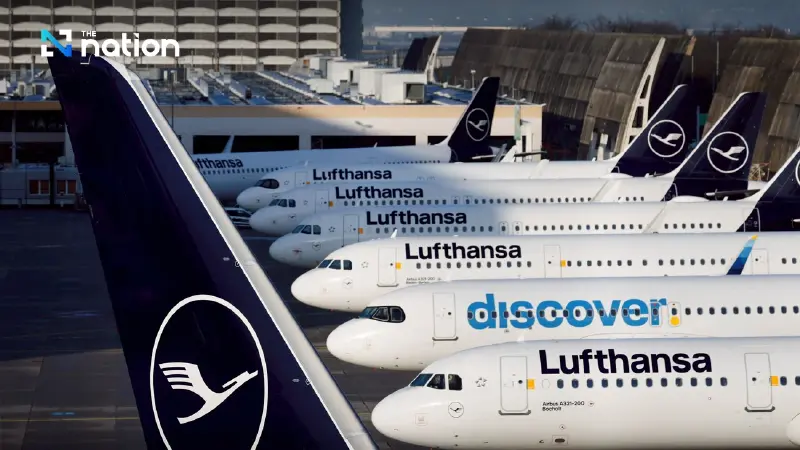


Mainline and cargo operations face 90% cancellations as pension disputes collide with soaring fuel costs and regional airspace closures
- Lufthansa pilots have initiated a 48-hour strike, leading to the cancellation of approximately 90% of the airline's mainline and cargo flights.
- The industrial action stems from a dispute over Lufthansa's proposal to change pilot pensions from a defined benefit to a defined contribution scheme, which the union argues shifts market risk onto employees.
- Citing "current geopolitical uncertainty," the pilot's union has strategically exempted flights to 13 Middle Eastern destinations from the strike to maintain essential connectivity to the volatile region.
- The strike compounds existing operational challenges for the airline, which is already grappling with high fuel costs and flight rerouting due to escalating tensions in the Middle East.
Mainline and cargo operations face 90% cancellations as pension disputes collide with soaring fuel costs and regional airspace closures.
European aviation networks have been plunged into significant disruption today as pilots and cabin crew at Lufthansa (LH) commenced a 48-hour walkout.
The strike, organised by the Vereinigung Cockpit (VC) union, is scheduled to run through 12 and 13 March 2026, targeting the airline’s primary hubs in Frankfurt (FRA) and Munich (MUC).
The industrial action comes at a critical juncture for the German carrier.
Management is currently grappling with a "perfect storm" of operational challenges, including surging jet fuel prices and the complex rerouting of flight paths necessitated by escalating tensions between Iran, the US, and Israel.
Strategic Exemptions and Operational Resilience
In a tactical move, the VC union has explicitly excluded flights to 13 Middle Eastern destinations—including Israel, Saudi Arabia, and the UAE—from the strike.
Union leaders cited the "current geopolitical uncertainty" as a humanitarian justification to maintain essential connectivity.

Despite this, the financial and operational impact remains severe:
Flight Volume: Lufthansa expects to ground nearly 90% of its domestic and European services, though it aims to maintain 60% of long-haul passenger flights through volunteer crews and aircraft swaps.
Fiscal Hit: Analysts estimate the two-day walkout will cost the group between €10 million and €20 million, following a similar action in February that resulted in a €15 million loss.
Cargo Constraints: While Lufthansa Cargo expects to operate 80% of its freighter schedule, time-sensitive supply chains—particularly automotive and pharmaceutical components—face significant bottlenecks at the Frankfurt gateway.

The Pension Deadlock: Defined Benefits vs. Market Risk
The core of the dispute lies in a fundamental shift in Lufthansa’s capital structure.
Management seeks to transition pilot pensions from a defined benefit model to a capital market-financed defined contribution scheme.
Michael Niggemann, Lufthansa’s Executive Board Member for HR, labelled the escalation "incomprehensible," arguing that the airline already provides premium retirement security.
However, the union contends that the new model shifts financial market risks entirely onto employees.
Furthermore, a secondary dispute involves Lufthansa CityLine, where the union alleges the subsidiary is being used to bypass mainline pay scales through lower-cost employment structures.
Passenger Rights and Market Sentiment
Under EU261 regulations, affected passengers are likely entitled to compensation, as industrial action by an airline’s own staff is generally not classified as an "extraordinary circumstance."
Lufthansa is currently attempting to rebook tens of thousands of travellers onto sister carriers, including Austrian Airlines, SWISS, and Eurowings.
Despite the immediate chaos, the markets appear to view the strike as a contained operational risk rather than a systemic threat; Lufthansa stock recently saw a 7.9% gain, suggesting investor confidence in the airline’s long-term cost-cutting measures and its shift toward lower-cost regional units.
Source : Reuters, DW, VisaHQ, Bitget, Aviation2z
