
Middle East flight disruption prompts countries to plan citizen evacuations
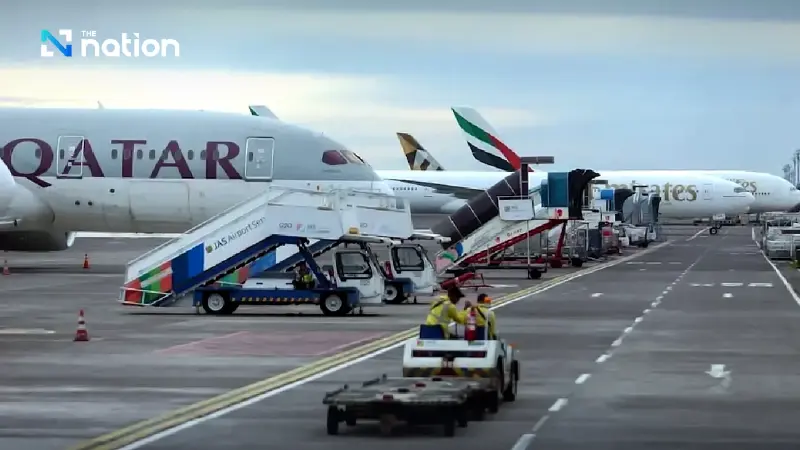


Airspace closures across the region have grounded many commercial services, stranding tens of thousands of travellers and triggering emergency repatriation steps by governments worldwide.
- Widespread airspace closures and commercial flight suspensions in the Middle East, prompted by escalating conflict, have stranded numerous foreign nationals.
- Multiple countries, including France, Germany, the UK, and Italy, are planning or have commenced evacuation operations, often utilizing charter flights.
- Evacuation strategies vary, with some nations prioritizing vulnerable groups, the US urging citizens to use remaining commercial routes, and others arranging overland transport.
The escalating conflict following attacks by the United States and Israel on Iran has led to the closure of airspace in several Middle Eastern countries.
Many commercial flights have been suspended, leaving tens of thousands of foreign passengers stranded, as governments worldwide race to assess the situation and prepare evacuation measures amid security and travel constraints.

Australia: No decision yet on special flights
The Australian government said around 115,000 Australians are in the region.
Foreign Minister Penny Wong said evacuation remains difficult as long as the airspace stays closed.
Australia is also in talks with airlines to accommodate travel once commercial flights resume.
France: Charter flights planned, prioritising vulnerable groups
French government officials said around 400,000 French nationals are in more than 12 affected countries, including permanent residents and tourists.
Authorities have deployed consular staff to Israel’s borders with Egypt and Jordan to facilitate overland travel, and are preparing charter flights, prioritising children, older people and other vulnerable individuals.
Germany: Lufthansa flights to bring back high-risk groups first
The German government said the tourism industry is responsible for returning most of an estimated 30,000 citizens, with the military to be used only as a last resort.
Berlin is preparing two Lufthansa charter flights from Riyadh and Muscat to bring back children, pregnant women and people with disabilities.
Greece–Italy–Spain: Evacuation operations begin
The Greek prime minister said evacuation plans have been prepared for several thousand citizens, although travel remains disrupted by airspace closures.
Italy’s first charter flight has brought 127 Italians from Oman to Rome, while Spain has begun evacuating more than 175 citizens via Abu Dhabi, and plans to reinforce its embassies in the region to support additional assistance.
Philippines: More than 1,000 workers seek to return home
The Philippine president urged workers in Israel and nearby countries to move to safer areas.
Around 2.4 million Filipinos work in the Middle East, and more than 1,000 have applied to return home.

United Kingdom: First citizens arrive back home
The UK government said the first flight bringing British citizens has arrived in the country.
Around 300,000 Britons are in the region, and more than 102,000 have registered with the foreign ministry for assistance.
United States: Urges citizens to leave immediately
The United States Department of State urged citizens to leave more than 12 Middle Eastern countries as soon as possible via any remaining commercial routes, although it has not announced official evacuation flights.
It also advised citizens to enrol in the Smart Traveller Enrollment Program (STEP) to receive security updates.
UAE–Slovenia–Switzerland: Immediate measures
The United Arab Emirates is preparing special flights to help tens of thousands of stranded passengers.
Slovenia has arranged police-escorted buses to take its citizens to Muscat airport, while Switzerland said it will not conduct an evacuation, but has opened a hotline and received more than 2,000 calls within a few days.

