
US–Iran conflict threatens B60bn Thai export hit, spilling into tourism, property and retail
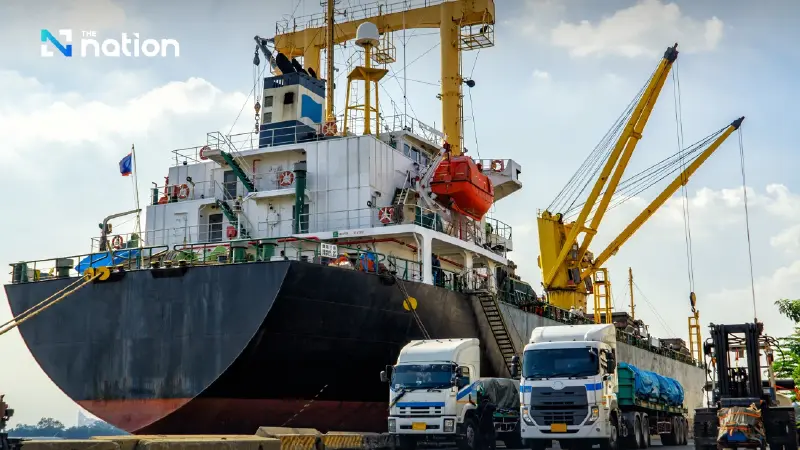


Thai exports to the Middle East could lose B60bn if sea/air routes stall for two months, with spillovers to tourism, retail and property.
- The conflict between the United States and Iran could damage Thailand’s exports to the Middle East by as much as 60 billion baht if sea and air transport routes are disrupted for two months.
- The situation directly affects Thailand’s tourism sector through flight cancellations and route changes via the Middle East, a key aviation hub for long-haul travellers.
- Retail and property businesses are being hit by weaker consumer confidence and the risk that construction-material and energy costs could surge in line with global oil prices.
War erupted after the United States and Israel launched attacks on Iran, triggering retaliation that spread across the Middle East and pushing global geopolitics into a new point of fragility.
A prolonged conflict would not only rattle energy markets and gold prices, but also intensify global trade volatility for Thailand.
The shock could transmit through oil prices, inflation, transport costs and exports, squeezing the economy and households’ cost of living if the war does not subside easily.
The decisive point: closing “Hormuz” shakes the world economy
Associate Professor Dr Aat Pisanwanich, an independent academic and specialist in international and ASEAN economics, told Thansettakij that the US–Israel conflict with Iran has escalated into a full-scale war after Iran retaliated by attacking US bases in 11 countries, including some economic areas.
The aim, he said, is to use economic weapons to pressure the opposing side alongside an official closure of the Strait of Hormuz.
No shipping lines dare to pass through due to safety fears.
This week, he said, is a “make-or-break” moment that will determine whether the war ends quickly or becomes protracted, and could even lead to political change in Iran.
Globally, the impact would hit energy prices head-on because more than 20% of the world’s oil shipments — about one-fifth — pass through the Strait of Hormuz.
Oil prices could rise by 5% to 100%, and in a worst-case scenario could reach US$100–150 per barrel.
Global stock markets are likely to fall amid uncertainty, except for some sectors in the United States, while gold would become a safe-haven asset, with a chance of climbing to US$5,500–5,600 per ounce.
Domestically, Thai gold prices could reach 80,000–100,000 baht per baht-weight of gold if the Middle East “goes up in flames”.

Thai exports could drop by 60 billion baht
Thailand exports to 15 Middle Eastern countries, worth 400 billion baht in 2025 — about 4% of total exports — with 70% concentrated in the GCC group.
If shipping routes or airlines are disrupted for two months, based on average exports of 33 billion baht per month, the damage could reach 60 billion baht.
The baht could become volatile in line with capital flows, while oil costs could push domestic retail fuel prices to as high as 80 baht per litre, further worsening the cost of living.
“If the situation remains severe, Thailand’s GDP growth this year could slow to just 0.5–1%, from the NESDC’s previous midpoint forecast of 2%, and exports could fall within a range of -3% to +1%,” Dr At said.
He proposed that the government set up a war room to closely manage energy prices and the cost of living, while preparing measures to support exporters and proactively manage geopolitical risk — “because this is now the number one risk factor, overtaking the trade war.”
Kriengkrai Thiennukul, chairman of the Federation of Thai Industries (FTI), said if the US–Israel attacks on Iran end within one week, the impact would be short-term and would gradually ease.
But if it drags on longer, Thailand must assess whether the conflict could spread across the region.
If the escalation broadens, oil prices could breach US$100 per barrel, driving global inflation, energy shortages and higher shipping costs.
FTI to convene members to assess risks
The key issue, he said, is the energy risk that could sharply raise costs.
Although Thailand does not rely directly on Iranian oil, it sources most of its energy from the Middle East and must accelerate efforts to find alternatives.
He added that he understood Energy Minister Auttapol Rerkpiboon had called a meeting to increase natural gas production in the Gulf of Thailand.
Thailand’s current oil stockpile, he said, would last about 60 days, while the government is managing the impact via the Oil Fuel Fund and export-control measures.
Industry players are preparing to hold an urgent meeting within 1–2 days to assess risks, identify backup sources of raw materials or energy, and monitor how to secure alternatives and cope with price volatility if disruptions occur.
SMEs urge steps to close economic gaps and absorb the shock
Sangchai Theerakulwanich, chairman of strategy at the Thai SME Confederation, warned that the violence could spread into an “underground war” that would disrupt global trade.
In 2025, Thai SMEs exported goods to Iran worth US$38.54 million, accounting for 28.17% of Thailand’s exports to Iran.
Overall Thailand–Iran trade in 2025 was US$137 million, with Thailand exporting US$137 million and importing US$9.3 million.
The top five SME export categories to Iran were:
- machinery and boilers — US$6.39 million
- electrical machinery — US$5.71 million
- vehicles and parts — US$5.44 million
- fruit — US$3.89 million
- vegetables — US$2.47 million
Sangchai proposed that Thailand urgently strengthen economic security to cope with energy and oil volatility, maintain supply-chain stability, build energy reserves and manage logistics — especially routes through the Strait of Hormuz — control costs so they do not hit the cost of living, prepare alternative-market measures, protect exports and tourism, and maintain balanced international relations so Thailand is not drawn directly into the conflict.
Global economy, energy and financial markets jolted
Yuthasak Supasorn, chairman of the Industrial Estate Authority of Thailand (IEAT), said the Middle East conflict stemming from US and Israeli military operations against Iran marks a major geopolitical turning point.
The death of Iran’s supreme leader has created a power vacuum and pushed the region towards full-scale war.
The conflict has expanded across air, land and sea, creating systemic shockwaves for the global economy, energy and financial markets.
The key pressure point is the Strait of Hormuz, a route for around 20 million barrels per day of oil and LNG — about one-fifth of global supply.
Blocking the route creates an “artificial supply shortage”, with more than 15 million barrels per day unable to be delivered.
That risk could push Brent crude above US$100 per barrel, lift freight and insurance costs by 50–140%, and every 10% rise in oil prices could raise global inflation by 0.35% within one year.
For Thailand, which relies on the Middle East for 52% of its crude oil imports, the main sources still pass through Hormuz even though Thailand does not import directly from Iran.
Thailand currently has about 60 days of total reserves.
The government has therefore suspended exports of petroleum products, used the Oil Fuel Fund to cap diesel prices at no more than 30 baht per litre, and increased the share of coal and hydropower generation to reduce LNG use.
Capital markets have shifted into “risk-off” mode: the SET index risks testing 1,400 points, the baht may weaken to 33–35 per US dollar, gold could rise above US$5,300 per ounce, while tourism and exports to the Middle East — about 3.5% of the total — are beginning to slow.
If prolonged, crude oil could surge to US$120 per barrel
Yuthasak outlined two scenarios.
If the conflict ends quickly, oil prices could rise to US$75–80 before easing, markets would rebound in a V-shape, and the impact on Thailand would be limited.
But if it becomes protracted and Hormuz remains closed, the world risks an oil shock, with prices holding above US$100–120, recession risks rising and inflation becoming entrenched.
Thailand would need to accelerate energy management, prepare rationing plans if necessary, speed up the PDP 2026 power development plan, diversify markets through new FTAs, and adopt an “active neutrality” stance to preserve economic stability.
Spillover: fewer foreign tourists to Thailand
The Tourism Authority of Thailand (TAT) said attacks in the Middle East have led many countries to close airspace and major airlines — including Emirates, Qatar Airways, Etihad Airways, Kuwait Airways and Flydubai — to suspend flights temporarily.
This has affected travellers using the Middle East as a hub to connect to Asia, including Thailand. Long-haul carriers that do not rely on Gulf hubs, such as Thai Airways, Lufthansa and Air France, can still operate but must adjust routes, extending travel times.
“TAT estimates that in March 2026, foreign arrivals to Thailand will be around 2.8 million, below the original target of 3 million — a drop of about 150,000 from the Middle East, Europe and the Americas.”
For full-year 2026, TAT outlined two scenarios.
- In the “best case”, if the conflict ends within two weeks, long-haul markets recover within one month, China continues growing, and some travellers may shift destinations to Thailand. Arrivals could rise 6–9% for the year to 35–36 million, with minimal impact.
- In the “worst case”, if the conflict lasts more than three months, long-haul recovery would be slower. Oil prices and baht volatility would pressure the economy, and arrivals could fall to 30–31 million, down 5–8% from 2025, with Europe, the Americas and the Middle East hit hardest.
TAT has opened a monitoring centre and is accelerating efforts to pull in replacement markets from East Asia and ASEAN — especially China, South Korea and Malaysia — while adjusting plans immediately as the situation becomes clearer.
Flight-route shock squeezes demand as costs jump
Adith Chairattananon, secretary-general of the Association of Thai Travel Agents (ATTA), said the Middle East conflict has hit Thai tourism immediately through cancellations, delays and flight rerouting via Gulf hubs such as Dubai and Doha — key connection points linking Europe, Africa and the Americas to Asia, including Thailand.
There is also a confidence impact, with travellers avoiding connections through higher-risk regions even though Thailand is safe.
Meanwhile, higher oil and insurance costs are pushing up airfares and slowing travel decisions. Cancellations from the Middle East market have already started appearing in March.
He outlined two scenarios:
Scenario 1: ends within one week
This would be a short but sharp shock.
Flights would be disrupted for 3–10 days before gradually normalising. Most demand would be “postponed” rather than “lost”.
Thailand would be affected mainly in long-haul markets that require connections through the Middle East and in tightly scheduled group tours. Short-haul Asian markets would be less affected and recover faster.
Urgent proposals include establishing a war room to track airspace and flights daily, communicating that “Thailand is safe but routes may be disrupted”, and pushing flexible policies with airlines and agencies.
Scenario 2: lasts more than one week
This would shift into a high-cost environment: longer detours, ongoing schedule disruption, and a real contraction in long-haul markets — especially those connecting via Gulf hubs and MICE travel.
Tourism supply chains would face shorter booking windows and tougher price competition.
The response should focus on replacement short-haul markets, national-level confidence packages, coordination with airlines on capacity adjustments, and data-driven management — while stressing that Thailand may not be on the battlefield, but it is on the “flight path”, requiring tighter security-risk monitoring and better expectation management.
If it drags beyond three months, purchasing power and tourism take a hit
Dr Chatchai Tuangrattanaphan, secretary-general of the Federation of Asia-Pacific Retailers Associations (FAPRA), said retail impacts typically arrive with a lag of around 6–7 months as external shocks pass through the economy from upstream to downstream, meaning retail still has some “breathing room” in the short term.
However, if the conflict lasts beyond three months, consumer confidence would begin to wobble and spending would slow — especially if the Middle East conflict pushes up oil prices, raising costs for raw materials, energy, transport and finance before feeding into consumer prices.
He urged the state to focus on fixing problems at the source and in production, while managing energy and logistics costs to slow cost pass-through and support purchasing power.
He added that the short-term tourism impact may not yet be severe, and it is still too early to conclude a clear direction given the high uncertainty.
Watch construction materials: higher costs could lift building prices
Anankorn Amornwatee, president of the Home Builder Association, said war-driven uncertainty is undermining consumer confidence and could delay short-term decisions to build homes.
If the situation eases quickly, the impact on Thailand’s economy would be limited, but the country must watch government measures to support purchasing power and overall stability.
Longer term, the risk lies in construction costs — materials, wages and energy — especially steel and aluminium, which are energy-linked and imported.
Prices could rise by around 30%, lifting overall costs by 15% and pushing home prices up about 10%.
Prinya Thaninthirakul, vice president for special activities at the association, said from the third quarter onwards, high oil and gold prices could continue to pressure costs, and by the end of the year construction prices could rise 5–15%.
However, he noted that Asia could still benefit later from production base relocation and supply-chain shifts.
Inflation risk rises, property purchases may slow
Sunthorn Sathaporn, president of the Housing Business Association, said it remains difficult to assess how far the latest escalation between Israel/the United States and Iran could spread, but the main risk is “energy prices”.
If the conflict becomes prolonged and disrupts Middle East transport routes, it could lift oil prices, fuel global inflation and increase financial-market volatility, raising the risk of low growth alongside high inflation.
For Thailand, a net oil importer, higher energy costs would affect inflation, the trade balance and the baht.
If inflation exceeds the target band, it could pressure the Monetary Policy Committee to slow rate cuts or gradually raise interest rates, even though the economy remains fragile.
The property sector would be affected if interest rates turn upward, tightening repayment capacity, delaying purchase decisions and making developers more cautious about launching new projects.
However, the housing estate market still has real residential demand and supply is not excessive, so a severe slump is unlikely — but the recovery could be slower than expected.
