
Middle East crisis deepens as Trump, Netanyahu threaten Iran’s leader
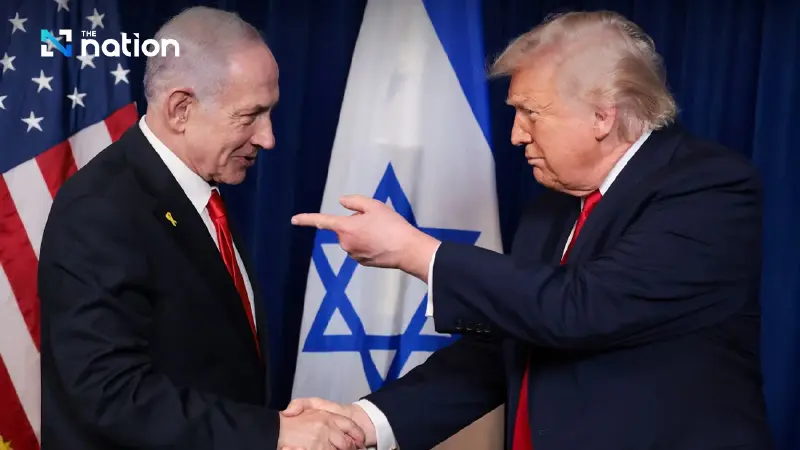


Trump and Netanyahu escalated pressure on Iran as fresh threats against new supreme leader Mojtaba Khamenei sent Middle East tensions and oil prices sharply higher.
International media are closely following a geopolitical crisis that has entered its most dangerous phase, as US President Donald Trump and Israeli Prime Minister Benjamin Netanyahu jointly take an increasingly hardline stance under the Board of Peace (BoP), established by Trump.
They declared their intention to use decisive measures to wipe out Iran’s ruling regime, while also revealing an alleged plan to assassinate the country’s new supreme leader, sending global oil prices sharply higher and triggering military confrontation on an unprecedented scale.
Trump-Netanyahu: ‘Board of peace’ with a mission to order death
Trump and Netanyahu have taken an uncompromising stance through their close cooperation. Trump wrote on social media that Iran’s navy and air force had already collapsed, adding that it was “a great honour”, as the 47th president, to have eliminated those he described as “deranged scumbags”.
Trump also told Fox News that Mojtaba Khamenei, Iran’s new supreme leader, was likely injured and left in a “damaged” condition following attacks in late February.
Netanyahu, for his part, stated clearly that there was a plan to kill Mojtaba Khamenei in order to remove what he called a threat to the region, dismissing the new supreme leader as merely a “puppet” of the Islamic Revolutionary Guard Corps (IRGC).
Netanyahu also stressed his close relationship with Trump, calling him a “personal friend”, and revealed that they had discussed joint war strategy almost daily. In addition, Israel was reportedly pursuing a parallel plan to assassinate Naim Qassem, the leader of Hezbollah in Lebanon.
Iran retaliates, shuts Strait of Hormuz and shakes the global economy
Mojtaba Khamenei, Iran’s supreme leader, made his first public statement on March 12 by calling for the closure of all US military bases in the region and declaring that the Strait of Hormuz would remain shut indefinitely in revenge for his father and those killed in enemy attacks, particularly an attack on a school in the city of Minab that reportedly left 168 people dead.
The closure of the shipping route through which around 20% of the world’s oil is transported immediately sent Brent crude above US$100 a barrel, a rise of more than 9% in a single day. Analysts described it as the most severe shock to the energy market in a generation.
To help stabilise the market, the United States issued a temporary licence allowing certain countries to continue purchasing Russian oil until April 11.
At the same time, Trump challenged Iran to go ahead and close the strait, saying the United States was prepared to send escort vessels and had already destroyed almost all of Iran’s ships.
Operation ‘Epic Fury’ hits 6,000 targets and shakes underground nuclear sites
US Central Command (CENTCOM) released figures on strikes under Operation Epic Fury, saying more than 6,000 targets in Iran had already been destroyed, including 60 vessels and numerous missile launch bases.
The latest satellite imagery also showed extensive damage at the underground nuclear facility known as Taleghan 2 within the Parchin military complex, which is believed to have been hit by US 30,000-pound GBU-57 bunker-buster bombs, leaving three large craters.
At the same time, US intelligence assessments indicated that Iran’s ruling regime remained stable and continued to maintain firm control over society.
War spreads wider: espionage in Bahrain and casualties in Iraq
The conflict has expanded into neighbouring countries. Bahrain’s Interior Ministry announced the arrest of four spies who had allegedly photographed sensitive locations and sent coordinates to the IRGC through encrypted applications.
Bahrain’s air defence system has reportedly intercepted 112 missiles and 186 drones since late February.
There were also reports of foreign military casualties. One French soldier was killed in an attack in Erbil, Iraq, while a US KC-135 refuelling aircraft crashed in western Iraq. The Islamic Resistance claimed it had shot the aircraft down in revenge for Iran’s leader, although CENTCOM said the incident was an accident and that rescue operations were under way.
Meanwhile, Qatar and the United Nations condemned Israel’s attacks in southern Lebanon as a serious violation of humanitarian law.
